
US-Iran Peace Deal Fuel Price Impact: Crude oil surge due to US-Iran peace deal; Will petrol and diesel become cheaper in India now?

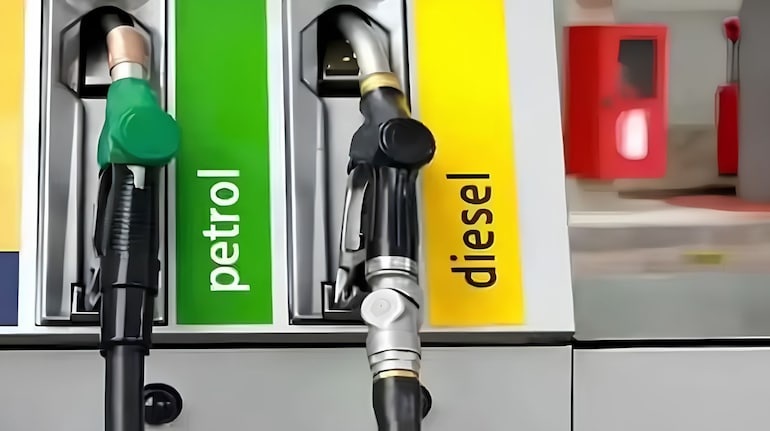
After a very historic and relief news from global geopolitics and international energy market, now the biggest question arising in the minds of common citizens of India is whether the prices of petrol and diesel will reduce in the domestic market?
In fact, an interim peace agreement has been signed to end the long-running military conflict and bitterness between America and Iran. During the war, the security crisis on the ‘Strait of Hormuz’, one of the world’s most sensitive and strategic oil routes, had deepened, due to which there was a sharp rise in the prices of crude oil in the international market and there was concern of record breaking inflation all over the world. Now after this peace agreement and the possibility of the Strait of Hormuz opening again with full operational capacity, global oil markets have heaved a sigh of relief.
Heavy fall in crude oil prices in the international market
This interim agreement between the US and Iran includes fully opening the Strait of Hormuz to all international ships and relaxing US sanctions on Iranian oil exports.
After this major global diplomatic success, the price of international benchmark Brent Crude has fallen sharply to the level of $77 to $78 per barrel, which is considered to be the lowest level in the last three months. Market analysts estimate that if Middle East crude returns to the international market at full capacity, then global oil supply will exceed its total demand in the coming time, which may lead to an even bigger recession in crude oil prices.
Why will this peace agreement prove to be a lifeline for India?
From the point of view of Indian economy, this diplomatic agreement is no less than a lifesaver, because India fulfills its total needs. More than 85 percent of crude oil is imported from abroad. Does. Nearly 20% of the world’s oil trade passes through the Strait of Hormuz alone. If this war had dragged on, the cost of petrol-diesel, LPG cylinders, airfares and logistics in India would have skyrocketed.
Now India is going to get mainly three big benefits from this agreement:
Import bill will reduce: Due to cheaper crude oil in the international market, India’s foreign exchange expenditure will reduce and the financial pressure on the government will reduce significantly.
Inflation will be controlled: Falling crude oil prices will reduce freight and transportation costs within the country, which will curb retail inflation of everyday essential commodities and food items.
Energy security will be strengthened: With the normalization of the Hormuz route, India will continue to get regular and uninterrupted supply of oil from the countries of West Asia (Middle East), due to which the risk of supply chain disruption in future has been averted.
So will the prices of petrol and diesel reduce immediately in the country?
If you are expecting that as soon as crude oil becomes cheaper in the international market, the price of oil at the petrol pumps of your city will reduce from the next morning, then currently the answer is “No” Is.
Retail prices of petrol and diesel in India do not depend only on the live price of international crude oil. There are many complex economic and government factors involved:
Tax and Excise Duty: Apart from refining costs and transportation expenses, there is excise duty of the central government and VAT of individual state governments.VAT) together determine a large part of oil prices.
Rupee-Dollar Exchange Rate: Crude oil is always purchased in US dollars, so the exchange rate of Rupee and Dollar (INR vs USD) in the international market also affects the final oil prices.
Stance of oil companies: Indian government oil marketing companies (OMCs like IOCL, BPCL, HPCL) do not take immediate decisions based on immediate fall in the international market. They usually track global trends closely for a few days or weeks to see whether this decline in prices is sustainable or not; Only after that the final decision on revision of domestic prices is taken.
Why is there still uncertainty over lasting peace?
Energy sector experts say that the expectation of relief for the general public has definitely increased, but clouds of partial uncertainty are still looming in the global market. Actually, this agreement between America and Iran is currently a interim agreement Under which the leadership of both the countries have only one option to reach a permanent and complete agreement. 60 days time (Window).
Many highly sensitive issues, such as Iran’s most controversial nuclear program and providing permanent complete relief from economic sanctions, are still unresolved on the table. If there is any deadlock in these serious talks in the next 60 days or tensions increase again, then crude oil prices could rocket again. Additionally, Iran has hinted at imposing toll taxes on commercial vessels passing through the Strait of Hormuz in the future, which could impact the cost of oil transportation.

Comments are closed.