
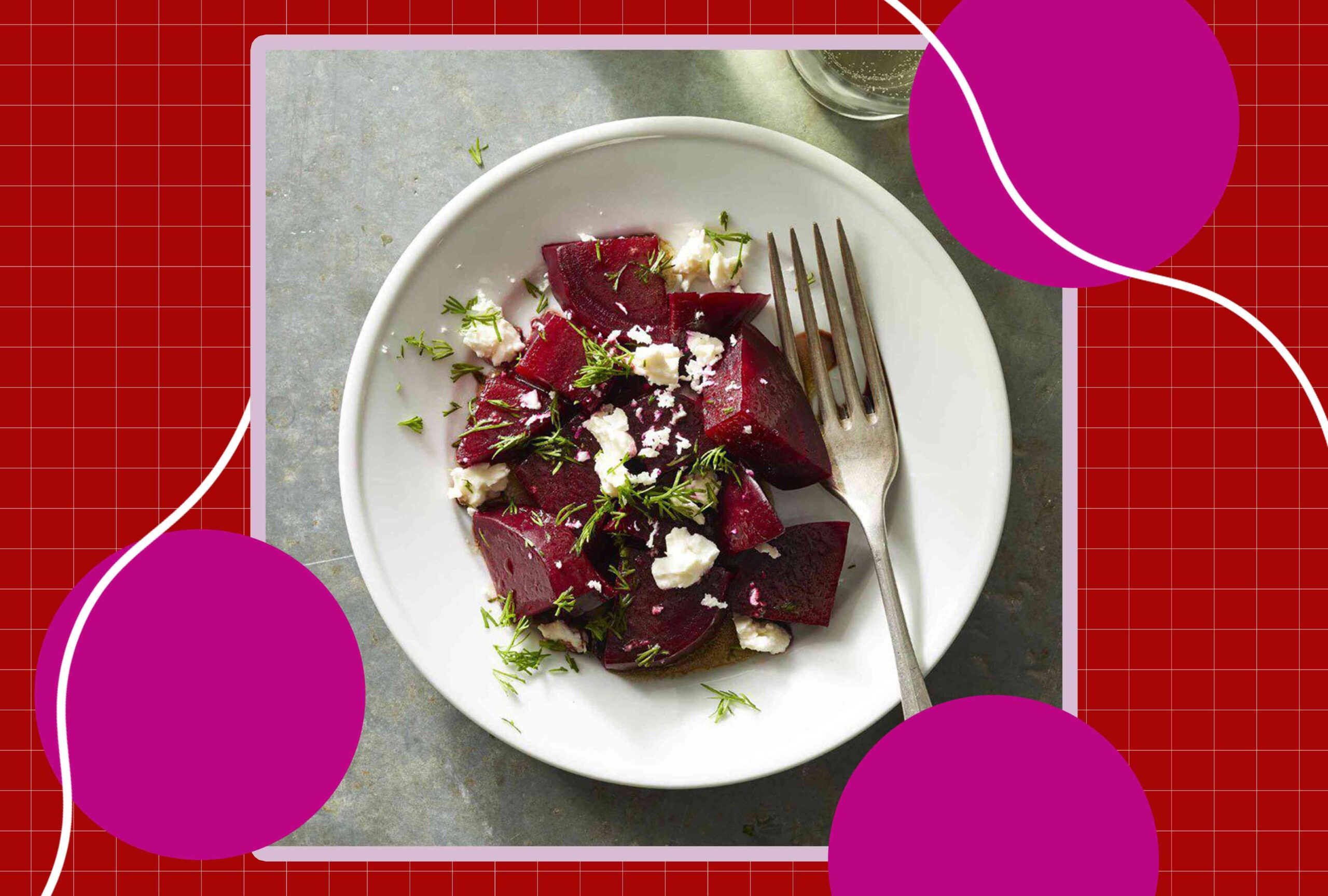

You’ll want to add this overlooked, nutrient-packed vegetable to your diet after reading what these chefs have to say.
Reviewed by Dietitian Christa Brown, M.S., RDN, LD
Key Points
- Three renowned chefs select beets as their favorite vegetable for good reasons.
- The chefs share creative ways to use beets, including great tips for prepping and cooking them.
- Beets are rich in fiber and potassium, which support good digestive and heart health.
With so many species of cultivated vegetables to choose from, you would think there would be more diversity on the average dinner table. Yet, many people—myself included—get stuck in a rut, rotating the same ones on repeat. To broaden the options, I tapped top Los Angeles area chefs to learn what their favorite vegetable is, and they all had the same answer: beets.
Root vegetables like carrots and potatoes get a lot of love, but beets tend to get overlooked. Maybe that’s because home cooks aren’t quite sure what to do with them, or maybe it’s just that they require a bit of scrubbing and TLC to get them plate-ready. If you find yourself nodding your head, a word from the chefs may change your mind about the squat taproot veggie.
Background
Beets are believed to have originated in the Mediterranean sometime around the 8th century B.C., and ancient Greeks and Romans enjoyed beets so much that they developed techniques to grow them outside of their normal season, making beets widely available for a greater part of the year. Several centuries later, the root vegetable eventually made its way to North America via European immigrants in the early 1800s, where it became a staple, especially valued for its long shelf life.
Healthy and Versatile
Beets boast high levels of fiber and potassium, crucial nutrients for maintaining optimal digestive and heart health. There is evidence that beets may lower blood pressure and reduce cancer risk. Beet juice may even reduce the risk of heart disease in postmenopausal women. Outside of beets’ impressive health benefits, chefs especially appreciate their versatility and earthy qualities.
“I love the versatility behind them,” says Mindy Oh, the former executive chef of Abernethy’s who is now working at the Intuit Dome in Inglewood, California. “They’re great steamed, grilled, pickled, raw; you can do so much with them.”
It’s this quality that makes beets an ideal choice for use in both sweet and savory recipes. “I use beets in desserts, such as a beet cheesecake, and in savory dishes, like soups,” says Hendrix Vegaexecutive chef of Sendero at the Ritz-Carlton, Los Angeles. “You can puree them for a meat dish or steam them for a beet tartare. I also have fond memories of my grandma using them to make borscht for me.”
Prepping and Cooking
No matter what type of beet you have on hand—red, golden, Chioggia (sometimes called candy cane or candy stripe beets)—the preparation possibilities are practically limitless. And with a few tips from the culinary experts, you’ll be on your way to enjoying them in your home.
Slow-Roasted for Meaty Texture
“The best way to cook beets at home is to wash them carefully to get all the dirt off, dry them off, then toss in olive oil, salt and pepper,” says Mazen Mustafa, the executive chef at The Lonely Oyster in Echo Park, explaining that slow-roasting beets gives them a nice meaty quality that satisfies vegans—or pescatarians like himself. “Next, wrap them up in foil, place them in a preheated 375°F oven and cook for one and a half hours.”
Mustafa recommends checking the beets with a cake tester or the tip of a sharp knife to see if they’re cooked all the way through. There should be no resistance to the knife when placed into the beet. Once they’re done cooking, peel the outer skin and let them cool. “Now you can use them in multiple ways,” says Mustafa. “You can add them to stews, puree them for a soup, add them to a salad or serve them on the side with a nice steak.”
“At work, we cook them in so many ways,” says Mustafa. “We slow-roast them, brine and cook them, smoke them and juice them. Among my favorite ways is incorporating all those methods into one dish, which is slow-roasted beets, XO sauce, tomato marmalade [and] crystal lettuce. We will steam the brined beets until tender, then put them into a super-low oven to dehydrate them. After that, we smoke them to get them a bit of depth, then glaze them in a reduced beet juice with a bit of black-garlic vinegar.”
Braised and Boiled to Retain Color
“I love braising [beets] in the oven or stovetop,” says Oh. “I put them in water with a little bit of vinegar, chile flakes, sugar and salt. It’s my preferred way of cooking them because you can set and forget them. By the time you remember you were cooking beets, they’re fully cooked.” Oh adds that boiling them with a bit of vinegar and sugar also helps them retain their color and lessens their earthiness, making them more appealing.
Beet Juice for Drinking and Curing
Juicing beets isn’t a new method by any means. Still, Hendrix says it’s great for more than drinking. “I use beets as a natural colorant when I make purple-cured salmon. I recommend making a beet juice base to cure your fish. I use 50 grams of beet juice per kilo of salt and 300 g of sugar. It makes a crudo look amazing!” (A crudo is a raw dish—typically seafood and fish—that is dressed with a combination of citrus and/or vinegar, olive oil and seasonings.)
The Bottom Line
With so many healthy and delicious reasons to eat beets, these expert tips for preparing them at home will hopefully inspire you. Be sure to add beets to your list for your next trip to the grocery store. If you can’t find fresh beets or don’t want to spend the time preparing them, go for frozen, shelf-stable or canned beets—all of which are healthy, convenient time-savers.

Comments are closed.