

Pramod Bhargava, senior journalist
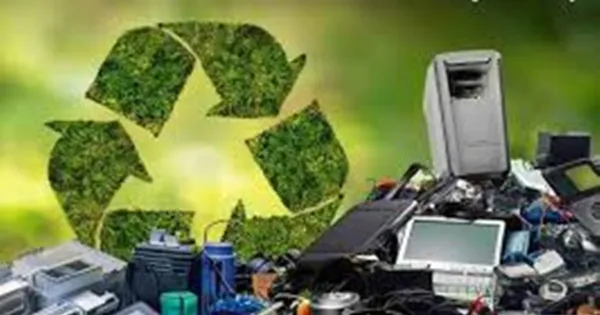
Not only India, the entire world is facing the increasing crisis of e-waste today. At such a time, researchers at the Indian Institute of Technology (IIT) Madras have developed an indigenous pilot plant under the “Make in India” initiative, which is capable of processing 100 tonnes of electronic waste per year. The plant is specially designed for the treatment of Printed Circuit Boards (PCBs) and has been installed at the premises of Bharat Heavy Electricals Limited (BHEL) at Tiruchirappalli.
PCBs are among the most hazardous and metal-rich components of electronic waste. These contain metals like copper, lead and tin in sufficient quantities. If they are not properly managed, they can seep into the soil and groundwater and pose a serious threat to the environment and public health in the long run. India is generating about 50 lakh metric tons of e-waste every year. In such a situation, this achievement of IIT Madras is important because it extracts valuable metals from unusable electronic devices and makes them reusable and in this process there is no pollution.
Professor S. of the Department of Chemical Engineering, IIT Madras. Pushpavanam and Y.B.G. Verma says that amidst the increasing e-waste challenge, this plant is a model of clean metal recovery, which can be implemented on a large scale. This is in line with national goals like “Make in India”, circular economy and protection of critical minerals. Its specialty is that the entire process is completed using only acid and it has high level automated safety measures.
It is noteworthy that this plant is completely built by Indian companies. The importance of this achievement also increases because in the report of environmental monitoring organization Basel Action Network (BAN), it has been said that millions of tons of bad electronic material is being sent from America to the developing countries of Asia and West Asia.
These include computers, laptops, tablets, mobiles and other IT devices. These devices contain valuable but toxic metals like lead, cadmium and mercury. As new models are coming into the market, old gadgets are rapidly becoming useless and the crisis of e-waste is continuously increasing. According to the United Nations organization UNITAR, 62 million metric tons of e-waste was generated globally in the year 2022.
It is estimated that by 2030 its quantity will increase to 82 million metric tons. According to the report, every month about 33 thousand metric tons of used e-waste is sent out of developed countries in thousands of containers. The companies supplying these shipments often do not recycle themselves, but instead offload the waste to ports in poor countries.
As a result, serious problems of water, air and land pollution are arising there. A large portion of e-waste ends up in scrap markets, where workers separate the metals by burning or melting them without any safety equipment. The toxic smoke emitted from this process is extremely harmful to human health. This is why the amount of e-waste in the world is increasing much faster than recycling.
Bio-hydrometallurgical technology is being considered quite effective to solve this problem. In this, e-waste is finely ground and kept with bacteria. Enzymes present in bacteria convert metals into compounds that make them easier to separate. In this process, metals like copper, lead and tin are separated using different types of bacteria and fungi. It is considered safer and environment-friendly than traditional technologies.
Experts believe that an average smartphone contains about 30 mg of gold, which is present in its circuit board and other internal parts. This is why big companies of the world are now paying special attention to recycling of electronic devices. If such e-waste plants are established on a large scale, not only will the environmental crisis be reduced, but new employment opportunities will also be created for the youth.
Besides, India will also be able to earn foreign exchange by exporting this indigenous technology. It is clear that this plant developed by IIT Madras is not just a technical achievement, but an important step towards solving the growing global crisis of e-waste. It provides a strong foundation to the concept of environmental protection, re-use of resources and sustainable development. (These are the personal views of the author.)

Comments are closed.