
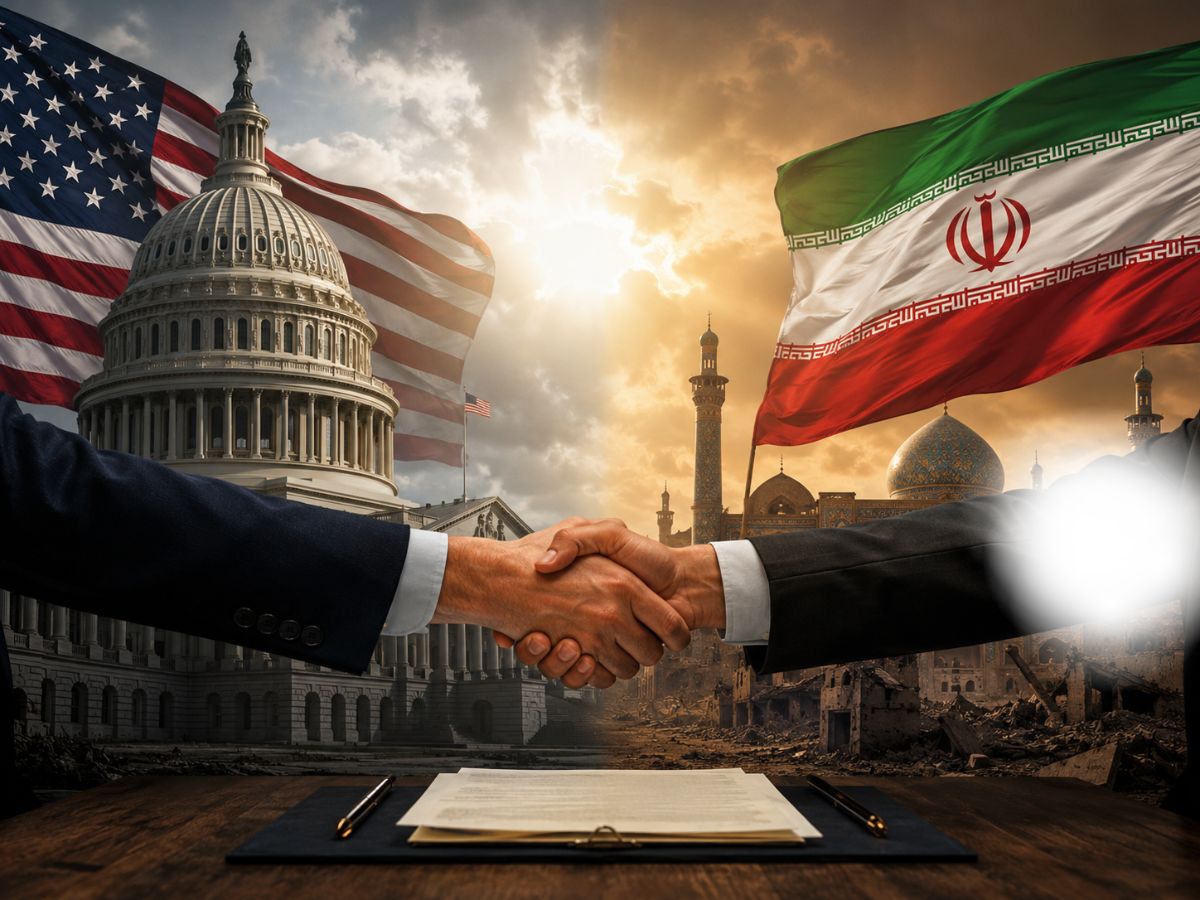

The Iran-US agreement which was supposed to help put an end to the Iran war and reduce tensions in West Asia has received a mixed reception in America with some of the leading Republicans having come out publicly to oppose it while others have argued that it will help bring about stability. This has been as a result of the leaking of copies of the Memorandum of Understanding (MOU) which was signed by American President Donald Trump to Congress, and which many people felt gave too much away to Tehran.
The backlash is notable because it comes from within Trump’s own Republican Party, where lawmakers have largely stood by the president. However, concerns over the economic fallout of the Iran conflict and its impact ahead of November’s midterm elections appear to be fueling unease. Democrats have also voiced concerns about the agreement and are seeking greater clarity on its provisions.
Growing Republican unease as Iran-US deal reaches Capitol Hill
The White House shared the text of the Iran-US deal with members of Congress on Thursday, a day after Trump signed the preliminary agreement. The document reportedly matched details that had already been outlined publicly by a US official.
Lawmakers from both parties have since demanded more information. Congressional aides said there had been no formal briefing for Congress regarding the agreement or the administration’s future plans. As of Thursday, no briefing had been scheduled, adding to concerns among lawmakers seeking answers about the Iran-US deal.
One of the strongest critics was Republican Senator Bill Cassidy of Louisiana. In a post on X, he argued that the agreement failed to address Iran’s nuclear ambitions.
“Iran’s nuclear ambitions were not curbed, and they have learned that threatening the Strait of Hormuz works and will undoubtedly leverage it in the future,” Cassidy wrote.
He pointed out that before the conflict, the crucial shipping route remained open while Iran was under heavy sanctions. “Now, 13 Americans are dead, families have paid billions at the pump, sanctions will be lifted, and the bombing has stopped. This is the worst foreign policy blunder in decades,” Cassidy wrote.
Why parts of the Iran-US deal are drawing intense criticism
A major source of concern among Republicans involves reports that the Iran-US deal includes the release of frozen Iranian assets, support for a proposed $300 billion private wealth fund aimed at boosting investment in Iran, and the easing of sanctions.
Republican Senator Roger Wicker of Mississippi, who chairs the Senate Armed Services Committee, warned that the agreement risks undermining US military achievements. Wicker said he feared the MOU “negotiates away” American successes achieved during the conflict.
He also criticized provisions that would require Israel to scale back operations against Hezbollah in Lebanon. Wicker opposed any move to lift sanctions or unfreeze Iranian funds “in exchange for Iran’s mere agreement to negotiate for another 60 days.”
Trump responded aggressively to the criticism. In a social media post, he wrote: “These fools, who think I haven’t been tough enough on Iran, when the Stock Market Just Hit A RECORD HIGH, and Oil prices are ‘tumbling’ down, are either jealous, bad people, or stupid. MAKE AMERICA GREAT AGAIN!!! President DJT”
Supporters of the Iran-US deal argue that it has already delivered benefits by helping calm markets and creating a pathway toward a broader settlement.
Conservative commentators split over Iran-US deal as debate widens
The criticism has extended beyond Congress and into conservative media circles. Political commentator Ben Shapiro, who had previously supported US and Israeli military action against Iran, called the agreement a “disaster.”
Shapiro blamed Vice President JD Vance for backing the arrangement and said: “This MOU appears to be, just from the text, a disaster that does not achieve any of the actual signal goals that were set by the administration.”
Another influential conservative voice, Mark Levin, also broke with Trump over the Iran-US deal. Levin criticized Republican Senator Roger Marshall of Kansas after Marshall suggested Iran could retain ballistic missiles for defensive purposes.
“This man should never be elected dogcatcher,” Levin wrote about Marshall. He also described the administration’s decision not to include ballistic missiles in the agreement as an “outrage.”
“To downplay the damage these missiles do (ask the Arab countries what they think about ballistic missiles) and the significance of not including them in any deal is utterly irresponsible,” Levin wrote. “Iran is a terrorist regime that has killed our people, how many more times do we need to be reminded of this.”
Supporters defend Iran-US deal as Congress prepares for possible review
Despite the criticism, some Republicans have defended the agreement. Speaking on KCMO Radio, Senator Roger Marshall praised Trump for choosing “a path to lasting peace, not another forever war.”
Marshall argued that safeguards would exist on how Iran spends the funds it receives and stressed that the money would not come from American taxpayers.
Supporters say the Iran-US deal could help reopen and secure the Strait of Hormuz, a key global oil route, while reducing military and economic pressure on the United States. Critics, however, argue that Iran is receiving major concessions in return for restoring conditions that existed before the conflict began.
The debate may soon move to Congress. Under the 2015 Iran Nuclear Agreement Review Act (INARA), any agreement involving Iran’s nuclear program and sanctions relief must be reviewed by lawmakers. While the Trump administration has sent mixed signals about whether it will submit the agreement for review, several senators, including close Trump ally Lindsey Graham, have said the Iran-US deal should be sent to Capitol Hill for scrutiny.
(inputs from Reuters)
Also Read: ‘They Don’t Quite Have Freedom Of Press’: JD Vance Slams Pakistan Over Delayed Iran Deal Release
Khalid Qasid is a media enthusiast with a strong interest in documentary filmmaking. He holds a Master’s degree in Convergent Journalism from AJK MCRC. He has also written extensively on esports at Sportsdunia. Currently, he covers world and general news at NewsX Digital.
The post Trump’s Iran-US Deal Explained: Why Critics Call It A Win For Tehran appeared first on NewsX.

Comments are closed.