
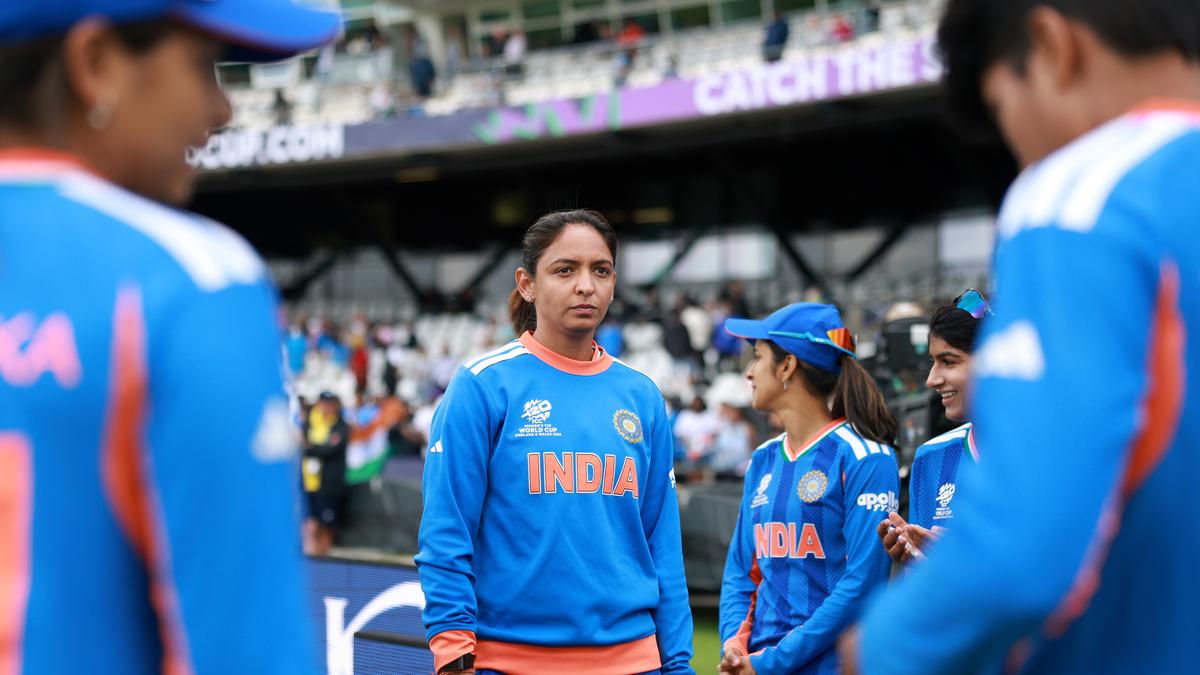
Harmanpreet Kaur becomes first player to play 200 T20Is: A look at her pathbreaking journey so far

There are players whose careers help you trace the evolution of a sport – how it grew up, responding to talent, infrastructure or the lack thereof, success, or failure. And then there are others whose job it is to have an entire ecosystem ambition.
These players, knowingly or otherwise, push or break thresholds of reality, allowing those around them to see just how the impossible can be hacked down to the realms of possibility if one puts their mind and effort into it.
One such pathbreaker is Harmanpreet Kaur.
Harmanpreet had one of the easier journeys to the doorstep of cricket. Her parents welcomed her into this world with a shirt embroidered with the words, ‘Good batting.’ Her father, a club cricketer himself, was stoked to encourage the cricket gene in his daughter, even if it stretched the family’s wallet. She got a fully funded school gig where cricket would be a priority after the man behind the institution saw her smack the ball with boys in her neighbourhood. There was no girls’ team where she came from. It was made because of and for her. Once in the Indian team, there was no looking back. The soft-spoken Punjab ki kudi went on to become one of its most merciless competitors.
ALSO READ | Joe Root crosses 14,000 Test runs, becomes only second player after Sachin Tendulkar to do so
When the 37-year-old steps onto the hallowed turf at Old Trafford on Sunday during a Women’s T20 World Cup 2026 fixture against South Africa, she will ring in another special milestone as she will become the first player, male or female, to have played 200 T20 internationals.
Harmanpreet Kaur was just the spectacle Indian cricket needed in 2017, which laid the foundations for a nagging conversation that demanded progress in attention and infrastructure within the Indian ecosystem.
| Photo Credit:
X/BCCI Women

Harmanpreet Kaur was just the spectacle Indian cricket needed in 2017, which laid the foundations for a nagging conversation that demanded progress in attention and infrastructure within the Indian ecosystem.
| Photo Credit:
X/BCCI Women
No other man or woman comes close to venturing into the two-ton T20Is club. Ireland’s Paul Sterling (163 caps) and a soon-to-retire Suzie Bates (184) are closest to her.
When the right-handed big-hitter comes on television screens, broadcasters often reel off names like Thor and Harmonster. One can brush them aside as extreme broadcast creative liberties, a little cringey even, most times. But in the case of this all-rounder – yes, all-rounder, even though we don’t see her bowling too much anymore – from Moga, these are strikingly accurate.
Harmanpreet has a reputation for tearing into opposition attacks when locked in during an innings. An easy example of this, even though it comes from the One-Day format, is the T20-esque unbeaten 171 in the 2017 Women’s World Cup. Rain may have curtailed the game at Derby. Still, it was the storm that came after – off Harmanpreet’s bat – that truly razed any preconceived tendencies to underestimate Harmanpreet herself, the Indian women’s cricket team, or even the larger ecosystem by extension.
This is by no means an exaggeration.
As opposed to women’s teams clawing for attention in a male-dominated and male-oriented setup, that performance and the side making a final (although it lost eventually and quite tamely) made way for the sport to accommodate another gender. Maybe not as equals just yet (that’s still a work in progress), but make room nevertheless.
The ICC’s broadcasting audit backed up that reality. A whopping 156 million people tuned in to the 2017 World Cup; 126 million tuned in for the final alone. India’s performances had contributed to a 500% increase in viewing hours in the nation for the 2017 edition.
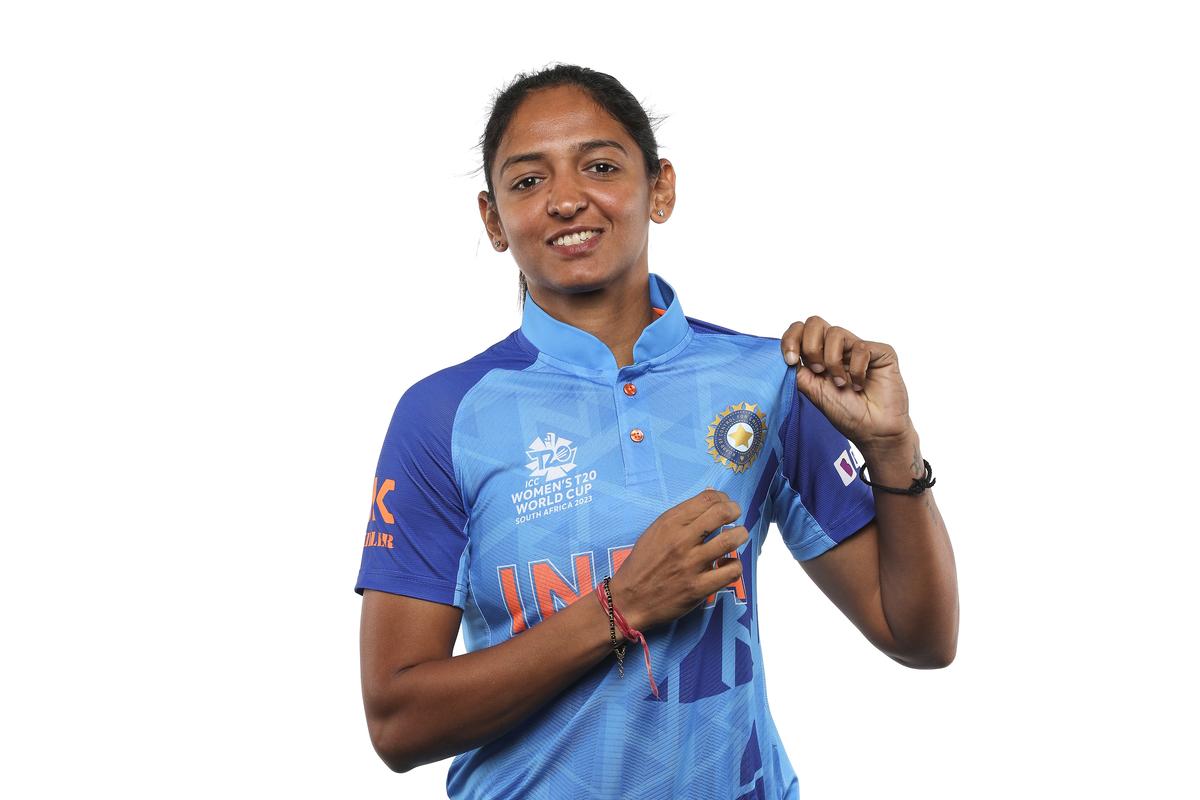
Harmanpreet Kaur began her career as a bowling option for the Indian team and quickly cemented a reputation of being one of the most devastating strikers in the global game.
| Photo Credit:
Getty Images
Harmanpreet Kaur began her career as a bowling option for the Indian team and quickly cemented a reputation of being one of the most devastating strikers in the global game.
| Photo Credit:
Getty Images
The vertical has come a long way since. Money, many times the amounts thought possible then, is being pumped into women’s cricket. Broadcasting numbers are soaring, advertising revenue is multiplying, and the general population – observing and participating alike – is only growing stronger in number each year. In the ongoing Women’s T20 World Cup in England, the tournament director Beth Barrett-Wild told this publication that England was not ready to capture the success of that triumph, beating India in the 2017 final. While England missed the bus, Harmanpreet’s assault ended up triggering a whole other revolution 17,000-odd kilometres away in Australia.
ALSO READ | Tempo versus volume: Making sense of India’s Women’s T20 World Cup batting dilemma
“We couldn’t stop her,” Meg Lanning, captain of the Australian cricket team, declared with tighter-than-usual pursed lips. Laser-eyed and irritated to have been denied glory, that humbling triggered a decade of domination where Aussie systems revolutionised ruthlessly. That bloodlust brought the side an unshakeable top world ranking and four ICC titles (two each in T20s and ODIs).
Ask anyone Down Under what triggered that domination, and a whimper will follow. “Harmanpreet.” Maybe an oversimplification, but hey, origin stories often are.
Her two standout achievements may have come in the One-Day format, where she also led India to a remarkable maiden ICC triumph on home soil last year. But it all began in the blossoming of a new-age T20 player who the world recognised, before India did, as one of its best.
She made her debut in the format on the biggest stage there was – the inaugural Women’s T20 World Cup in 2009. On June 11, a baby-faced Harmanpreet was among three debutants for India against England in what would be a 10-wicket thrashing at the hands of the then recently crowned ODI champion. Harmanpreet, blooded in as a bowling option, came in at no. 8. She didn’t bat in the next two games and was dismissed for a golden duck in the semifinal loss to New Zealand.
Her first fifty in the format would come in her 24th game and against mighty Australia in Visakhapatnam in 2012. The second would take another 24 games, coming in a big win against Bangladesh this time at the 2014 T20 World Cup. By this time, the batting chops had been validated enough for Harmanpreet to open alongside Mithali Raj. Her next two came in 2016, against the erstwhile T20 world champion West Indies, a three-match series the visitor won in straight games. Another fifty-plus score would follow in the 2018 Asia Cup. India lost, but Harmanpreet had an impactful run by finishing as player of the series.
The 2018 T20 World Cup helped Harmanpreet enter the history books with a remarkable 51-ball 103, striking at 201.96 against New Zealand in Providence. To this day, it is India’s lone century in the history of the tournament. India’s campaign ended in a semifinal disappointment but only added to Harmanpreet’s reputation as a player who revelled in big games.
ALSO READ | What advice did India captain Harmanpreet Kaur give Netherlands skipper Babette de Leede?
Harmanpreet’s next two half-centuries arrived in the 2022 Commonwealth Games in Birmingham, both in narrow losses to Australia. One in the campaign opener and the other in the final. A few bilateral fifties aside, another came in the 2023 semifinal loss to Australia. Another slim defeat, by five runs. This game assumed infamy for Alyssa Healy’s remarks on running out Harmanpreet, saying she didn’t put in too much of an effort.
That, too, triggered one of the most endearing rivalries to follow in women’s cricket. Meg Lanning, Australia’s talismanic trophy hoarder, was a touch above everyone in the vertical. Healy was human, chirpy, and happy to match Harmanpreet’s appetite for a fight.
That fight was on full display in an abysmal run as India crashed out in the group stage of the 2024 T20 World Cup in the UAE, but not before a nerve-wracking game against Australia in Sharjah, where India needed a win to stay alive. Harmanpreet’s unbeaten 47-ball 54 was more desperate than valiant, and it eventually went in vain.
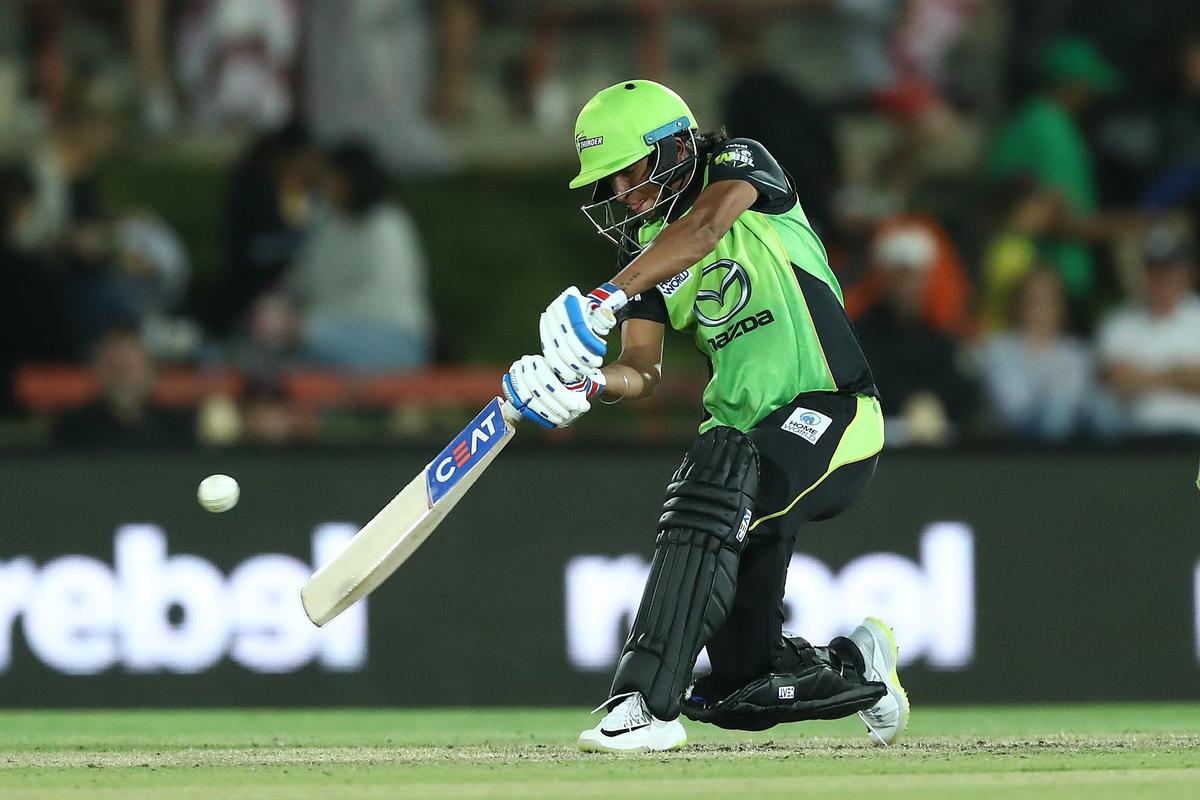
Harmanpreet Kaur became the first Indian player to land an overseas contract when she was signed by Sydney Thunder in the Women’s Big Bash League in 2016.
| Photo Credit:
Getty Images
Harmanpreet Kaur became the first Indian player to land an overseas contract when she was signed by Sydney Thunder in the Women’s Big Bash League in 2016.
| Photo Credit:
Getty Images
Something about Harmanpreet still made the Aussies quake. Several players underlined how important it was to get her out for a result to be sealed in their favour. Her numbers reflect it too. Of the 4,123 runs she has in the format, 881 have come against Australia – the highest against any nation for her. Australians got to see Harmanpreet evolve into a T20 behemoth from 2016, when Sydney Thunder signed her to play in the Women’s Big Bash League. Harmanpreet, hence, became the first Indian cricketer to sign an overseas league contract.
This also explains the 2017 hurt, as Harmanpreet has been vocal about the huge learnings – technical tweaks and muscles – she came back home with after that stint Down Under.
Harmanpreet’s smarts as a captain got its first stage in the 2012 Asia Cup final. India was bowled out for just 81, but Harman and Co. managed to defend it and seal an 18-run win. The remarkable part of this was the team going in without talismanic seniors Mithali and Jhulan Goswami. Harmanpreet eventually took over as full-time skipper of the side in T20Is in 2016 and then in all formats in 2022 when Mithali retired. Post 2017, this leadership conversation brought with it a tornado of controversy when the Indian think tank dropped Mithali for the 2018 T20 World Cup semifinal after she registered two fifty-plus scores earlier in the tournament. Harmanpreet stuck to her gut of not wanting to change a winning combination, as India had opted to go without Mithali in its previous fixture against Australia and did so successfully.
“Whatever we decided, we decided for the team. Sometimes it works, sometimes it doesn’t, no regrets,” she said after the game. This triggered a rift that claimed a coach’s job (although he did come back later) and tore the dressing room wide open. Regardless, Harmanpreet persevered and prevailed.
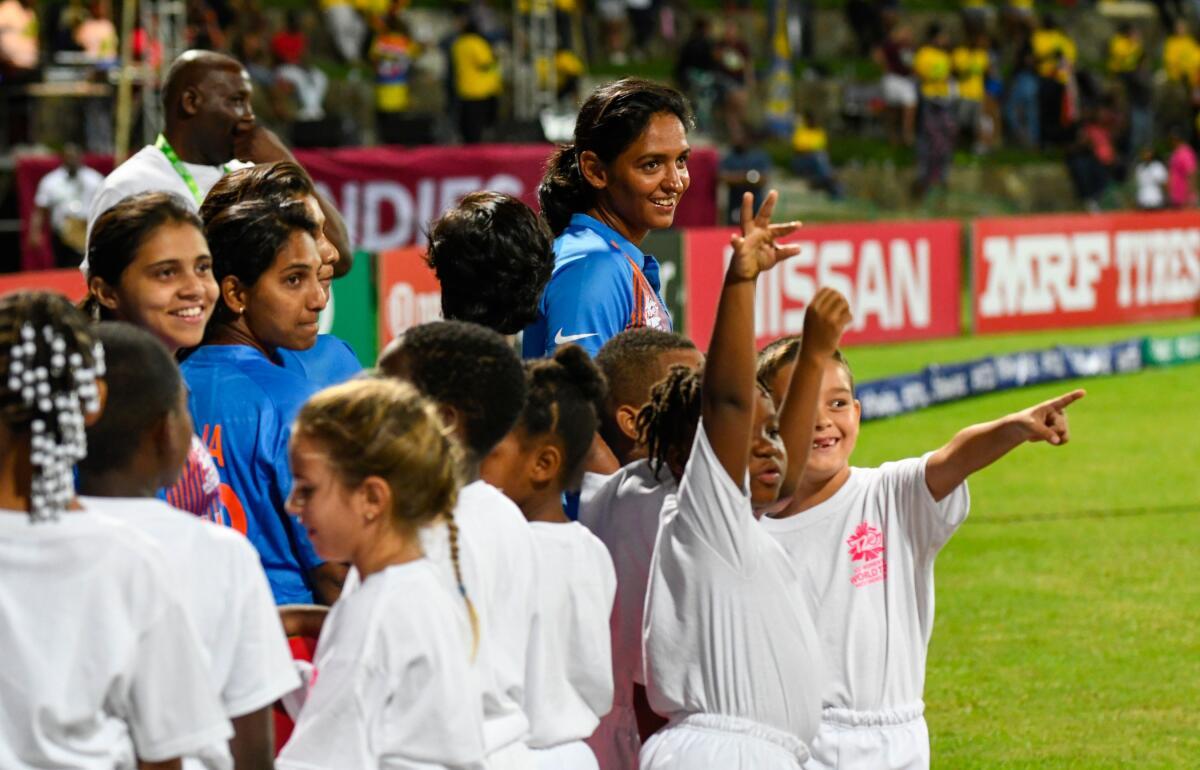
Harmanpreet Kaur before the 2018 Women’s T20 World Cup semifinal against England which India lost.
| Photo Credit:
AFP
Harmanpreet Kaur before the 2018 Women’s T20 World Cup semifinal against England which India lost.
| Photo Credit:
AFP
An enduring image of Harmanpreet is her going ballistic on Deepti Sharma for a run-out that almost ended what would be that 171* against Australia before it began. An eventual apology followed. Harmanpreet, fairly reserved in unfamiliar situations, comes alive, quite often violently, on the cricket field. Don’t get this wrong. It is that aggression that India chose it needed as it crawled towards a new dawn post 2017.
She relentlessly advocated for a women’s domestic league along with other seniors on the side. She lifted the inaugural Women’s Premier League trophy, a delightful consequence for an Indian captain to be the one lifting the ornate cup when the skipper at the other end was India’s nemesis, Lanning.
Incidentally, she went past the Victorian as the captain with the most wins in T20Is. Although, as it stands, Harmanpreet has played nearly twice as many matches as Lanning and has a 38.19 loss percentage to Lanning’s enviable 18.
She stands tied with Smriti Mandhana with two WPL titles each as captain in four editions so far. The WPL also got to see an encore of Harmanpreet in Hulk mode in 2024 in New Delhi.
Chasing 191 for a win against the Gujarat Giants, she went from 20 off 21 balls to finishing with an unbeaten 95 off 48 balls. It was savoured by those who witnessed or followed 2017, sure, but it was lapped up more by those who didn’t.
ALSO READ | Trailblazing twins Jill and Jane Powell look back at evolution of women’s game
Reporters at the press conference tried several versions of one question: ‘How do you unlock this mode?’ A big grin and an uncharacteristic forward defence emerged to brush aside the investigation.
That internal resolve defines Harmanpreet the cricketer, a player built for the ruthlessness of T20s but who yearned for its classical charms and triumphs. A brash, in-your-face maverick who carried her side to the biggest podium of the sport, hoping now to do it once more in the format she was first entrusted with as a leader.
All the more crucial given that it is undeniable that the end of this storied career is inching closer to its finish line, even if we still have plenty of time to go.
In Harmanpreet, India has a visionary who doesn’t shy away from setting her ambitions for the future. In her, India also has a success story of a girl who made the most of the small things that fell in place for her. That she has become a chapter in Indian cricket that the sport cannot be understood without is the biggest testament to her stature in the game.
Published on Jun 21, 2026

Comments are closed.