
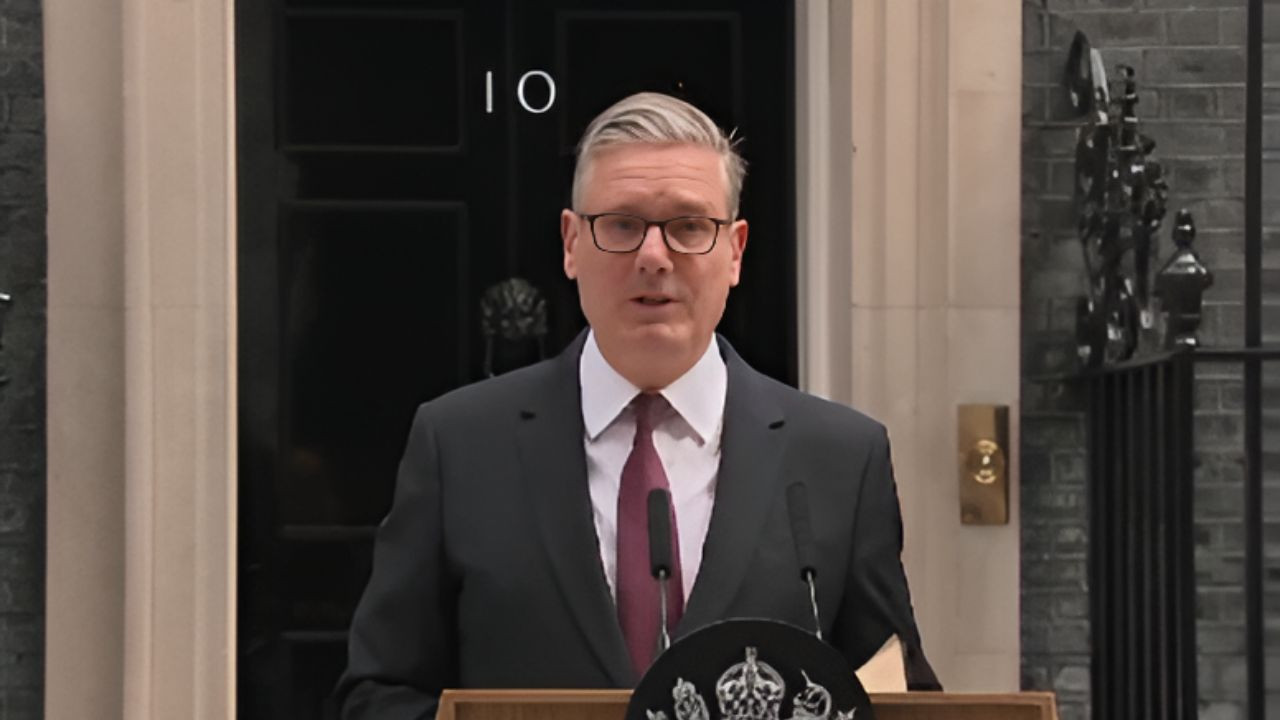

New Delhi: A big development has come to light in British politics. The country’s Prime Minister and Labor Party leader Keir Starmer has announced his resignation from his post. This decision, taken amidst increasing pressure within the party for some time and questions being raised regarding leadership, is being considered very important for British politics. With Starmer’s resignation, Britain is once again moving towards new leadership and discussions about future possibilities have intensified in political circles.
Keir Starmer came out of 10 Downing Street with his wife after the announcement of his resignation. During this, the people present there welcomed him and bid him farewell with applause. In his address, Starmer said that reaching the Prime Minister’s residence two years ago was one of the proudest moments of his life. He told that his aim of coming into politics was to bring positive change in the lives of common people.
Mentioned the achievements of the government
In his speech, Starmer enumerated many achievements of his tenure. He said that his government worked towards strengthening the economy, increasing investment and creating employment opportunities. According to him, the pace of salary increase was ahead of inflation and many major development works were taken forward. He also claimed that steps were taken to improve health services, which reduced the number of people waiting for treatment in hospitals. Many important decisions were also taken to strengthen the rights of workers and tenants.
Steps taken for workers and poor families
Starmer said that his government gave priority to the interests of the working class. He claimed that in recent years the biggest reforms were made regarding workers’ rights. Apart from this, efforts were made to provide relief to poor and needy families through many policies. According to him, government schemes helped in bringing a large number of children out of poverty. Investment was also increased in the defense sector and many decisions were taken to strengthen national security.
Increasing opposition increased pressure
However, despite the government’s claims of achievements, Starmer faced constant criticism. Changes in policies on many issues and allegations of not fully fulfilling election promises weakened his position. Along with the opposition, many leaders of his own party also started raising questions about the leadership. The dissatisfaction within the party increased further when some senior leaders started openly demanding change of leadership. Many MPs publicly asked him to resign or set a deadline to step down.
Leadership challenge became a big reason
The ongoing tussle over leadership within the Labor Party placed additional pressure on Starmer. Many MPs of the party believed that new leadership was needed to face the upcoming political challenges. In this environment, the demand for change of leadership increased and ultimately Starmer decided to step down. After Starmer’s resignation, Britain is going to get a new Prime Minister. Over the past few years, the country has seen frequent leadership changes, which has further intensified the debate over political stability.

Comments are closed.