
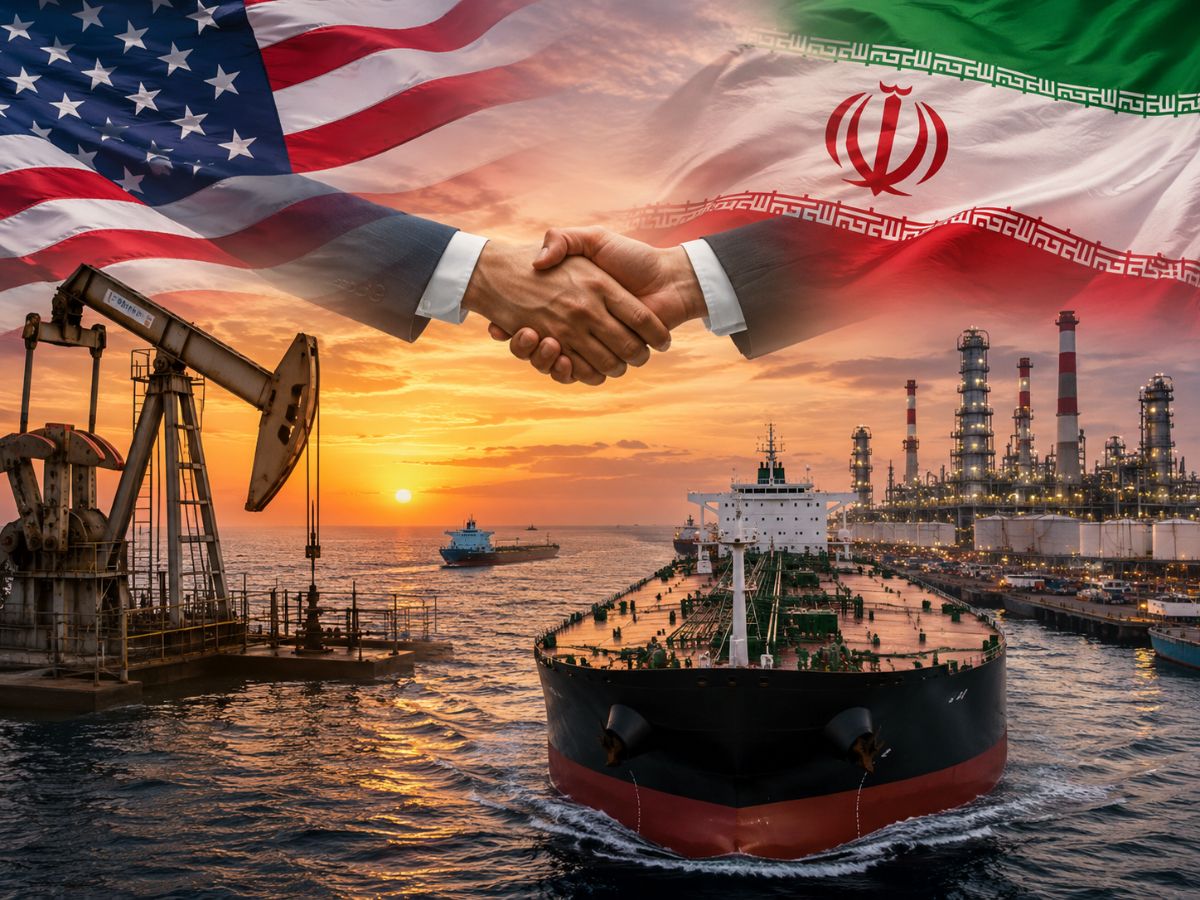

The United States’ decision to temporarily ease sanctions on Iran’s oil sector could offer India a major strategic and economic advantage, even if Indian refiners do not immediately resume purchases of Iranian crude. Washington has issued a 60-day waiver allowing the production, sale, delivery and import of Iranian oil, petroleum products and petrochemicals until August 21, a move linked to ongoing diplomatic talks with Tehran and efforts to reduce tensions in the Gulf region.
The waiver covers not only oil trade but also supporting services such as shipping, insurance and banking. It follows Iran’s agreement to permit inspections by the International Atomic Energy Agency (IAEA) and continue negotiations aimed at reaching a broader understanding. The development has already influenced global markets, with crude prices falling on expectations that additional supplies could return to the system.
Why cheaper oil could be the biggest India benefit from the sanctions waiver
Implications for India are huge because India imports almost 85% of the crude oil that it uses. Any change in the price of the international crude oil will have direct repercussions on the inflation rate, cost of fuel, government finances, and overall imports. Being one of the biggest consumers of energy globally, India keeps track of any development that happens in the oil-producing countries.
This waiver will make it possible for more barrels from Iran to enter the market if negotiations keep moving ahead. Without even buying from Iran, extra barrels will mean increased competition between exporting countries and India would be in a better position to control the prices of the crude oil.
How the India benefit extends to supply diversification and energy security
India’s oil sourcing pattern has changed considerably since the Russia-Ukraine conflict. Russia now supplies roughly one-third to 40 per cent of India’s crude imports, making it the country’s largest supplier. At the same time, India remains heavily dependent on Gulf producers such as Saudi Arabia, Iraq and the UAE. OPEC nations accounted for around half of India’s crude imports in 2025.
Before sanctions were reimposed in 2018, Iran was one of India’s most important oil suppliers. Indian refiners preferred Iranian crude because of its competitive pricing, favourable credit arrangements and lower transportation costs. The latest waiver does not immediately reopen the market, but it revives the possibility of future discussions between Indian refiners and Iranian exporters if diplomatic progress continues.
Strait of Hormuz stability adds another major India benefit to the equation
The second relevant point is that of the Strait of Hormuz, an extremely significant route for sea transportation of a sizable amount of oil imported by India. Geopolitical problems had caused fears about the possibility of disruptions in transit as well as rising costs of energy resources. The agreement between the US and Iran entails certain promises related to maritime security and unimpeded transit of the waterway.
A decrease in the risk of disruptions in the Strait of Hormuz will be yet another advantage for India, contributing to the issue of energy security and absence of the risks of any disruptions in supply. In light of the fact that India spends annually over $100 billion on importing crude oil, any fall in the price of energy resources will positively affect the economy.
Also Read: US Eases Iran Oil Sanctions With 60-Day Waiver As Switzerland Talks Advance
Khalid Qasid is a media enthusiast with a strong interest in documentary filmmaking. He holds a Master’s degree in Convergent Journalism from AJK MCRC. He has also written extensively on esports at Sportsdunia. Currently, he covers world and general news at NewsX Digital.
The post Iran Oil Back On Global Markets? Why US Move Could Be Good News For India appeared first on NewsX.

Comments are closed.