
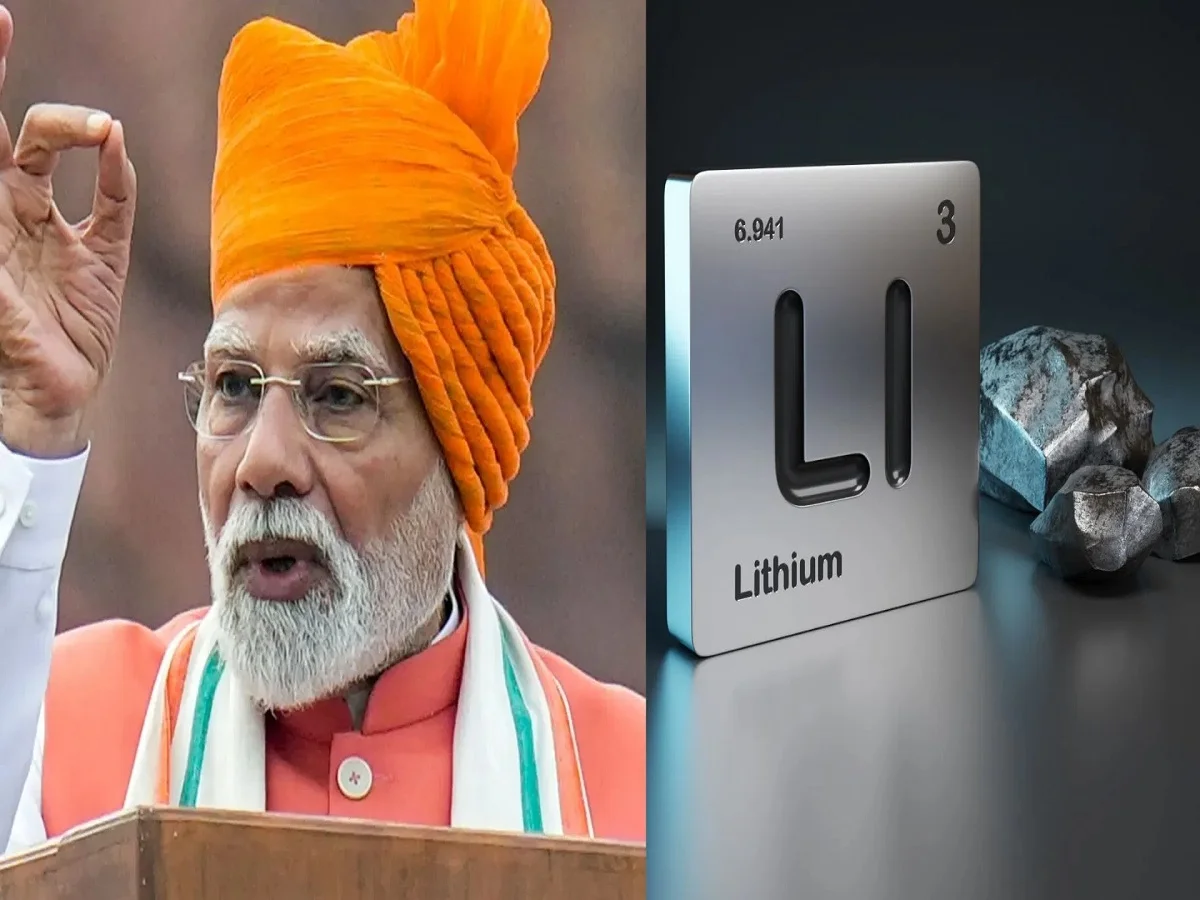
Critical Minerals- India will not have to depend on China for critical minerals, India has made a masterplan.

Friends, critical minerals have become the backbone of everything from electric vehicles (EVs) and smartphones to wind turbines, semiconductors and advanced defense systems. For years, China has dominated this strategically important sector and controls a large share of global supply and processing. But now India is taking an important step to reduce this dependence, let us know about it.
Quad countries launch $20 billion initiative
In a significant development, the Quad countries—India, the US, Australia and Japan—have finalized the $20 billion ‘Quad Critical Minerals Initiative Framework’ in New Delhi. The initiative aims to strengthen global supply chains by investing in mining, processing, refining and recycling infrastructure.
Its long-term goal is to create alternative supply networks and establish India as a trusted global hub for critical minerals.
Strategy to challenge China’s dominance
China currently controls approximately 80% of the world’s critical mineral refining capacity and accounts for approximately 94% of permanent magnet production. Permanent magnets are a vital component used in EVs, renewable energy technology and defense equipment.
In 2023, China imposed restrictions on exports of several critical minerals, raising concerns among major economies. Given the risks of being dependent on a single country, leaders of the Quad countries have stressed the need for a diversified and secure supply chain.
Foreign Minister S. Jaishankar stressed the importance of cooperation across the entire value chain—from exploration and mining to processing and manufacturing.
India increased global partnership
State-owned KABIL signed its first overseas lithium mining agreement in Argentina in January 2024.
During the Prime Minister’s visit to Japan, India and Japan signed an important agreement on Critical Minerals.
Talks on lithium and cobalt projects with Australia have gained momentum.
India also held important talks on rare earth minerals with Myanmar on June 1.
These efforts are part of India’s broader strategy to build a strong and diverse mineral supply chain.
Processing remains the biggest challenge
Although acquiring mineral resources is important, processing and refining remain India’s biggest hurdles.
₹34,300 crore mission to increase self-reliance
To address these challenges, the government approved the ₹34,300 crore ‘National Critical Mineral Mission’ in January 2025.
Major initiatives under this Mission include:
Expansion of exploration and mining activities in the country.
Development of refining and processing infrastructure.
Establishment of ‘Rare Earth Corridor’ in four states.
Greater use of advanced technology by Geological Survey of India (GSI) to explore new deposits of minerals in Rajasthan, Gujarat, Assam and other areas.
Opportunity for India to become a global option
It is difficult for any country to be completely self-sufficient in critical minerals. However, with continued investment, technological advancements and strong partnerships through the ‘Quad’ framework, India has a great opportunity to emerge as a credible alternative to China in the next decade.

Comments are closed.