

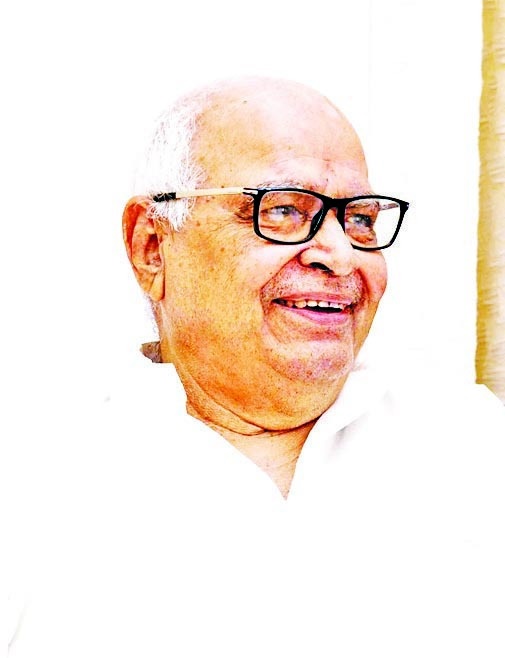
Hridaynarayan Dixit,
Former Assembly Speaker UP
For a long time, Christian and Islamic preachers have been demanding backward class facilities even for converts. High courts of different states have expressed similar views and given decisions, but the political party system has been demanding reservation facility for the converted person also. This time the court has made it clear that mere conversion does not change the class of a person and the converted person cannot be considered a member of the backward class.
Reservation does not come through conversion. A person who converts to Islam may change his religion and become a Muslim, but he no longer remains a member of the backward class. The Madras High Court has said that Christian missionaries and Islamic preachers have for centuries praised their respective sects for having social equality. There is equality. There is no discrimination. There is caste system among Hindus. The court has said that its opinion is that describing some classes as backward and some as advanced is contrary to the teachings of the Quran. Then the claim of Islam is to create an equal society.
For a long time, Christian and Islamic preachers have been demanding backward class facilities even for converts. High courts of different states have expressed similar views and given decisions, but the political party system has been demanding reservation facility for the converted person also. This time the court has made it clear that mere conversion does not change the class of a person and the converted person cannot be considered a member of the backward class.
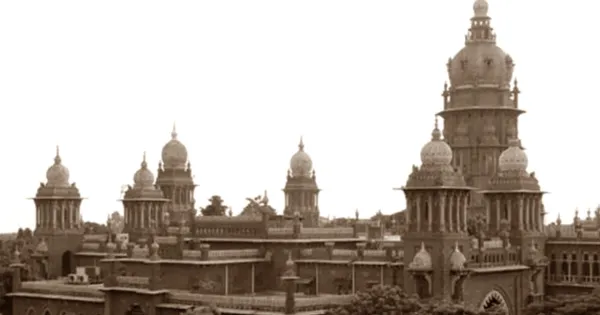
The Madras High Court has termed the Tamil Nadu government’s March 2024 order as unconstitutional and canceled it. In the government order, the person who converted was considered a member of the Muslim backward class. A provision was also made to recognize the converted persons as backward classes. This famous decision was given by the bench of Madras High Court on June 25. The court has given this decision after due consideration in a case in which a person, who was born in a Hindu family, had later left Hinduism and changed his name to Sameer Ahmed.
After becoming a Muslim, he described himself as a member of the Muslim Lebbai community. He demanded a backward class certificate from his tehsildar. The Tehsildar rejected his application. Then he reached the High Court. The Tamil Nadu government had made a provision in its order that if people coming from Scheduled Castes, Other Backward Classes or denotified communities convert and adopt Islam, they can also be given the benefit of reservation as backward classes.
The government’s argument was that this would protect the rights of people who convert, but the court did not accept this argument and made it clear that the basis of reservation is not on creed or religion, but on social and educational backwardness. The court made it clear that creating a new category by merging constitutional categories like Scheduled Caste, Other Backward Class and Extremely Backward Class is contrary to the basic structure of the Constitution.
Madras High Court itself, citing the 1951 decision, had said, ‘When a Hindu embraces Islam, he merely becomes a Muslim. His prestige in the society is not based on caste. As soon as he leaves Hinduism, he ceases to be a member of his original caste. The issue of reservation also came up in the Constituent Assembly of India. The country was divided on religious basis only. The Constituent Assembly was considering reservation in very sad moments. The Constituent Assembly had formed a committee under the leadership of Sardar Patel to consider the issue of reservation for minorities. The committee had completely rejected religious reservation in its recommendation.
Sardar Patel, Chairman of the Committee on Minority Rights and Fundamental Rights of the Assembly, presented the report of the Committee in the Constituent Assembly (May 25, 1949). The debate took place for two consecutive days (25 and 26 May, 1949). Jagat Narayan Lal said, “India will be a secular state. After that there should be no demand for reservations. As far as Scheduled Castes are concerned, they have been given reservation only because they are economically, socially and educationally backward.”
Most of the members justified the temporary reservation of Scheduled Castes, but cursed the basic spirit of ‘reservation’. Naziruddin Ahmed said, “I think that reservations of any kind are inimical to healthy political development. They give rise to a kind of inferiority complex. … Sir, reservation is a defensive measure by which the thing it is meant to protect is destroyed. As far as the Scheduled Castes are concerned, we have no complaint.”
J.H. Lari, while advocating Muslim reservation, said, “You are concerned about the interests of Scheduled Castes. You do not care about the interests of Muslims. Along with the principle of reservation of seats for Scheduled Castes, do you not also accept that reservation is not against the national interests?” Reservation is against national interests. Reservation is a special temporary measure. Its advantages and disadvantages were not properly considered. The makers of the Constitution made it a tool for social reconstruction. Scheduled Castes/Tribes got temporary reservation based on birth.
Arrangements were made to form a commission to investigate the conditions of backward classes (Article 340). During Pt. Nehru’s time (1953), Kaka Kalelkar Commission was formed to search for backward classes. Many members of the Commission disagreed on making birth caste the basis of backwardness. The Commission wrote to the President, “The caste system is an obstacle to progress towards an equal society. By considering certain castes as backward, we may perpetuate discrimination on the basis of caste system.”
The Nehru government talked about finding some other criterion other than caste to check the basis of backwardness. The second commission was formed under the leadership of VP Mandal. In the Mandal Commission Report (1980), ‘caste’ was made the basis of backwardness. The commission also prepared a list of backward castes. Mandal made the surprising point of keeping the national programs for poverty alleviation separate from reservation, “Under the national problem of poverty alleviation comes the problem of upliftment of Other Backward Castes. But this is only partially true. The deprivation of Other Backward Castes is a separate big national problem.” (Report, p. 62). That means poverty of the rest of the people of the country is a separate problem. Poverty of backward castes is also worth considering, but reservation on religious basis is not acceptable. (These are the personal views of the author)

Comments are closed.