
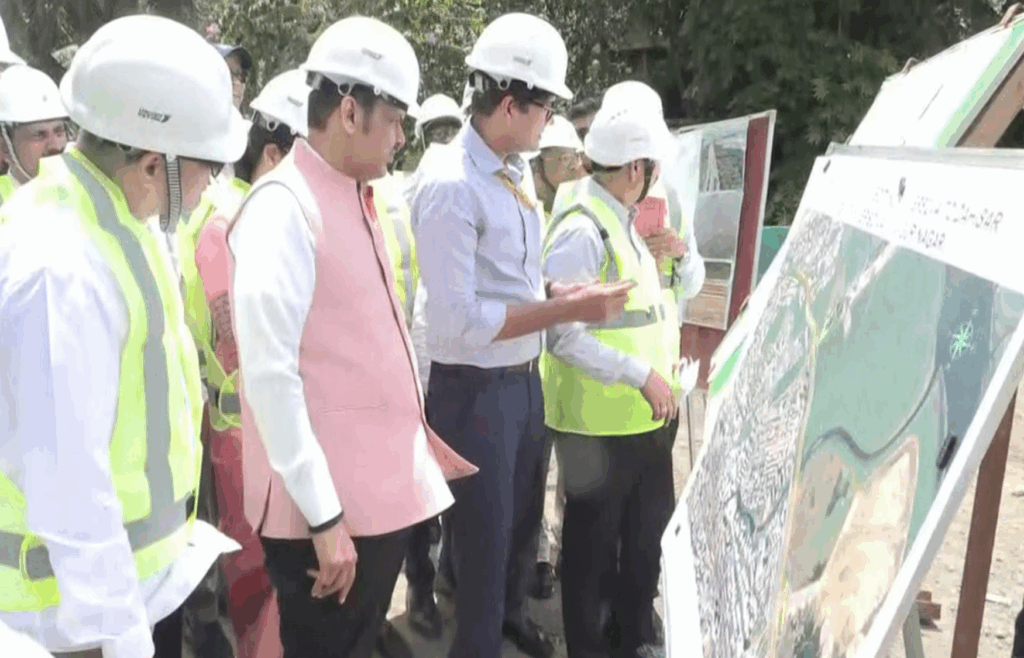

Maharashtra Chief Minister Devendra Fadnavis has expressed confidence that the ambitious Mumbai Coastal Road Project will be completed by late 2028, marking a major milestone in the city’s ongoing infrastructure transformation. During a recent inspection of the under-construction northern section of the project, the Chief Minister reviewed progress and outlined how the coastal corridor is expected to significantly ease traffic congestion while improving connectivity across the Mumbai Metropolitan Region. The project is among the largest urban road infrastructure developments currently underway in India.
Chief Minister Reviews Progress
During the site visit, Fadnavis inspected the ongoing construction of the Versova-Dahisar section of the Mumbai Coastal Road. Officials briefed him on construction progress, environmental clearances, land acquisition, and the mobilisation of manpower and machinery required for the remaining phases of the project. According to the Chief Minister, the government is targeting completion by October-November or December 2028.
The inspection reflects the state’s focus on accelerating key infrastructure projects that are expected to improve urban mobility and support Mumbai’s long-term growth.
A Signal-Free Route Across Mumbai
Once completed, the Mumbai Coastal Road will provide seamless, signal-free connectivity from Nariman Point in South Mumbai to Bhayandar in the northern part of the Mumbai Metropolitan Region. The project is designed to reduce dependence on the heavily congested Western Express Highway, which currently handles a significant portion of the city’s daily traffic.
Officials believe the corridor will offer a faster alternative for commuters travelling between South Mumbai and the western suburbs, helping reduce travel times and improve traffic distribution across the city.
Transforming Travel Across the City
The full Mumbai Coastal Road project will span approximately 29.2 kilometres along the city’s western coastline. Once operational, travel time between South Mumbai and the northern suburbs is expected to fall dramatically—from more than two hours during peak periods to around 40 minutes.
The corridor is being developed as an eight-lane, high-speed, access-controlled roadway designed to support increasing traffic demand while improving overall commuting efficiency.
More Than Just a Road Project
The state government also plans to develop areas surrounding the Coastal Road into modern commercial and business zones. According to Fadnavis, the objective is to create new economic hubs that complement existing business districts such as the Bandra-Kurla Complex (BKC).
The project is expected to stimulate investment, improve connectivity to commercial centres, and support future urban expansion in Mumbai and surrounding regions.
Environmental Measures and Challenges
Like many large infrastructure projects, the Coastal Road has faced environmental scrutiny. Authorities have stated that necessary environmental clearances have been obtained and compensatory measures, including mangrove plantation initiatives, are being implemented alongside construction activities.
Officials maintain that environmental safeguards remain an integral part of project execution as construction progresses.
A Key Part of Mumbai’s Infrastructure Future
The Mumbai Coastal Road Project represents a crucial component of the city’s broader infrastructure strategy, which includes metro rail expansion, sea links, tunnels, and expressways. Together, these initiatives aim to reduce congestion, improve mobility, and support economic growth in one of the world’s most densely populated urban regions.
If completed on schedule, the Coastal Road could become one of Mumbai’s most transformative transportation projects, reshaping how millions of residents travel across the city every day.
Summary
Maharashtra Chief Minister Devendra Fadnavis has said the Mumbai Coastal Road Project is expected to be completed by late 2028. The 29.2-km corridor will provide signal-free connectivity from Nariman Point to Bhayandar and is expected to cut travel time from over two hours to around 40 minutes. The project is designed to ease pressure on the Western Express Highway, improve urban mobility, and support Mumbai’s future economic growth.
Image Source
Comments are closed.