
Asia’s best-performing currency expected to weaken further against Singapore dollar in 2026

Yaw Poh Ling, a Singapore-based administrative worker, sends money to her parents in Malaysia every month. As fluctuations between the Singapore dollar and the Malaysian ringgit have become more pronounced, the 52-year-old has become more strategic about when she makes her transfers.
“I always check the exchange rate on my CIMB Bank app before making a transfer,” The Straits Times quoted Ling as saying.
Her strategy could become even more rewarding in the coming months, with analysts expecting the ringgit to weaken further against the Singapore dollar.
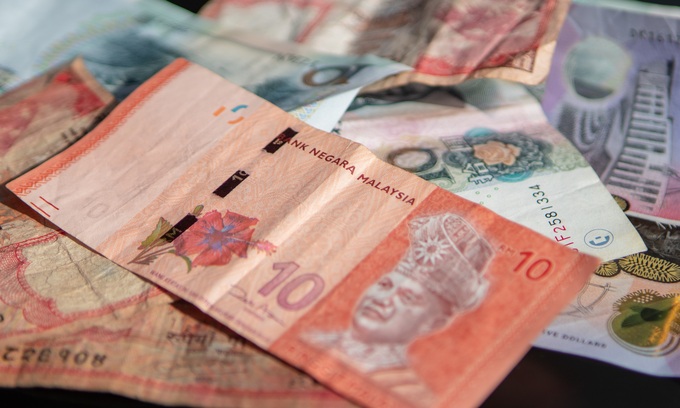
Various denominations of Malaysian ringgit banknotes. Photo from Pexels |
The ringgit, Asia’s best-performing currency in 2025, according to The Star, has weakened 0.2% against the Singapore dollar so far this year after strengthening 4% in 2025. It traded at 3.17 ringgit per Singapore dollar on June 26, close to its six-month low of 3.21 reached on June 22.
Against the U.S. dollar, the ringgit fell to 4.1349 on June 24, its weakest level since November 2025, after depreciating 1.7% over the previous week despite record foreign bond inflows. MBSB Research said the currency has retreated sharply from its Feb. 27 peak of 3.8847, moving further away from the psychologically important RM4 level.
Bank Negara Malaysia announced on June 24 that it would step up measures to support the ringgit, including encouraging companies to repatriate and convert more overseas earnings into the local currency amid expectations of a stronger U.S. dollar.
The bank said the ringgit’s recent weakness was driven mainly by external factors rather than domestic economic conditions. Its Financial Markets Committee said an interim peace agreement between the U.S. and Iran had eased geopolitical uncertainty, but investors remained focused on the prospect of higher U.S. interest rates amid persistent inflation risks.
The committee also said foreign investors have taken a wait-and-see approach to Malaysian assets ahead of state elections in Johor and Negeri Sembilan, adding pressure on the ringgit in June.
OCBC foreign exchange strategist Christopher Wong said the central bank’s latest measures may provide some support but are more likely to stabilize markets than trigger a lasting rebound, as expectations of higher U.S. interest rates, rising Treasury yields and cautious investor sentiment continue to weigh on the currency, according to The Business Times.
He expects the ringgit to weaken to around 3.2 against the Singapore dollar by the end of 2026.
A weaker ringgit could also encourage more Singaporeans to shop across the border. DBS senior currency economist Philip Wee said Malaysia favors a stronger ringgit as a sign of economic resilience, but the currency remains more vulnerable than the Singapore dollar if the Federal Reserve raises interest rates at its September policy meeting as expected.
CMC Markets sales trader Oriano Lizza said expectations of another U.S. rate hike have boosted demand for U.S. assets, drawing capital away from emerging markets such as Malaysia. Lower oil prices have also weighed on the ringgit because Malaysia is a net energy exporter.
Lizza said the Singapore dollar has weakened less than the ringgit because it is managed against a basket of currencies. He expects the Malaysian currency to weaken to between 3.20 and 3.25 against the Singapore dollar by the end of 2026, assuming there are no major policy surprises.

Comments are closed.