
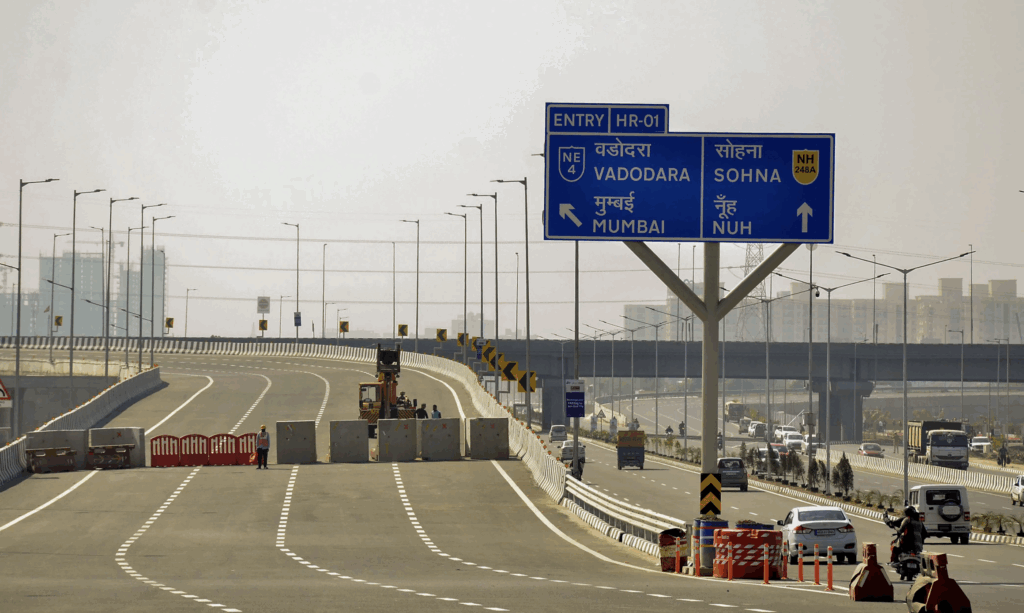

A major transportation milestone is on the horizon for western India. Maharashtra Chief Minister Devendra Fadnavis has announced that the Mumbai-Vadodara section of the Delhi-Mumbai Expressway is expected to be fully operational by August 31, 2026, potentially cutting travel time between the two cities from around eight hours to just four hours. The development is expected to transform road travel, logistics, and economic connectivity between Maharashtra and Gujarat.
4-Hour Mumbai-Vadodara Journey Set To Become Reality
Once the remaining sections are completed and opened to traffic, motorists will be able to travel between Mumbai and Vadodara in approximately four hours, nearly half the current travel time. The expressway is designed for high-speed travel and will provide a faster, safer, and more efficient alternative to existing highway routes.
The reduction in travel time is expected to benefit both personal and commercial travellers, significantly improving connectivity between two of western India’s most important economic regions.
Maharashtra Stretch Nearing Completion
According to Fadnavis, the Maharashtra portion of the Vadodara-Mumbai section spans about 157 kilometres and is being developed at an estimated cost of ₹24,000 crore. The project has been divided into seven construction packages, five of which have already been completed and opened for traffic. The remaining two packages are expected to be finished by August 2026.
Officials are targeting August 31, 2026, as the date for opening the entire Maharashtra stretch to vehicles.
Part Of India’s Biggest Expressway Project
The Mumbai-Vadodara corridor is a key component of the larger Delhi-Mumbai Expressway, one of India’s most ambitious infrastructure projects. Stretching approximately 1,350 kilometres, the expressway aims to reduce Delhi-Mumbai travel time from nearly 24 hours to around 12 hours when fully operational.
The access-controlled corridor passes through multiple states and is expected to become a critical freight and passenger transportation artery connecting northern and western India.
Big Boost For Industry And Logistics
Government officials believe the expressway will deliver substantial economic benefits by improving freight movement and reducing transportation costs. Faster road connectivity is expected to benefit industries, exporters, logistics companies, and businesses operating across Maharashtra and Gujarat.
The corridor also connects several industrial clusters, manufacturing hubs, ports, and logistics centres, making it an important catalyst for regional economic growth.
More Than Just Faster Travel
Apart from reducing travel time, the expressway is expected to ease congestion on existing highways, improve road safety, and support future economic expansion. Modern design features, controlled access points, and high-speed infrastructure are expected to enhance the overall travel experience for commuters and commercial operators alike.
Officials also expect the project to strengthen supply chains and improve connectivity between major commercial centres in western India.
Countdown To August Begins
With most of the construction already completed, attention is now focused on the final two packages that remain under development. If the August deadline is achieved, the Mumbai-Vadodara journey could soon become one of the fastest intercity road trips in India.
For commuters, businesses, and logistics operators, the expressway represents more than just a new road—it signals a major upgrade to the country’s transportation infrastructure and a glimpse into the future of high-speed road travel in India.
Summary
The Mumbai-Vadodara section of the Delhi-Mumbai Expressway is expected to be fully operational by August 31, 2026, according to Maharashtra Chief Minister Devendra Fadnavis. Once completed, the corridor will reduce travel time between the two cities from around eight hours to just four hours. The project forms part of the larger Delhi-Mumbai Expressway and is expected to boost logistics, industrial growth, and regional connectivity across western India.
Comments are closed.