
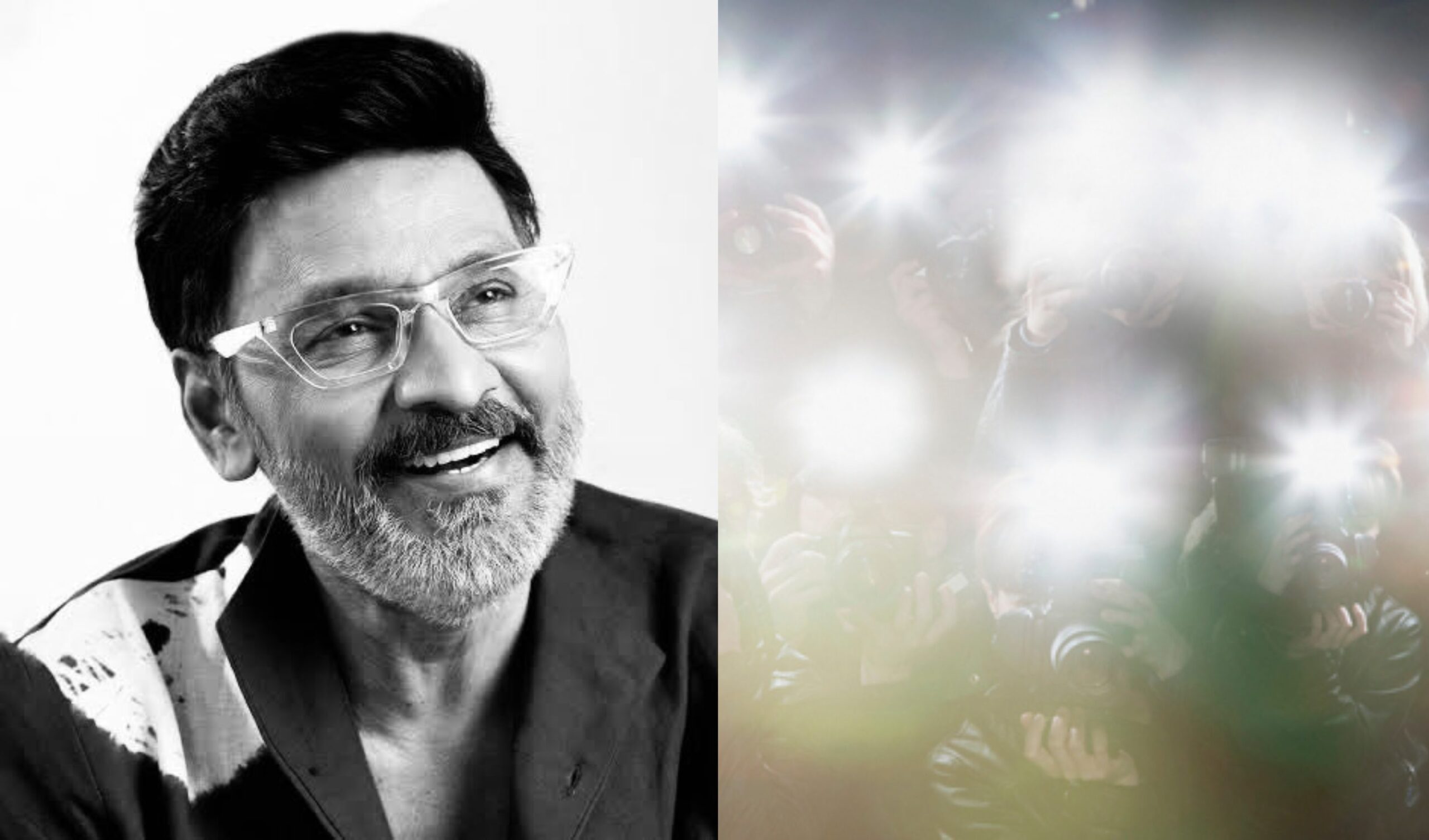
Funeral paparazzi: With Bhagyaraj’s funeral, Tamil cinema’s grief was turned into circus again

When veteran filmmaker-actor K Bhagyaraj passed away on June 27 following a sudden heart attack, everyone, including his family, friends, and fans, was shocked, as he was only recently spotted at a celebrity wedding in Goa. Added to the sadness was the fact that the industry only suffered the death of Iyakunar Imayam Bharathiraja, who was also the mentor of Bhagyaraj. From CM Vijay to opposition leaders, including Stalin, to cinema superstars Rajinikanth and Kamal Haasan, all the leading faces of Tamil Nadu attended the event, where the media houses and paparazzi, turned out to be intrusive elements.
The cameras — jostling, zooming in on tears, and turning a private moment of loss into a spectacle for views and clicks — led to a wave of outrage that once again forced the film industry to confront an uncomfortable question: when does coverage become intrusion?
Actor Radikaa Sarathkumar, who shared a 50-year friendship with Bhagyaraj and was among the first to reach his home after his passing, found herself pleading with the media even as she helped the family move his mortal remains from the hospital.
“If you want drama for the sake of TRP ratings, I will deliver that through films. Here, give us some privacy, please,” she screamed, visibly devastated amidst the crowd. In another instance, she was seen angry and fuming through the crowd, pushing and punching her way through the intrusive cameraperson.
Radikaa also took to social media to write, “A place where all needed to digress and mourn in silence, turned into a circus for all who came to pay their respects. Where and when do we change or rather changed to this callousness,” she wrote, calling on the government and the film industry to sit down and chart protocols to “give dignity to the departed soul.” She also demanded a restraining order against funeral paparazzi.
Suhasini’s slipper warning
Meanwhile, another video of actress-filmmaker Suhasini pulling a man who was holding a camera at the window of the funeral van also irked many online. In a widely circulated video from the funeral procession, she can be seen physically shoving media personnel who attempted to capture the event. At one point, she was heard warning them: “I will give you a tight slap with a slipper.” It was a raw, unfiltered expression of the frustration that many in the industry have been quietly nursing for years.
In a detailed statement later, Radikaa articulated what many felt. “With the influence of social media and the race to deliver news instantly… competing over who reports first, who zooms in more on people’s grief, and who can attract more viewers with dramatic captions, one cannot help but wonder whether society is moving towards a state where it is unable to respect genuine human emotions and lacks empathy and understanding,” she said.
This is not the first time
The Bhagyaraj funeral controversy did not emerge in a vacuum. Tamil cinema has witnessed this pattern of grief being converted into content with disturbing regularity.
In March 2025, the Tamil Film Active Producers Association was compelled to issue a strong statement condemning the media coverage of the funeral of Manoj Bharathi, son of legendary director Bharathiraja, who passed away at 48 while recuperating from heart surgery. “What is the need to show someone’s grief and tears in such detail? Does a person’s sorrow only have to be viewed as a means of making money?” the association asked. So severe was the criticism that the body went as far as recommending that media personnel be banned from funerals altogether.
Also Read: Breaking the superstar mould: How Bhagyaraj redefined the Tamil film hero
But even that was not the first instance. In September 2023, the death by suicide of music composer Vijay Antony’s 16-year-old daughter reduced the media to its worst. Tamil channels broadcast events live from inside Vijay Antony’s home, went as far as livestreaming the digging of the child’s grave, and speculated openly about the reasons for her suicide — violating both Juvenile Justice laws and basic human decency. The Tamil Nadu Child Rights Watch condemned the publication of the child’s photo by several outlets. The Nadigar Sangam, in a scathing statement, said the behaviour of some media outlets “led to distress” and that the coverage made “many react with disgust.” In the aftermath, entertainment platform Behindwoods publicly apologised and announced it would no longer cover the funerals of public personalities.
Not just a Tamil Nadu problem
The malaise is not confined to Tamil Nadu. Kerala too found itself in the grip of a similar controversy recently, following the funeral of beloved actor Salim Kumar. Videos from the funeral showed cameras and microphones crowding around the grieving family, prompting Kumar’s son Chandu to repeatedly and emotionally ask media personnel to step back. The visuals went viral and triggered a broader public debate. Kerala Chief Minister V D Satheesan, who was present at the funeral, lent his voice to the criticism. The Kerala Police followed up with a formal advisory, warning that capturing or circulating private images without consent could attract legal action under Section 66E of the Information Technology Act, which provides for imprisonment of up to three years and a fine of up to Rs 2 lakh.
Also Read: Bharathiraja obit | Why the filmmaker was more than the sum of his films
Time for binding protocols
Across these incidents, a clear pattern emerges, public outrage, industry condemnation, calls for restraint, and then silence until the next funeral. Radikaa’s call for the government and the industry to jointly draft binding protocols may well be the most concrete demand to emerge from this latest episode. Without a clear protocol and policy in action, we would soon be finding ourselves frustrated in another such funeral, instead of grieving.

Comments are closed.