
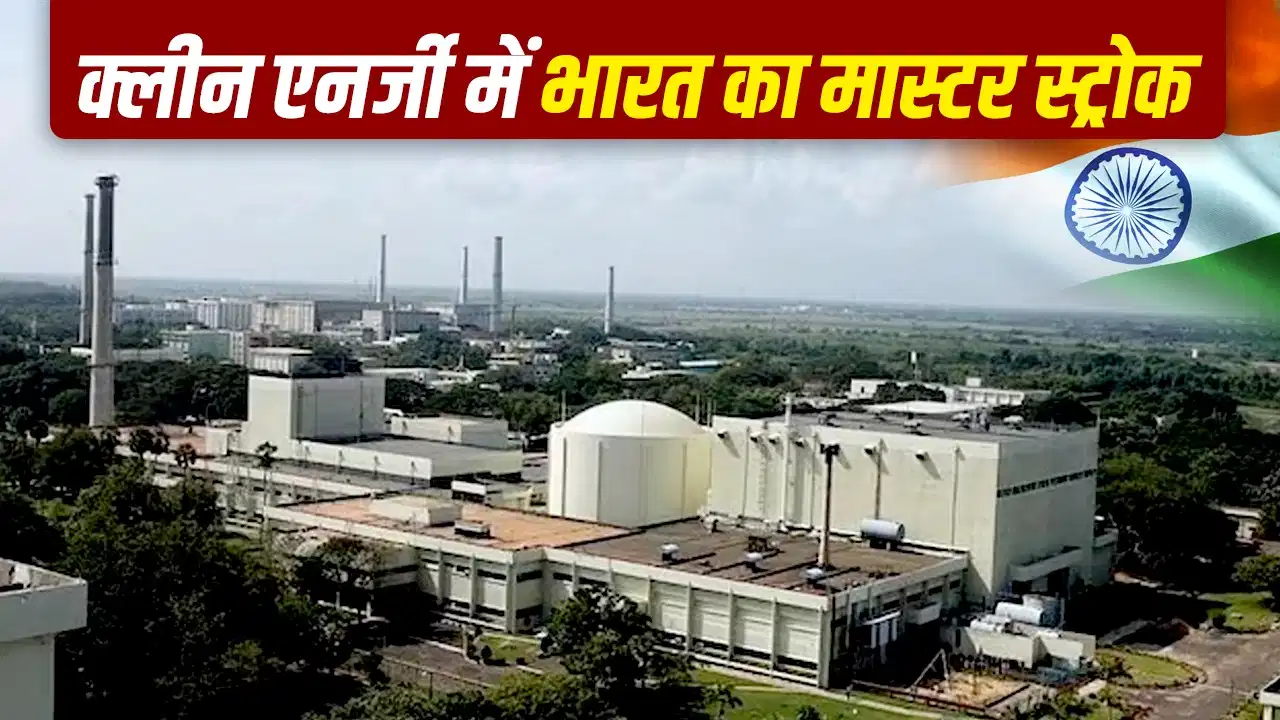
Will India become self-reliant with hydrogen plant? Know the complete story of this mega project

Knews Desk- Located in Kalpakkam, Tamil Nadu Indira Gandhi Center for Atomic Research (IGCAR) The hydrogen plant started in 2017 is being considered a big step in India’s energy journey. This is one of the world’s first pilot projects in which hydrogen will be produced using the heat from a nuclear reactor. If this project is successful, similar plants can be set up in many parts of the country in future. India is expected to get huge benefits from this in many areas like energy, environment, industry and employment.
Dependence on energy imports will reduce
India imports a large part of its oil and gas needs from abroad. This causes huge foreign exchange expenditure every year. Increasing domestic capacity of hydrogen production will reduce dependence on other countries for energy. This will not only strengthen energy security, but will also reduce the impact of fluctuations in oil prices in the global market. In the long run, India can move towards becoming self-reliant in the energy sector.
Environmental protection will get a boost
Hydrogen is considered the clean fuel of the future because its use does not emit carbon dioxide. Especially green hydrogen is very friendly to the environment. Increasing use of this technology will reduce air pollution and India will be able to take strong steps towards achieving its climate goals. This will also help in providing a clean environment to the coming generations.
Industries will get new option
Hydrogen is used not only as a fuel but also in the fertilizer, steel, chemical and pharmaceutical industries. Using hydrogen instead of coal in the steel industry will reduce pollution and make the production process cleaner. This can reduce the costs of industries and make Indian products more competitive in the international market.
Employment and skill development opportunities
A large number of engineers, technical experts and other employees will be required for the construction and operation of such a large plant. Apart from this, new employment opportunities will also be created in transportation, maintenance, logistics and other services. Besides, skill development programs related to hydrogen technology will give the youth an opportunity to learn new technology.
Infrastructure will expand
Along with the hydrogen plant, there will also be development of pipelines, storage tanks, transportation networks and other facilities. This will improve roads, electricity and other basic facilities in the surrounding areas. Local industries and rural areas will also benefit from this.
Promotion of foreign investment and research
India’s growing capacity in hydrogen technology could attract foreign investors. This will bring new technology and investment into the country. Also, IIT and other research institutes will get the opportunity to work on the data related to this project, which will enable the development of new technologies for hydrogen production and storage.
Changes in power and transportation sector
Hydrogen is also an effective medium to store energy. Excess solar and wind energy can be used to make hydrogen and can then be used to generate electricity again when needed. This will make the electricity grid more stable. Apart from this, in future heavy vehicles like buses, trucks and trains can be run on hydrogen. This will reduce diesel and petrol consumption and make public transport cleaner and more economical. Overall, this hydrogen plant in Tamil Nadu is not just a scientific achievement for India, but an important initiative towards energy self-reliance, environmental protection, industrial development and employment generation. If this pilot project is successful, India can make its strong mark among the leading countries of the world in the field of clean energy.

Comments are closed.