
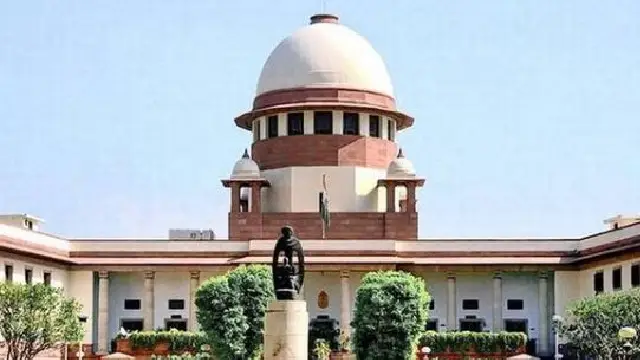

Supreme Court: Citing Fake AI-Generated Judgments Without Verification Is Lawyer Misconduct
In a landmark ruling, the Supreme Court of India has taken a strict stand against the use of fake or AI-generated judicial precedents in legal proceedings. The apex court held that it is professional misconduct for advocates to cite AI-generated judgments without verifying their authenticity and warned that judges must also avoid relying on such fabricated material while deciding cases.
A Bench comprising Justice P.S. Narasimha and Justice Alok Aradhe emphasized a “zero-tolerance” policy toward fake or hallucinated AI-generated legal citations. The Court observed that any judgment based on non-existent precedents cannot be treated as a valid judicial decision and must be set aside to protect the integrity of the legal system.
The observations came while hearing an appeal arising from insolvency proceedings involving Essel Infraprojects Ltd. The Supreme Court found that the National Company Law Tribunal (NCLT) and the National Company Law Appellate Tribunal (NCLAT) had relied on several judicial citations that either did not exist or were incorrectly generated using artificial intelligence. As a result, the Court quashed both orders.
The Court made it clear that lawyers have a professional duty to verify every legal precedent before citing it. It also warned that judges must independently ensure that authorities relied upon in court are genuine. According to the Bench, even the slightest reliance on fabricated AI-generated material undermines the sanctity of judicial decision-making and the rule of law.
While expressing concern over the increasing use of artificial intelligence in legal practice, the Supreme Court clarified that it is not against the legitimate use of AI. Instead, its objection is to presenting AI-generated hallucinations or fabricated case laws as authentic judicial precedents without proper verification.
The Court has also directed the Bar Council of India to examine the issue and frame appropriate guidelines, including disciplinary measures, to prevent advocates from citing unverified AI-generated judgments in future cases. The ruling is expected to influence how AI tools are used in India’s legal profession and reinforce the importance of human verification in court proceedings.
Comments are closed.