

Its GNI per capita last year was US$4,970, up from $4,490 in 2024, the bank said in a statement Wednesday.
“Vietnam tells a story of growth. Powered by an export-led model, the country saw exports surge by more than 15% in both 2024 and 2025, with its GDP growing at 7% and 8% respectively.”
The GNI expanded at an average of 10% annually between 2021 and 2025, one of the strongest sustained runs in the region.
Vietnam aims to become a developing country with a modern industry and upper-middle-incomestatus by 2030, before becoming a high-income developed country by 2045.
To achieve that goal, the government is targeting annual economic growth of at least 10% in the coming years.
This year, the World Bank assessed 218 economies, with six countries upgraded to higher income categories.
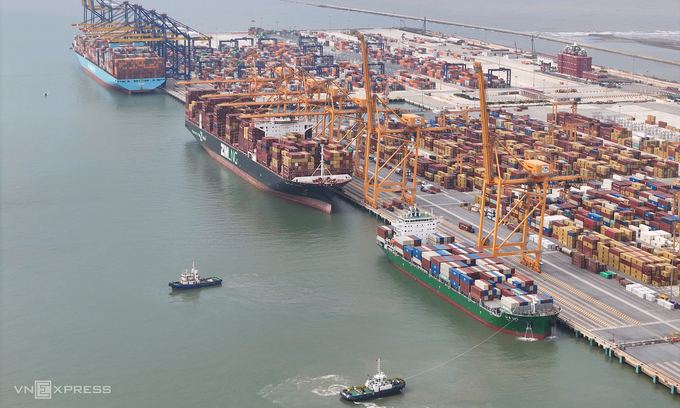
Lach Huyen Terminal, Hai Phong City, June 23, 2026. Photo by VnExpress/ Le Tan |
Besides Vietnam, the Philippines, Sri Lanka, Jordan, and Micronesia were also reclassified asupper-middle-income countries.
The Philippines’ GNI per capita was $4,850 in 2025, up $380 from the previous year.
The country recorded average annual GDP growth of 5.8% during the last five years, reflecting broad-based expansion across key industries rather than a boom driven by a single sector.
The World Bank has four income groups: low income, lower-middle income, upper-middle income, and high income.
For this year’s classification, the GNI per capita threshold for lower-middle-income economies ranges from US$1,176 to US$4,635, while the upper-middle-income category spans US$4,636 to US$14,375.
The thresholds were raised slightly from the previous year to factor in inflation. The classifications determine countries’ eligibility for concessional financing and development assistance and serve as a benchmark for tracking global economic trends.

Comments are closed.