
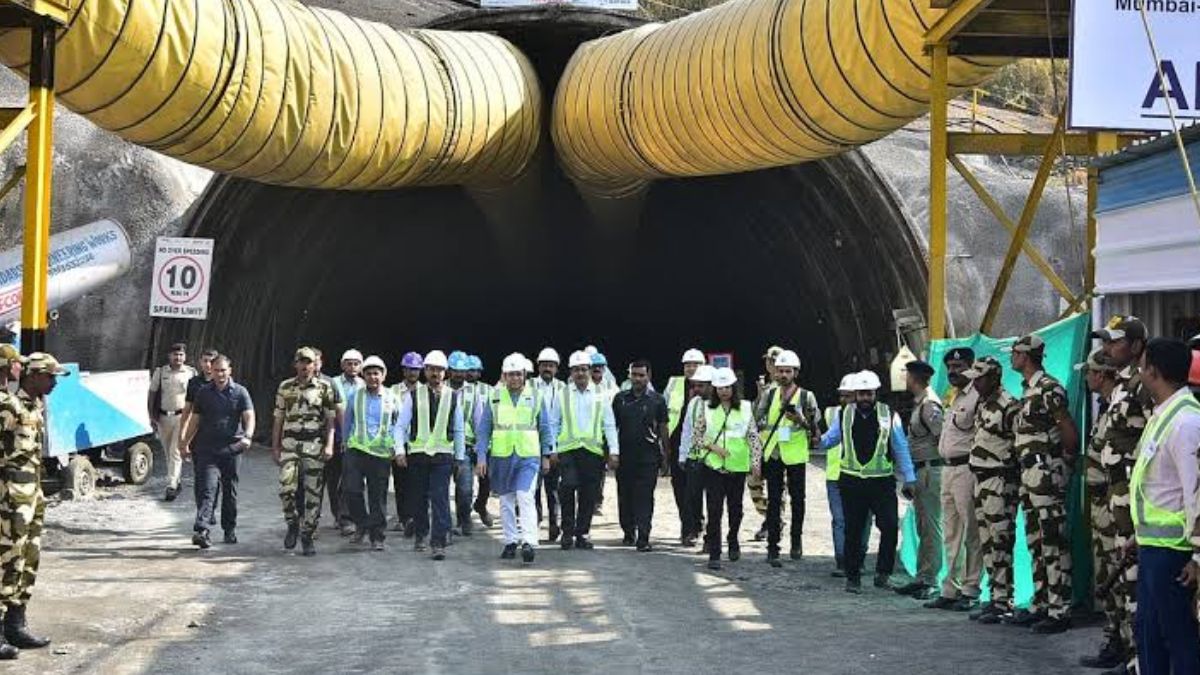

Railway Minister Ashwini Vaishnaw will inaugurate underground tunnel-boring work for the Mumbai-Ahmedabad High-Speed Rail Corridor on Sunday, marking a significant milestone in India’s first bullet train project.
The ceremony will launch tunnel excavation between Vikhroli and the Bandra Kurla Complex (BKC) high-speed rail station in Mumbai. The work will mark the first deployment of a Tunnel Boring Machine (TBM) for the underground section of the Mumbai-Ahmedabad Bullet Train project.
The underground stretch is being constructed by Afcons Infrastructure Limited, which is executing a 20.37-kilometre tunnel, including a 7-kilometre undersea section beneath Thane Creek. The tunnel will be built at a depth of approximately 65 metres below ground level, making it one of the most technically challenging components of the high-speed rail corridor.
The two customised German-made Tunnel Boring Machines, imported via the sea route from China in March 2026, will be used for the excavation. The specialised machines have been designed to handle Mumbai’s complex geological conditions and are expected to improve the speed, safety and precision of underground construction.
The Mumbai-Ahmedabad High-Speed Rail Corridor, being developed by the National High Speed Rail Corporation Limited (NHSRCL) with technical and financial assistance from Japan, spans about 508 kilometres and is designed to connect Mumbai and Ahmedabad in around two hours at operational speeds of up to 320 km/h.
Construction work on the project has gathered pace over the past year, with civil works progressing across Gujarat and Maharashtra. The underground tunnel in Mumbai is considered one of the most complex engineering segments of the corridor because of dense urban development and the undersea crossing.
The launch of TBM operations represents a key engineering milestone as the project moves into the next phase of construction. Once completed, the Mumbai-Ahmedabad Bullet Train will become India’s first operational high-speed rail service, significantly reducing travel time between the two financial and commercial hubs.

Comments are closed.