
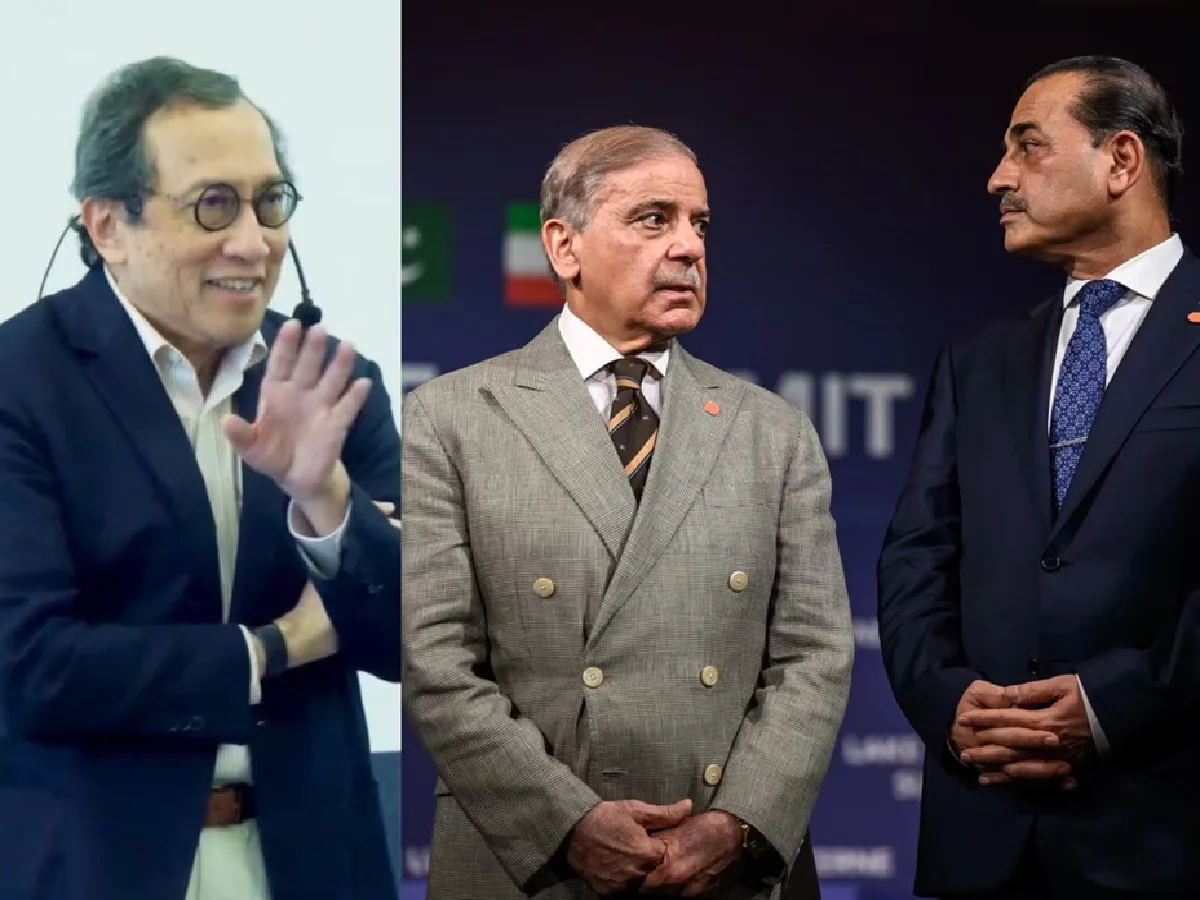
‘Without Nukes, Nobody Would Care About You’: Singapore’s Former Envoy Labels Pakistan a ‘Failed State’:

In a blistering assessment that has sent shockwaves through diplomatic circles, former Singaporean Ambassador and Permanent Secretary, Bilahari Kausikan, has branded Pakistan a ‘failed state.’ Speaking at a recent international forum, the veteran diplomat did not mince words, asserting that Pakistan’s relevance on the global stage is tethered solely to its nuclear arsenal. Kausikan’s comments came as a sharp rebuttal to Pakistani journalists, exposing the stark reality behind the nation’s fragile economy, military dominance, and internal instability.
‘Diplomatic Posturing Doesn’t Feed the Masses’
Addressing Pakistan’s recent attempts to position itself as a ‘peacemaker’ amid regional conflicts, Kausikan offered a harsh reality check. While acknowledging that Islamabad’s leadership is eager to grasp any opportunity for diplomatic relevance, he noted that such gestures are largely superficial. “Diplomatic successes do not feed the Pakistani people,” he stated, emphasizing that the country’s crises are deeply structural. According to Kausikan, Pakistan’s persistent woes are rooted in systemic economic mismanagement and the dangerous state-sponsored tolerance of extremist jihadist elements, rather than external diplomatic challenges.
The Nuclear Deterrent: The Only Shield of Relevance
Perhaps the most stinging part of Kausikan’s critique was his assertion regarding Pakistan’s geopolitical standing. He argued that the international community maintains interest in Pakistan exclusively because it possesses nuclear weapons. He clearly posited that should Pakistan lose its status as a nuclear-armed state, it would hold virtually no significance in global affairs. To him, the nuclear bomb serves as the only factor preventing the world from completely disregarding the nation’s impending collapse.
Refuting the ‘Geography’ Excuse
When challenged by Pakistani media representatives who blamed the country’s struggling economy on its complex geography—sandwiched between India, Afghanistan, Iran, and China—Kausikan dismissed the argument as a convenient “excuse.” He categorized this narrative as a classic symptom of a nation unable to take responsibility for its own trajectory. He noted that countries that habitually scapegoat their neighbors or external powers for their internal failures are doomed to perpetual stagnation.
A Feudal System Run by ‘Useless’ Leadership
Kausikan was equally scathing regarding Pakistan’s internal governance. He described the civilian political class as essentially “useless,” lacking both the power and the courage to effect real change. In his view, the military acts as the only anchor preventing an immediate total collapse, yet it remains the primary driver of the nation’s systemic problems. By highlighting the country’s deep-seated feudal mindset, he painted a picture of a nation stuck in a cycle of regression. His comments have reignited the global debate over whether Pakistan can ever reform its governance structure or if it is destined to remain a cautionary tale of institutional decay.

Comments are closed.