
‘Wall of Trees’ Explained: Why This Massive Green Barrier Is Being Compared To China’s Great Wall

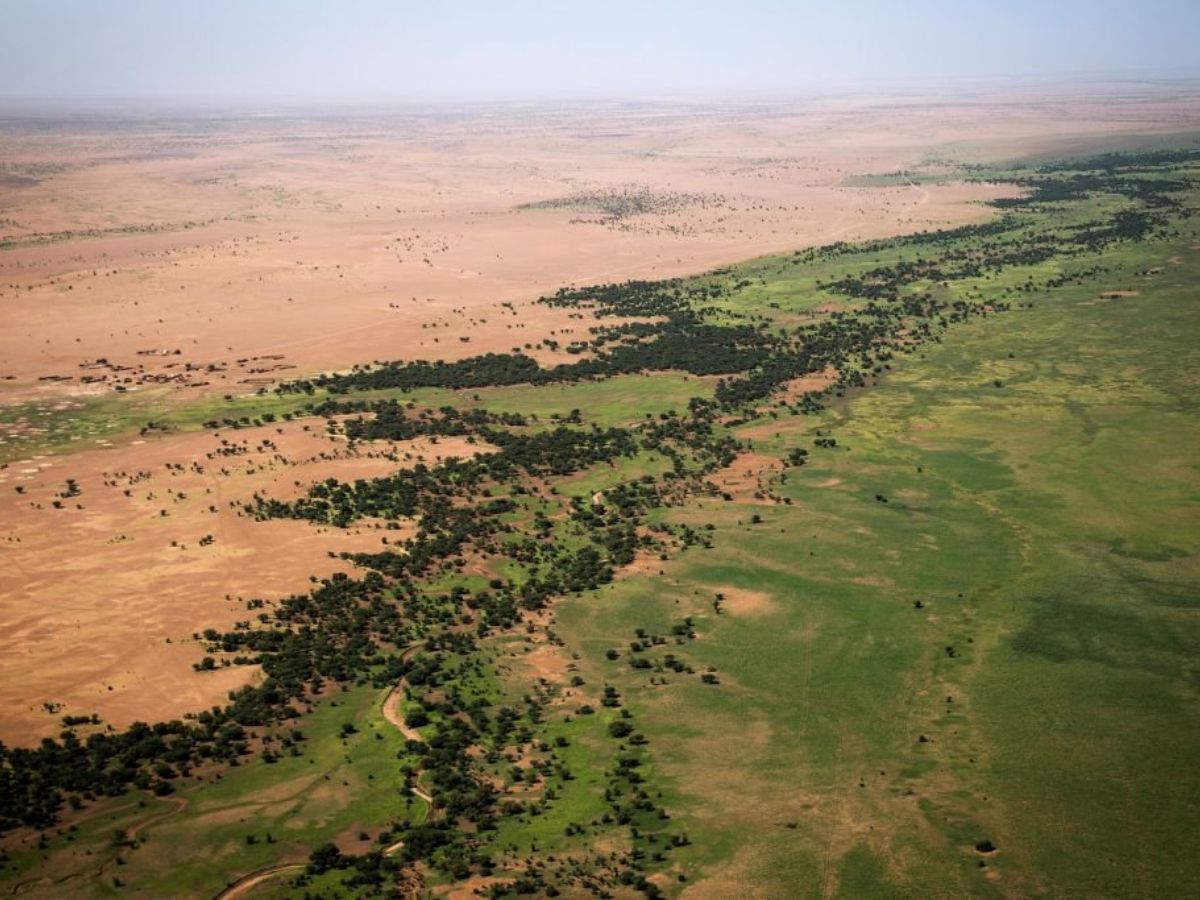
Africa is building one of the world’s biggest environmental restoration projects through the Wall of Trees, an ambitious initiative stretching around 8,000 kilometres across the Sahel from Senegal on the Atlantic coast to Djibouti on the Red Sea. The project goes far beyond planting trees. It aims to restore degraded land, stop desertification, improve food security, create jobs and help millions of people adapt to climate change. Today, the Wall of Trees combines forests, grasslands, wetlands and farmland restoration to revive one of the planet’s most climate-vulnerable regions.
What the Wall of Trees is and why it is compared to China’s Great Wall
Launched by the African Union in 2007, the Wall of Trees was originally envisioned as a continuous belt of trees roughly 8,000 kilometres long and about 15 kilometres wide across the Sahel, the vast semi-arid region separating the Sahara Desert from the greener savannas further south.
Its enormous scale is why it is often compared to China’s Great Wall. However, unlike the stone structure built for defence, this is a living green barrier designed to reconnect landscapes, restore ecosystems and protect communities. Over time, scientists concluded that restoring entire ecosystems would be far more effective than planting one uninterrupted line of trees. As a result, the Wall of Trees has evolved into a flexible restoration programme tailored to local conditions.
Why the Wall of Trees matters far beyond planting trees
The Sahel region has been facing desertification, prolonged droughts, land degradation, and climatic changes for many years. The people living in the Sahel region earn their living through agriculture and animal husbandry, but due to limited arable land and unpredictable rainfall, the output has decreased significantly.
Instead of focusing only on tree planting, the Wall of Trees restores forests, grasslands, wetlands, farmland and native vegetation. Depending on local needs, communities plant native trees, protect naturally regenerating vegetation, improve soil quality, harvest rainwater and adopt sustainable farming practices. The project also strengthens biodiversity, improves groundwater recharge, reduces soil erosion, stores carbon and makes farms more resilient during droughts while helping raise local incomes.
How big the Wall of Trees is and what it aims to achieve
The Wall of Trees project is one of the biggest eco-restoration projects to ever be conceived. According to reports, the plan, by 2030, seeks to rejuvenate 100 million hectares of degraded lands, equal to the size of Egypt; absorb 250 million tonnes of CO2; provide ten million green jobs; and improve food security and livelihoods of millions of people living in the Sahel region.
More than 20 African countries, along with international organisations, development banks and environmental groups, are supporting the project. Significant progress has already been made. Senegal has restored vast degraded areas, Ethiopia has rehabilitated millions of hectares, while Nigeria, Niger and several other countries have expanded sustainable land management programmes.
How the Wall of Trees is already changing Africa
As per reports, recent assessments estimate that around 30 million hectares of land have already been restored. While experts say much more funding, stronger regional cooperation and better security are needed to achieve the 2030 goals, the initiative has already shown that large-scale ecosystem restoration is possible.
The Wall of Trees project has gone beyond being an African environmental venture. It has become a worldwide model for restoration that addresses the challenges of climate change, conservation, and economic empowerment at once. The project is bringing people together, unlike a typical wall which would separate nations, through its natural living barriers.
Also Read: Why Is UNESCO Warning Pakistan Over Taxila? All About The Ancient World Heritage Site
Khalid Qasid is a media enthusiast with a strong interest in documentary filmmaking. He holds a Master’s degree in Convergent Journalism from AJK MCRC. He has also written extensively on esports at Sportsdunia. Currently, he covers world and general news at NewsX Digital.
The post ‘Wall of Trees’ Explained: Why This Massive Green Barrier Is Being Compared To China’s Great Wall appeared first on NewsX.

Comments are closed.