
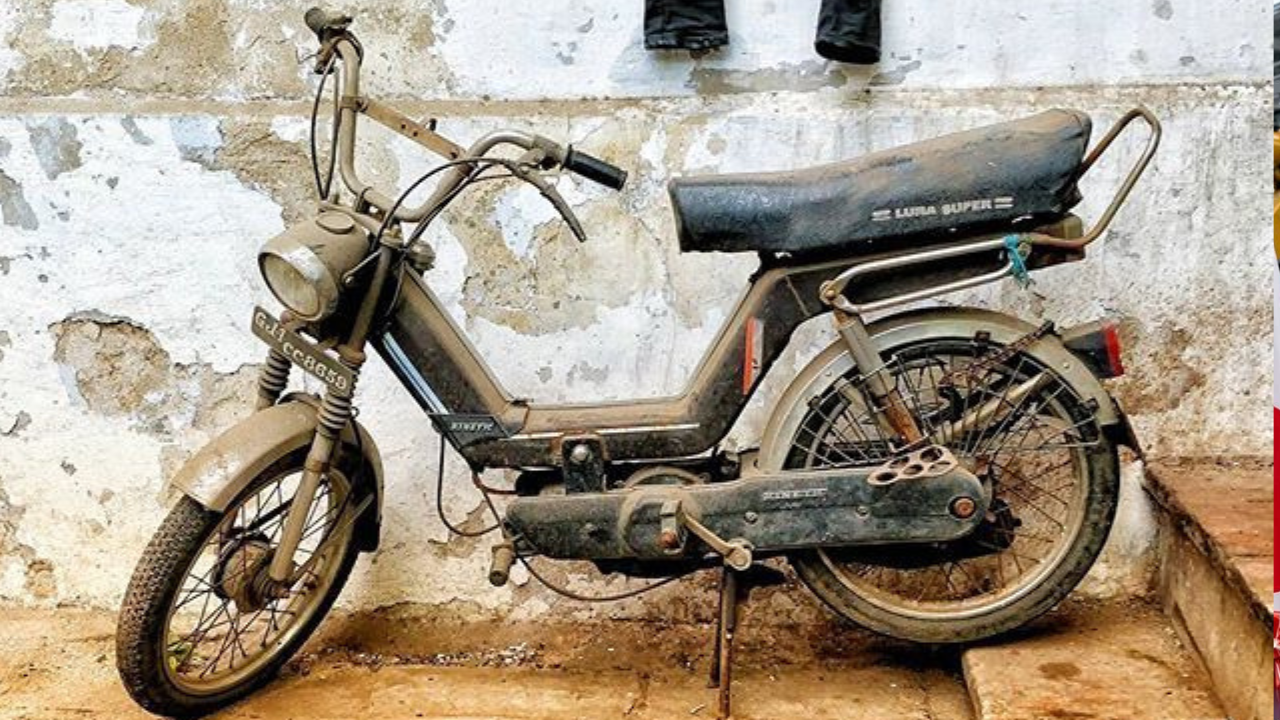
‘Come Mary Luna’! Another name for simplicity and the golden age of the Indian automobile revolution

There was a time when the financial dream of a middle class family in India was to own a house and then own a Luna. The line from the advertisement ‘Chal Meri Luna’ is still alive in the memories of many people. Simple design, low cost, excellent mileage and reliability made the Luna a permanent fixture in the minds of Indians. It was not just a two-wheeler, but a companion to the progress of millions of families.
In the 1970s and 80s, most people in India could not afford to own a motorcycle or scooter. At such a time Luna was a boon to the common man as it was available at low cost. From students, teachers, government employees, postmen, milk sellers, small traders to farmers, everyone trusted Luna.
Simple but strong design
Luna’s design was extremely simple and user-centric. The step-through frame also made it easy for women to ride. Its light weight, large and comfortable seat, sturdy carrier, simple handle and easy controls made it easy for any age group to ride with confidence. Plastic bodies are widely used in today’s modern scooters, but the Luna had a strong steel frame that would last for years. Even if there was a minor accident, the vehicle would not have suffered major damage.

These features of the ‘CD 100’ bike that made it the most famous bike of the 80s-90s? find out
Simple engine, But overwhelming faith
The Luna was normally powered by a 50cc two-stroke engine. This engine could be started with the help of kick or pedal. The design of the engine was so simple that it could easily be repaired even in a small village garage. This engine used to give good mileage by the standards of that time. The cost of petrol was reduced due to the ability to travel more distances on less fuel. The sound of the engine had also become a distinctive feature of the Luna.
Luna’s hand in lifting weights
Luna’s biggest feature is its load-bearing capacity. Although the company has specified a certain weight limit, Indian users used the Luna in an imaginative way. A Luna could easily carry two or three persons, large cans of milk, groceries, vegetables, gas cylinders, bags of fertilizer, even small business supplies. In many villages the luna became a small cargo vehicle.
Even today, old photos or videos show scenes of a Luna carrying an entire family or large cargo. That’s why the Luna came to be known as the “common man’s hardest working bike”.
A soul mate of the middle class
Buying a Luna was a moment of great pride for many families. Many bought Luna by saving their first paycheck or taking out a small loan. Dropping kids at school, going to office, going to market, visiting relatives or taking short trips – every journey was accompanied by Luna. Luna witnessed many love stories, friendships, family memories and important life moments. During that time, a Luna standing outside a house in every village was considered a symbol of the family’s progress.
King in the field, vizier on the highway! Do you need a ‘special’ license to drive a tractor? Know the legal rules
Maintenance cost is very low
A major reason for Luna’s growing popularity was its low maintenance cost. Spare parts were readily available, repairs were easy and there was no need for a large service centre. Many owners would clean plugs, adjust chains, or perform minor maintenance themselves. So Luna became a perfect example of “more use at less cost”.
A landmark in the Indian automobile sector
Luna has played a major role in democratizing two-wheelers in India. At a time when motorcycles were expensive and bicycles were slow, Luna created a link between the two. Luna gave millions of Indians the first experience of a motorized personal vehicle.
Today, even in the age of electric scooters, smart features and modern technology, Luna’s name is respected. Because she not only made travel easier, but also helped the common man to stand on his own feet.
Luna still preserved in the garage of memories
Today, the old Luna sits in dust in many people’s garages, but the memories associated with it are still fresh. First job, first salary, dropping kids off to school, village roads, journeys in the rain and countless moments with family – Luna is an integral part of it all.
That’s why the Luna is not just any old moped. It is a living story of the struggle, simplicity, hardship and progress of the Indian middle class. “Chal Meri Luna” was not just an advertisement; It was the feeling that gave wheels to the dreams of an entire generation.

Comments are closed.