
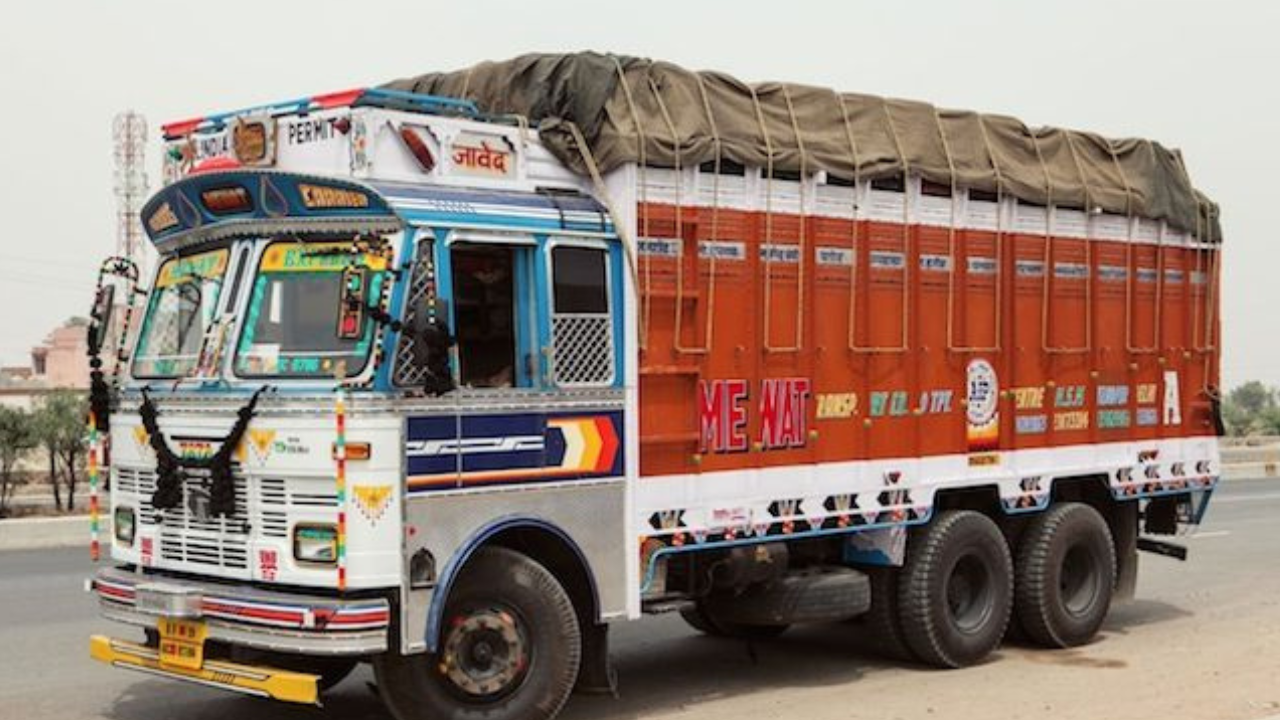
‘Dhoom Machale’! Have you heard such ‘musical horns’ of trucks? Know why drivers honk and what RTO’s prohibition law says?

While traveling on Indian highways, you must have heard trucks honking to the tune of “Dhoom Machale Dhoom”, “Naagin Tune” or various other songs. These musical horns or also known as pressure horns have become an integral part of Indian truck culture. But it is important to know what is the reason behind this and what the law says.
Why are musical horns installed on trucks?
1. To remove the long journey and fatigue felt
Truck drivers drive for days at a time, day and night. At such times, they install this horn as a part of entertainment to relieve the boredom and refresh themselves on the highway.
What is the use of black rubber bands near truck tires? Decoration or gambling?
2. To other vehicles to warn
Trucks are very large in size. Drivers believe that a loud horn is needed to alert other speeding vehicles on the highway or sleepy, ‘drowsy’ drivers at night.
3. of India Truck culture and decorating traditions
Trucks in India are considered ‘second home’ for drivers. At least 300 days a year, they are on the truck. So it has become a fashion to decorate the truck with a unique sounding horn.
do you know Thomas Edison’s companion invented the ‘horn’ of vehicles! find out
Is this legal?
no, Installing musical or pressure horns on trucks is completely illegal in India.
According to the Central Motor Vehicle Rules, the horn of any vehicle should not exceed 112 decibels. However, these musical horns in trucks make noise ranging from 120 to 140 decibels, which is very harmful to human ears.
What happens if the rules are broken?
Under Section 190(2) of the Motor Vehicles Act, a musical or pressure horn found in a vehicle can attract a hefty fine of ₹2,000 to ₹10,000. Traffic police confiscate such horns on the spot or cut off the truck’s sound connection.
These horns startle pedestrians and cyclists and cause accidents. Hence, although they sound funny, they are extremely dangerous in terms of road safety.

Comments are closed.