
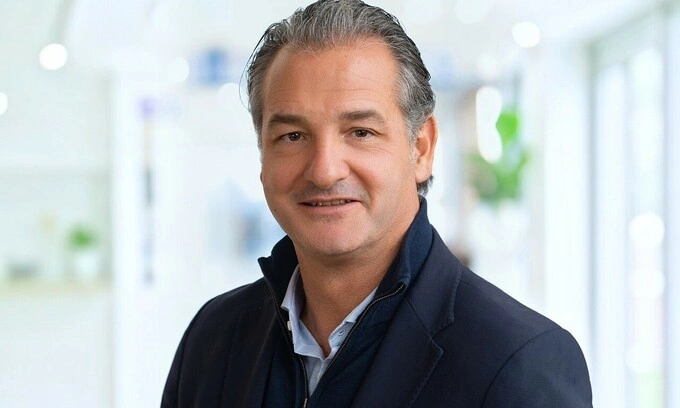

Jorge Rubio Nava, Global Head of Citi Social Finance. Photo courtesy of the bank |
How would you describe Citi’s role in social finance globally?
Citi established its social finance business in 2005, initially focusing on microfinance before expanding into financing that improves access to essential services for underserved communities.
Since then, the business has mobilized more than US$19.7 billion, reaching 22.7 million low-income and underserved households, including 12.3 million women, across more than 50 emerging markets.
The bank introduced its Global Social Finance Framework in 2021 and, in November 2024, issued a $3 billion Social Finance Bond.
Social finance is not only about providing capital, but also ensuring that financing reaches communities where it can support inclusive economic growth.
How does the bank define social finance?
Social finance supports projects that improve access to essential services for underserved populations.
Priority areas include affordable infrastructure, housing, economic inclusion, education, food security and healthcare.
Affordable infrastructure may cover clean water, sanitation, renewable energy, transport and telecommunications, while economic inclusion focuses on expanding access to finance and business opportunities. Food security includes improving agricultural productivity and access to nutritious food.
Each transaction is assessed against defined criteria and expected social outcomes. We have developed internal guidelines covering eligibility, financing structures and impact measurement to support consistent implementation across markets.
Citi recently completed two social trade finance transactions with BIDV and MB. What do these deals indicate about Vietnam?
Vietnam presents significant opportunities because micro, small and medium-sized enterprises (MSMEs) account for more than 45% of GDP and over 60% of employment.
We provided more than $100 million in social trade advance facilities to BIDV and MB. The financing is intended to support the banks’ lending to MSMEs for working capital and income-generating activities, contributing to business expansion and employment.
The transactions also demonstrate how social finance can be scaled through partnerships with local financial institutions.
Beyond banking, we are also working with corporate clients. One example is a financing arrangement with a Vietnamese coffee company that supports working capital while helping expand market access for smallholder coffee farmers through its supply chain.
What was the purpose of your recent visit to Vietnam?
The visit focused on meeting corporate clients and financial institutions to discuss how social finance can support business growth.
Discussions covered financing solutions for companies and domestic banks, particularly in areas that promote inclusive economic development.
Citi’s global network enables it to combine local market knowledge with international structuring expertise, access to capital and experience across emerging markets.
What is needed for social finance to grow further in Vietnam and Asia?
The first requirement is continued demand from clients. In Vietnam, banks are expanding MSME lending, companies are strengthening supply chains, and investors are increasingly interested in measurable social impact.
The second is transparency. Social finance depends on clearly defined use of proceeds, measurable outcomes and consistent reporting.
The third is scalability. Beyond individual transactions, the goal is to develop financing models that can be replicated across sectors. In Vietnam, areas with strong potential include MSME finance, agriculture, healthcare, education and infrastructure.
We plan to continue expanding its social finance activities in Vietnam and Asia by working with clients to develop financing solutions that combine commercial viability with measurable social impact.
Comments are closed.