
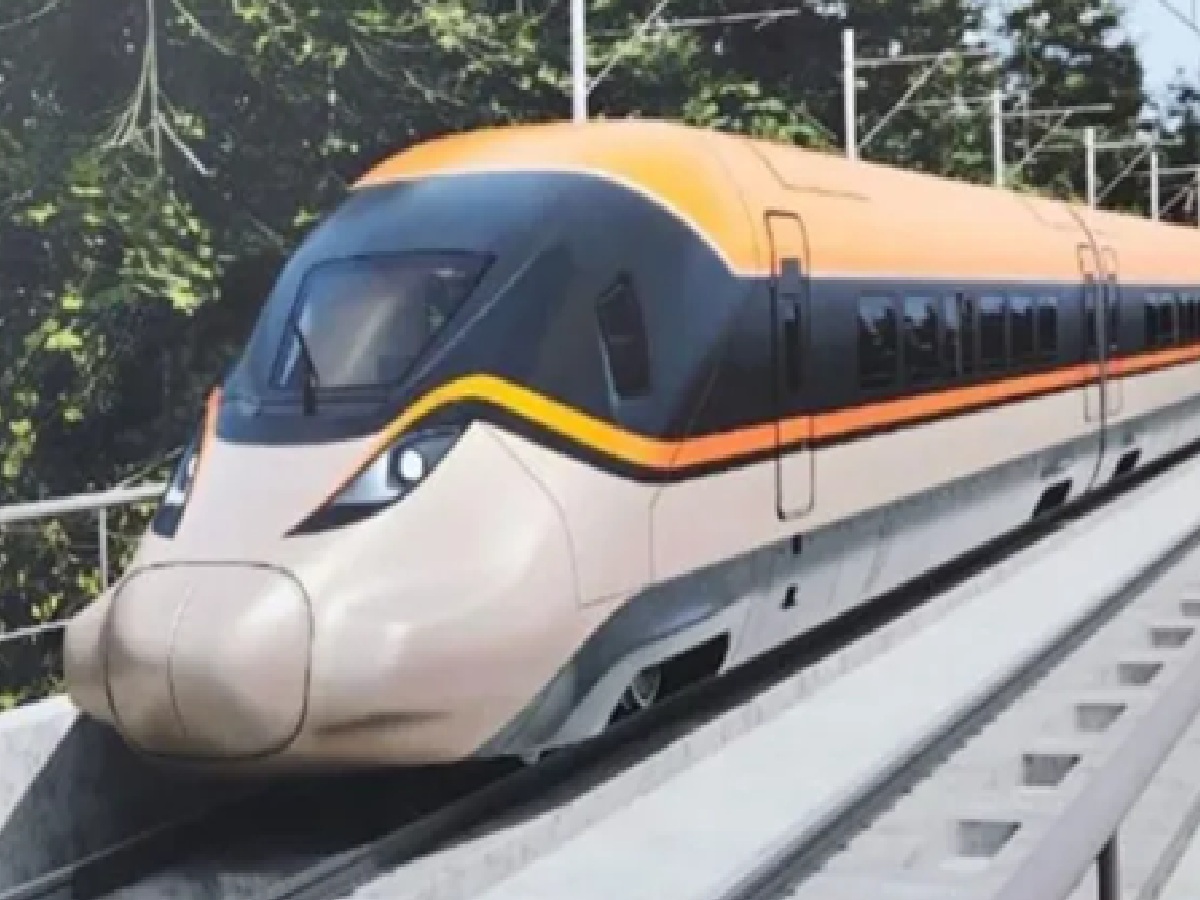
Delhi to Become India’s Next High-Speed Rail Hub: Four Mega Bullet Train Corridors Planned to Speed in All Directions:

Following the massive engineering breakthrough of the Mumbai-Ahmedabad bullet train project—where the first phase is now over 80% complete—the Government of India is shifting its focus to transforming the Delhi-National Capital Region (NCR) into the ultimate nucleus of the nation’s high-speed rail network. Railway Minister Ashwini Vaishnaw recently confirmed that comprehensive track planning, route alignments, and structural design tenders are actively underway to launch four massive new bullet train corridors originating from Delhi. These proposed routes, part of the high-speed corridors backed by an estimated ₹2 lakh crore budget allocation, will connect the national capital to major political, religious, economic, and tourism hubs across northern, western, and eastern India.
Delhi-Lucknow-Varanasi Corridor: Slashing Travel Time to Just Over 2 Hours
The Delhi-Lucknow-Varanasi high-speed rail link is one of the most critical socio-economic projects proposed by the ministry. Spanning an estimated 813 to 865 kilometers, this hyper-connected corridor will feature 13 to 15 state-of-the-art stations. The alignment is designed to strategically cut across Uttar Pradesh, passing through major nodes including Noida, the upcoming Jewar International Airport, Mathura, Agra, Firozabad, Etawah, Kannauj, Lucknow, Rae Bareli, Prayagraj, New Bhadohi, and terminating at Varanasi.
To boost religious tourism, a dedicated 124 to 135-kilometer high-speed link is also being integrated to connect Lucknow directly with Ayodhya. Operating at maximum aerodynamic speeds of up to 320 kilometers per hour, these bullet trains will compress the Delhi-to-Lucknow commute to a mere 2 hours and 10 minutes, while the entire journey from Delhi to Varanasi will take just 3 hours and 50 minutes. The National High Speed Rail Corporation Limited (NHSRCL) has already invited global tenders for the project’s civil structure and architectural design.
Delhi-Varanasi-Siliguri Corridor: India’s Longest High-Speed Network
In a bid to seamlessly unite northern India with the Northeast, the government plans to extend the Delhi-Varanasi line all the way to Siliguri in West Bengal, making it the longest high-speed rail corridor in the country. There are even preliminary proposals to extend this massive transit line further down to Guwahati in Assam.
Encompassing a staggering length of approximately 1,705 kilometers, the proposed bullet train route will pass through key economic zones including Delhi, Noida, Mathura, Agra, Lucknow, Varanasi, Buxar, Patna, Begusarai, Khagaria, Katihar, and New Jalpaiguri (Siliguri). Once fully operational, it will completely revolutionize long-distance transit, shrinking the arduous 20-hour train journey from Delhi to Siliguri down to a swift 6-hour ride.
Delhi-Jaipur-Udaipur-Ahmedabad Corridor: Unlocking a Direct High-Speed Route to Mumbai
Western India will get a massive infrastructure upgrade through the proposed Delhi-Jaipur-Udaipur-Ahmedabad corridor. This 886-kilometer-long high-speed line will flawlessly bridge the capitals of Delhi, Rajasthan, and Gujarat, featuring 14 to 15 modern transit hubs. The tentative station blueprint includes Dwarka, Bijwasan, Gurugram, Manesar, Rewari, Behror (Neemrana), Shahpura, Jaipur, Kishangarh (Ajmer), Vijay Nagar, Bhilwara, Chittaurgarh, Udaipur, Dungarpur, Himmatnagar, and Sabarmati (Ahmedabad).
The ultimate long-term master plan is to link this track directly with the ongoing Mumbai-Ahmedabad bullet train infrastructure. This integration will allow business travelers and tourists to experience uninterrupted, high-speed rail travel all the way from Delhi to Mumbai. While the Detailed Project Report (DPR) for this corridor is fully prepared and finalized, it is currently awaiting the final financial green light from the Union Cabinet and the respective state governments.
Delhi-Amritsar-Jammu Corridor: High-Speed Connectivity to Vaishno Devi
To cater to the massive volume of daily commuters and pilgrims heading north, the Ministry of Railways is charting out the Delhi-Amritsar corridor. Spanning roughly 450 to 500 kilometers, this route is mapped to run through Rohtak, Jind, Kaithal, Chandigarh, Mohali, Ludhiana, and Jalandhar before halting at Amritsar, bringing down the travel time between Delhi and the Golden Temple city to just about two hours.
Future extension plans are already being evaluated to push the track from Jalandhar upward to Jammu and Katra via Pathankot, which will provide direct high-speed rail access to the holy Vaishno Devi shrine. This project is currently undergoing preliminary aerial surveys and strict route alignment feasibility tests.
Current Status of India’s High-Speed Rail Ambitions
As the country looks toward a future of high-speed travel, the flagship Mumbai-Ahmedabad project remains on the fastest track, with bullet train operations between Surat and Bilimora heavily targeted to commence in 2027, and the entire stretch slated for a 2029 completion.
Concurrently, while the four mega-corridors out of Delhi are progressing through crucial phases of surveying, environmental clearances, and structural design, the central government has set an ambitious internal target to construct approximately 250 kilometers of high-speed rail tracks annually across the country. Furthermore, India’s tech innovation is hitting new milestones with the development of its first completely indigenous high-speed train, codenamed B35, with track trials expected to begin very soon.

Comments are closed.