
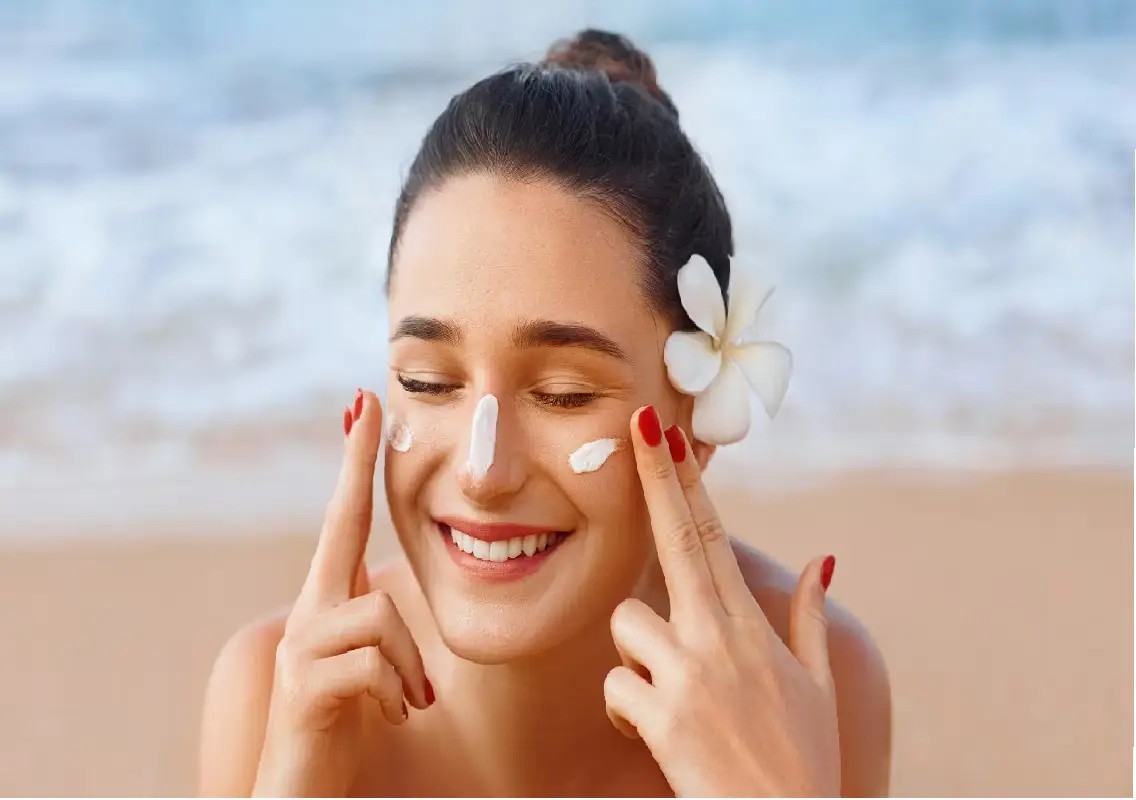

New Delhi: Cloudy skies and cooler temperatures during the monsoon often lead many people to skip sunscreen, believing the risk of sun damage is minimal. However, dermatologists say this is a common skincare mistake, as harmful ultraviolet (UV) rays continue to reach the skin even on overcast days.
Experts emphasise that sunscreen is not just a summer essential but should be used throughout the year, including during the rainy season, to protect against pigmentation, premature ageing and long-term skin damage.
Clouds do not block harmful UV rays
According to Dr Swati Mohan, Dermatologist at Fortis Hospital, Faridabad, up to 80 per cent of ultraviolet rays can penetrate cloud cover.
She explained that although the weather feels cooler and the sun may not be visible, UV exposure continues during the monsoon.
As a result, the skin remains vulnerable to damage despite cloudy conditions.
UVA rays remain constant throughout the year
Dermatologists note that while UVB rays are primarily responsible for sunburn, UVA rays penetrate deeper into the skin and remain relatively constant regardless of the season.
Dr Pankhuri Dudani, Consultant, Department of Dermatology, Amrita Hospital, Faridabad, said UVA rays are a major cause of:
- Premature skin ageing
- Pigmentation
- Uneven skin tone
- Long-term skin damage
She added that many people notice increased tanning and pigmentation after the monsoon because of cumulative UV exposure during cloudy weather.
Monsoon sun damage is often less noticeable
Unlike summer, when sunburn develops more quickly, the effects of UV exposure during the rainy season are often gradual.
According to Dr Swati Mohan, continued exposure without adequate sun protection may:
- Accelerate collagen breakdown
- Increase skin pigmentation
- Slow the fading of acne marks
- Cause premature ageing
- Raise the long-term risk of skin cancer
Because the damage develops slowly, many people fail to realise their skin continues to be affected throughout the monsoon.
Extra care needed after skin treatments
Dermatologists advise people undergoing cosmetic or medical skin procedures to be especially cautious about sun protection.
Treatments such as:
- Chemical peels
- Laser procedures
- Microneedling
- Prescription retinoids
- Exfoliating acid treatments
make the skin more sensitive to UV radiation.
Experts warn that even brief exposure on cloudy days may increase the risk of post-inflammatory hyperpigmentation and interfere with treatment outcomes.
Humidity is not a reason to avoid sunscreen
Many people avoid sunscreen during the monsoon because some formulations feel greasy or heavy in humid weather.
However, Dr Sachin Gupta, Senior Consultant, Department of Dermatology, Amrita Hospital, Faridabad, said sunscreen should remain part of the daily skincare routine whenever a person is exposed to daylight.
He recommended using lightweight, gel-based, non-comedogenic sunscreens that are specifically designed for humid climates and suitable for oily or acne-prone skin.
Choosing the right sunscreen
Dermatologists recommend selecting a sunscreen that offers:
- Broad-spectrum UVA and UVB protection
- SPF 30 or higher
- PA+++ or higher
- Lightweight gel or fluid formulation
- Non-comedogenic formula for oily and acne-prone skin
These products provide effective protection while remaining comfortable during humid weather.
Reapplication is equally important
Experts also stress that applying sunscreen once in the morning is not sufficient for prolonged outdoor exposure.
Dr Swati Mohan recommends reapplying sunscreen every two to three hours, particularly if:
- Spending extended periods outdoors
- Sweating heavily
- The face becomes wet due to rain or humidity
Regular reapplication helps maintain protection throughout the day.
Dermatologists conclude that while monsoon clouds may obscure the sun, they do not eliminate harmful UV radiation. Wearing a broad-spectrum sunscreen every day remains one of the simplest and most effective ways to protect the skin from pigmentation, premature ageing and long-term damage throughout the year.

Comments are closed.