
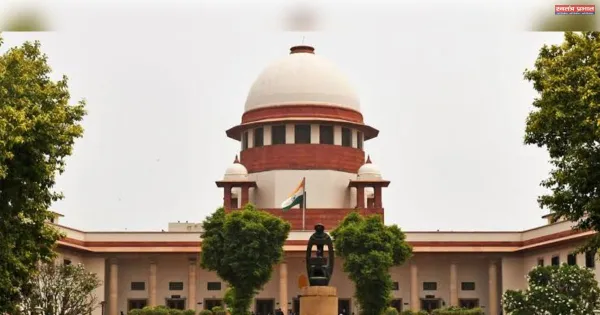

The Supreme Court of the country is not just a judicial institution, but the center of the soul of the Constitution and the last hope of democracy. When a citizen of the country approaches the Supreme Court after failing to seek justice at every level, he has the confidence that his case will be heard here with impartiality and sensitivity. For this reason, the dignity, respect and prestige of the Supreme Court is considered the cornerstone of the entire judicial system. Maintaining the dignity of the court is as much the duty of the judges and judicial staff as it is the duty of every advocate, petitioner and citizen present there.
Recently, during the hearing in the Supreme Court, a petitioner lawyer using abusive language towards the judges, throwing papers and abusing the Chief Justice is a very unfortunate incident. Under no circumstances can this type of behavior be considered acceptable within the court. The court understands the language of logic and law, not of outrage and insult. If those fighting for justice themselves start crossing the limits of law and decorum, then there may be a danger of weakening of people’s faith in the justice system.
A lawyer is not only the representative of his client, but he is also considered an officer of the court. His speech, his conduct and his behavior are linked to the dignity of the judiciary. Therefore, advocates are expected to maintain composure even in the most difficult situations. Everyone has the right to disagree, but there is a clear line between disagreement and rudeness. Respecting that line is the hallmark of democratic culture and judicial tradition.
The other side of this entire incident is equally important. The court rejected the lawyer’s plea, but did not take strict contempt action against him. The judges also said that the man was probably under extreme stress and mental pressure and his frustration was clearly visible. This approach also brings out the human sensitivity of the judiciary. Law is not merely a means of imposing punishment, but also a system of understanding circumstances and keeping in mind the broader objective of justice.
The reality is that every person who approaches the court in search of justice comes with some burden of pain, struggle or injustice. After fighting cases for years, bearing the financial burden and making repeated rounds of courts, many people become mentally broken when they do not get the expected results. This breakdown sometimes results in frustration and unbalanced behavior. This does not mean that such behavior is justified, but it is important to understand that there may be a long history of pain and disappointment behind it.
The biggest strength of the judiciary is its impartiality as well as its sensitivity. If a person appears extremely stressed in the court, his mental condition should also be understood while dealing with him as per the law. Justice is not accomplished just by passing the order, but it also creates confidence that the court has listened and understood the person with full seriousness. This trust is the biggest asset of democracy.
It is also true that delay in justice, lengthy legal process and increasing case load create frustration among many people. In such a situation, continuous efforts are necessary towards making the justice system more accessible, simpler and timely. When people get timely justice, situations of disappointment and dissatisfaction will also reduce. The purpose of the judicial system is not only to settle disputes but also to maintain trust and balance in the society.
This incident has given another message that everyone has equal responsibility in maintaining the dignity of the court. If discipline in the court is lost, the judicial process will be affected and ultimately the common citizen will suffer the loss. Therefore, whether it is a senior advocate, a new lawyer or the party itself, everyone has to understand that choice of words, decorum of behavior and respect for the law are of paramount importance in the court.
On the other hand, the generosity of the judiciary is also commendable. If the court wanted, it could have taken contempt action, but it showed restraint and considered it appropriate to end the case there instead of giving harsh punishment. This decision shows that justice is not just a display of power but a balanced form of prudence, patience and compassion. However, this leniency should not be construed to mean that in future anyone should dare to insult the dignity of the court. Respect for law is mandatory in every situation.
Judiciary is the last hope in a democracy. When a person disappointed with the administration, system and other institutions reaches the Supreme Court, then the last ray of hope is left in his mind. Therefore, the courts also have to keep in mind that every person standing before them is not just a case number, but a person struggling with some deep problem in his life. While listening to him, human sensitivity should also be maintained along with the law.
The country learns two important lessons from this incident. First, the dignity of the court should not be violated at any cost. Abusing, anger and abusive behavior in the court are against democratic values. Secondly, the justice system should also understand the pain, mental stress and struggle of the people, because justice is not just a name of giving judgment but is a process of maintaining trust in the society.
The Supreme Court is the biggest court in the country and its reputation is linked to the reputation of the entire nation. At the same time, every person who comes to the threshold of the court comes with the hope of justice. Therefore, it is necessary that on one hand the advocates and parties understand their dignity and responsibility, while on the other hand the justice system also feels the pain of every victim and maintains a balance between law and compassion. This balance is the biggest strength of the Indian judiciary and is also the permanent identity of democracy.
Kantilal Mandot
Comments are closed.