

6
Experts say the E-20 rollout success will depend on balancing energy security, farmer interests and vehicle compatibility.
India’s ambitious ethanol-blended petrol programme has emerged as one of the country’s flagship energy initiatives, aimed at reducing dependence on imported crude oil, cutting greenhouse gas emissions and creating additional income opportunities for farmers. While the rollout of higher ethanol blends marks a significant step in India’s clean energy transition, experts say the long-term success of the programme will depend on addressing concerns related to vehicle compatibility, water consumption and sustainable feedstock choices.
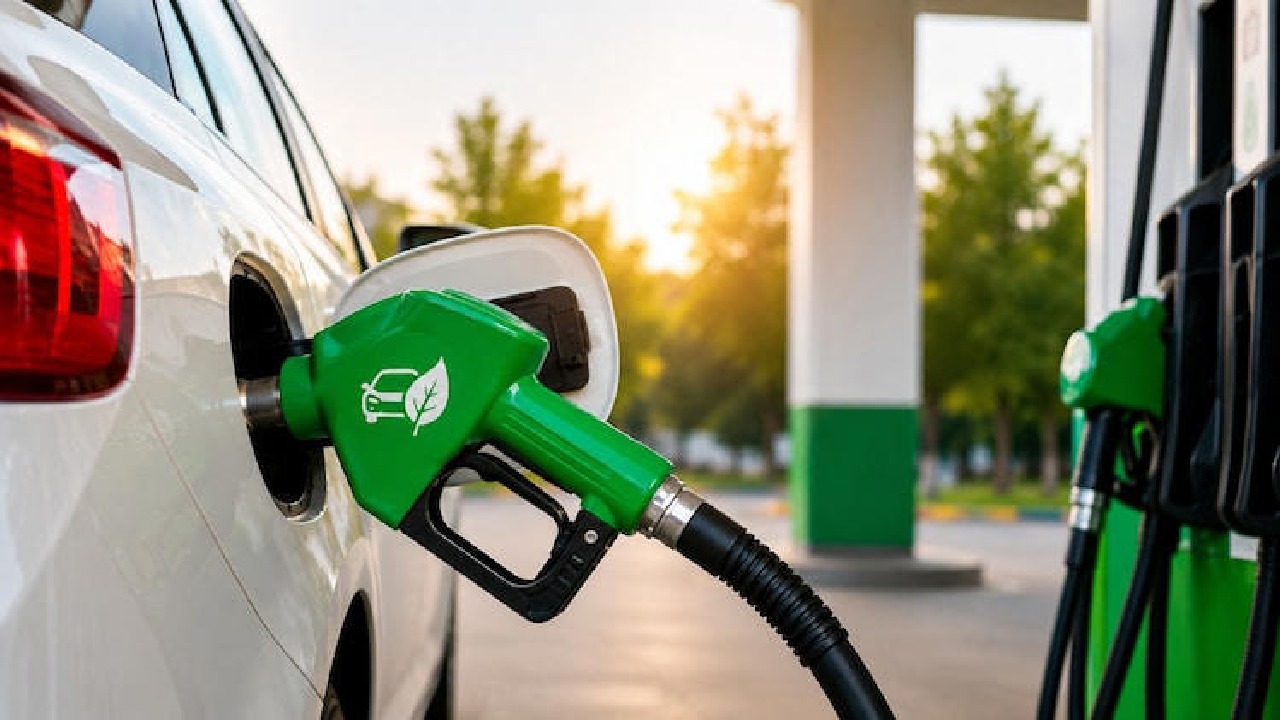
The government has steadily expanded ethanol blending under the Ethanol Blended Petrol (EBP) Programme, making E20 petrol—fuel containing up to 20 per cent ethanol—available across large parts of the country. The policy is expected to reduce India’s oil import bill while supporting domestic ethanol production from sugarcane, maize, surplus rice and, increasingly, agricultural residues.
Supporters argue that blending ethanol with petrol strengthens India’s energy security by diversifying fuel sources and reducing dependence on fossil fuels. They also point to the economic benefits for farmers and the agricultural sector, as ethanol production creates additional demand for crops and agricultural by-products.
However, the transition has also triggered debate over fuel efficiency, engine durability and environmental sustainability, particularly as millions of vehicles currently on Indian roads were designed before higher ethanol blends became the norm.
Anil Chikara, retired commissioner of the Delhi Transport Department, believes concerns over reduced mileage are often exaggerated in real world driving conditions.
“I believe there is hardly any effect on fuel efficiency or the mileage of petrol vehicles because although ethanol has a calorific value 25 to 30 per cent lower than petrol, the impact on average mileage is very minimal. My experience is that I did not find a big drop in mileage,” he said.
Ethanol contains less energy per litre than petrol, meaning a theoretical reduction in mileage is expected as blending levels increase. However, experts note that actual fuel economy depends on multiple factors, including driving habits, traffic conditions, vehicle maintenance and engine technology. As a result, many motorists may not notice a substantial difference in everyday use.
Even so, vehicle compatibility remains a significant concern, particularly for owners of older petrol vehicles that were not originally designed for E20 fuel.
Sharif Qamar, Fellow and Associate Director in the Transport and Urban Governance Division at The Energy and Resources Institute (TERI), said higher ethanol blends could adversely affect engines that are not specifically designed or calibrated for such fuels.
“Higher blending share of ethanol in petrol has an impact on the performance of the engines, particularly those that are not compatible or tuned for improved performance. The calorific value of ethanol is lower than that of petrol, which impacts the efficiency of vehicles,” he said.
Qamar added that ethanol’s tendency to absorb moisture could create additional challenges in certain situations.
“Because ethanol has the propensity to absorb water molecules, with lower levels of fuel in the tank coupled with higher moisture in the air/tank, water tends to form and settle down, which adversely impacts the engine performance and components not designed for the situation. The maintenance cost for non-E20-compatible vehicles would, therefore, come on the higher side,” he explained.
Those concerns are echoed by some vehicle owners who are closely following the transition to higher ethanol blends.
Abhirup Basu, a communications professional and owner of a 2021 Nissan Magnite Turbo, said the growing availability of E20 petrol has prompted questions about the long-term impact on vehicles manufactured before automakers began certifying models for higher ethanol blends.
“I purchased my Nissan Magnite Turbo in April 2021, and it has served me exceptionally well over the past five years. However, since my vehicle was manufactured before 2023 and is certified for E10 fuel, I am concerned about its long-term compatibility with E20 petrol,” he said.
While automobile manufacturers have increasingly introduced E20-compatible vehicles in recent years, experts say a large number of older petrol vehicles remain on Indian roads, making consumer awareness and clear manufacturer guidance important as the transition progresses.
Beyond vehicle performance, the environmental sustainability of ethanol production has also attracted attention, particularly regarding water use in agriculture.
Dr. Deep Chakraborty, Environmental Health Scientist at Sri Ramachandra Institute of Higher Education and Research, Chennai, said water scarcity should be evaluated through a comprehensive assessment of different ethanol feedstocks rather than focusing on a single crop.
“Water scarcity is a serious concern, especially in the context of climate variability. However, a comprehensive case-by-case assessment is needed to compare the water requirements of different feedstocks, such as rice, sugarcane, maize and agricultural residues,” he said.
According to Chakraborty, policymakers should compare the water footprint of ethanol produced from conventional crops with that produced from alternative feedstocks, including agricultural residues.
“We need to evaluate the water footprint of different scenarios: producing ethanol from rice and sugarcane, producing ethanol from maize and agricultural residues, and producing ethanol through alternative pathways. At present, conclusive data is still limited,” he said.
He suggested that reducing dependence on freshwater resources could significantly improve the sustainability of ethanol production.
“Recycled water, rainwater harvesting and treated domestic wastewater can potentially be used for agricultural production and ethanol processing. This approach could reduce pressure on groundwater and potable water resources, but it needs to be validated through field-level studies,” Chakraborty added.
As India continues to expand ethanol blending, experts say the programme’s long-term success will depend on balancing multiple objectives, reducing oil imports and emissions, supporting farmers, ensuring vehicle compatibility and protecting natural resources. Continued research, transparent policy implementation and investment in sustainable feedstocks and infrastructure are likely to determine whether ethanol blending can deliver its promised economic and environmental benefits while maintaining consumer confidence.

Comments are closed.