
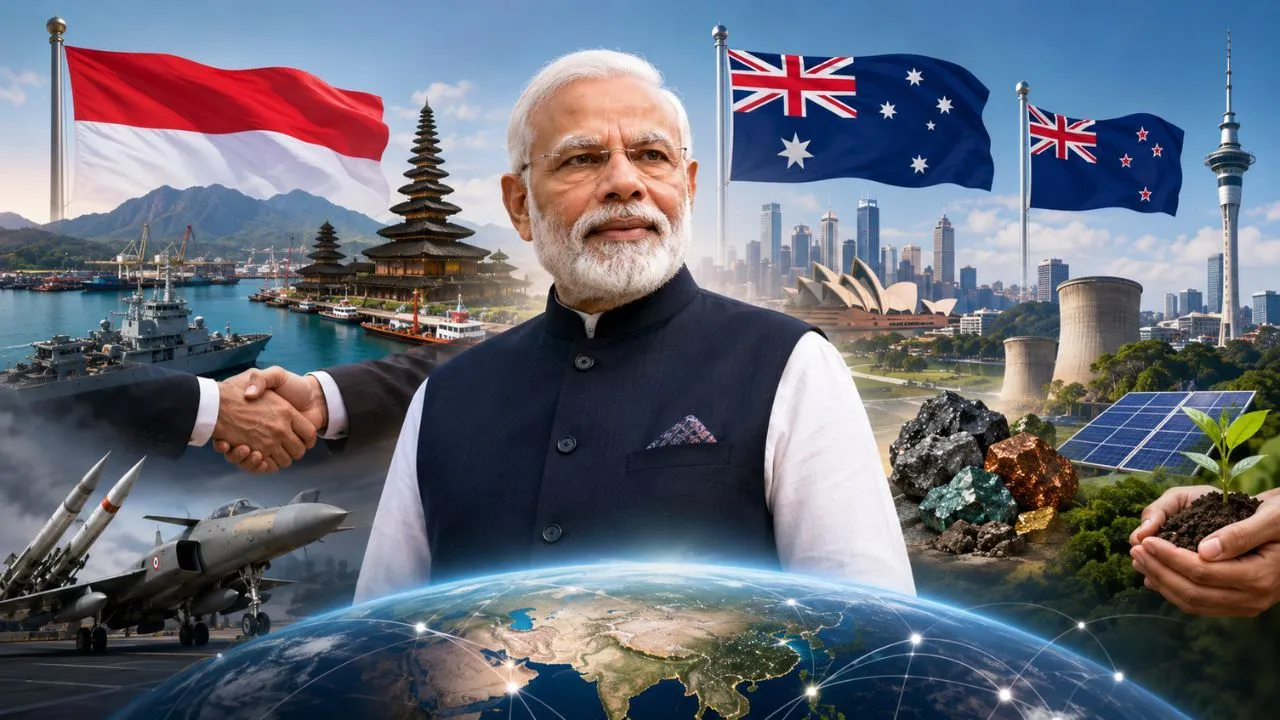
Explainer: 144 hours, 3 countries… What did India get from PM Modi’s visit? Know big agreements and their impact

PM Modi Three Nation Tour Results:Prime Minister Narendra Modi made a 144-hour foreign visit to Indonesia, Australia and New Zealand between July 6 and 12. This visit was very important for India in terms of defence, energy, trade and strategic partnership. During this period, many such agreements were signed which can strengthen India’s security, economic development and its role in the Indo-Pacific region in the coming years.
Let us tell you how much and what benefits India will get from this marathon visit of PM Modi. Also, what agreements did India make during the agreement and what could be its advantages and disadvantages?
Defense and maritime cooperation gets new direction in Indonesia
Prime Minister Modi had reached Jakarta, the capital of Indonesia, the first stop on his foreign tour. A total of 14 agreements were signed here between India and Indonesia. These included many important areas like defence, maritime security, infrastructure and digital cooperation.
Both countries agreed to jointly develop Sabang Port located in the north of Sumatra. This is a deep water port, where big warships and submarines can also come. Sabang Port is located very close to the Strait of Malacca. It is one of the busiest maritime trade routes in the world and a large part of China’s oil imports pass through this route. In such a situation, India’s presence in this region will further strengthen its strategic position in the Indian Ocean.
Big agreement on BrahMos and Astra missile
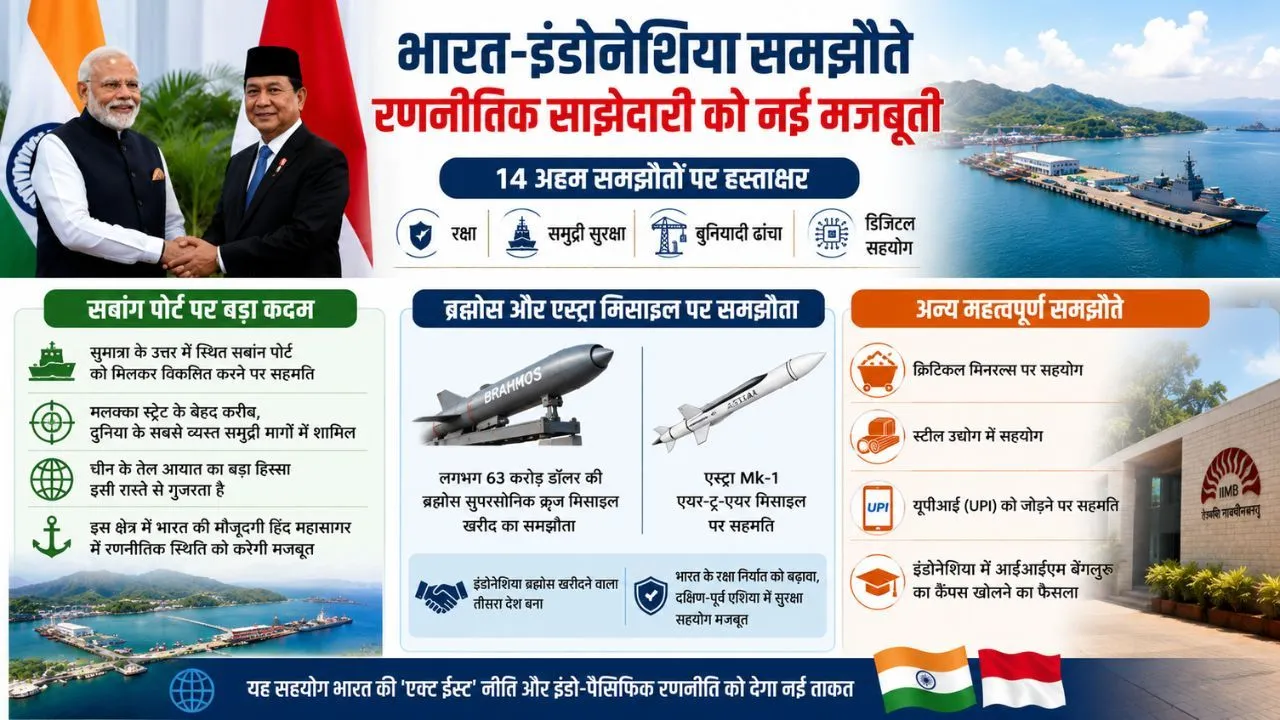
Talks on 14 important agreements between India and Indonesia (AI generated image)
An agreement was also signed between India and Indonesia for the purchase of BrahMos supersonic cruise missile worth about $630 million. Along with this, agreement was also reached regarding Astra Mk-1 air-to-air missile. After this agreement, Indonesia became the third country to purchase BrahMos missile. This will boost India’s defense exports and also strengthen security cooperation in South-East Asia. Both countries also agreed to link critical minerals, steel industry and UPI. Apart from this, a decision was also taken to open the campus of IIM Bangalore in Indonesia, which will further strengthen the relations between the two countries in the field of education.
Energy and technical security received from Australia
PM Modi reached Australia in the second phase after Indonesia, where he held the third annual summit with Australian Prime Minister Anthony Albanese. During this period, many important agreements were signed on energy, defence, space and important minerals.
India will get uranium without any restriction
India and Australia signed an administrative arrangement regarding uranium supply for nuclear energy. Australia has about 28 percent of the world’s uranium reserves. India is aiming to increase its nuclear power capacity to 100 GW by 2047. In such a situation, this agreement will play an important role in meeting the clean energy needs of the country and will help in reducing dependence on coal.
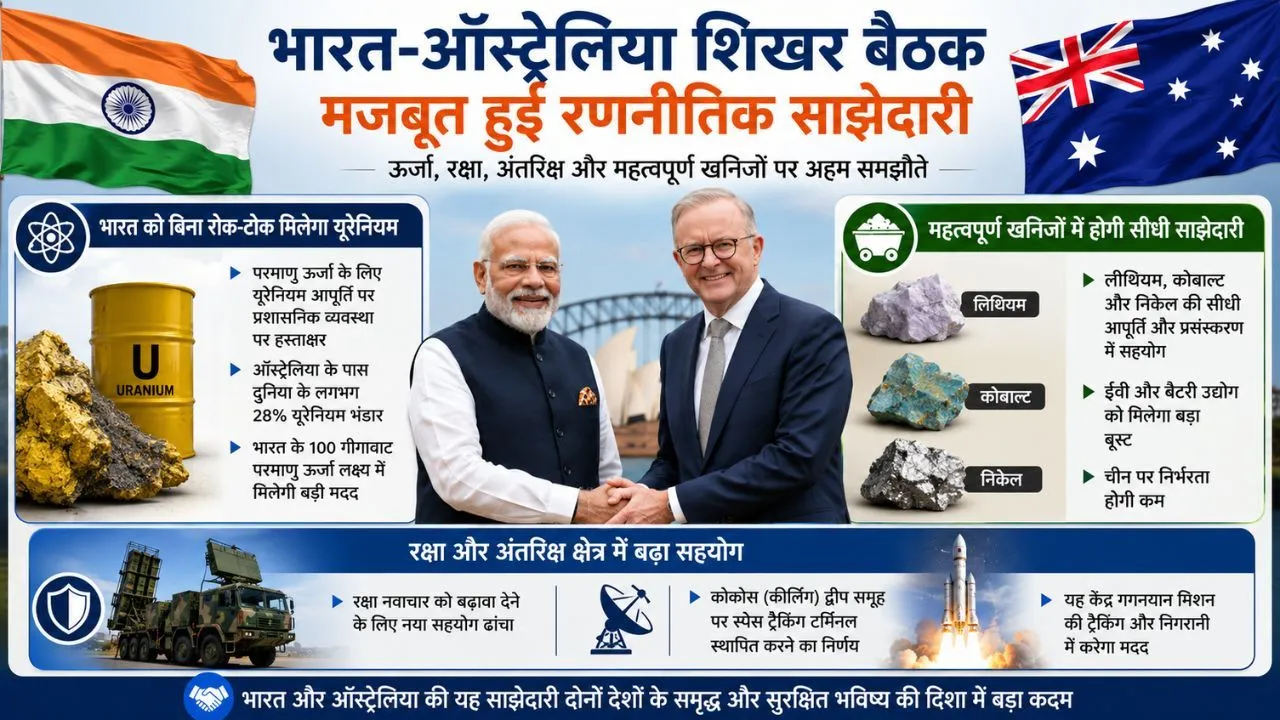
Australia will give uranium to India (AI generated image)
India imports most of the minerals like lithium, cobalt and nickel needed for manufacturing electric vehicles and batteries. China has great influence among them. After the new partnership with Australia, India will get support in direct supply of these minerals and their processing (refining). This will strengthen India’s EV and battery industry and reduce dependence on China.
Cooperation also increased in defense and space sector
Both countries agreed to create a new cooperation framework to promote defense innovation. Apart from this, it was also decided to establish a space tracking terminal on the Cocos Keeling Islands located in the Indian Ocean. This center will help in tracking and monitoring of India’s ambitious Gaganyaan manned space mission.
New base for trade with New Zealand
The last stop of Prime Minister Modi’s visit was New Zealand. This is the first visit of an Indian Prime Minister to New Zealand in the last four decades, hence it is being considered as the beginning of a new chapter in the relations between the two countries. India and New Zealand have set a target of almost doubling the trade between the two countries to Rs 35 thousand crore by 2030. Both the countries also agreed to take the Free Trade Agreement (FTA) forward and transform it into a comprehensive strategic partnership. This is likely to reduce duty on Kiwi fruit, wood and other products, which will increase trade.
New Zealand will make big investment in India
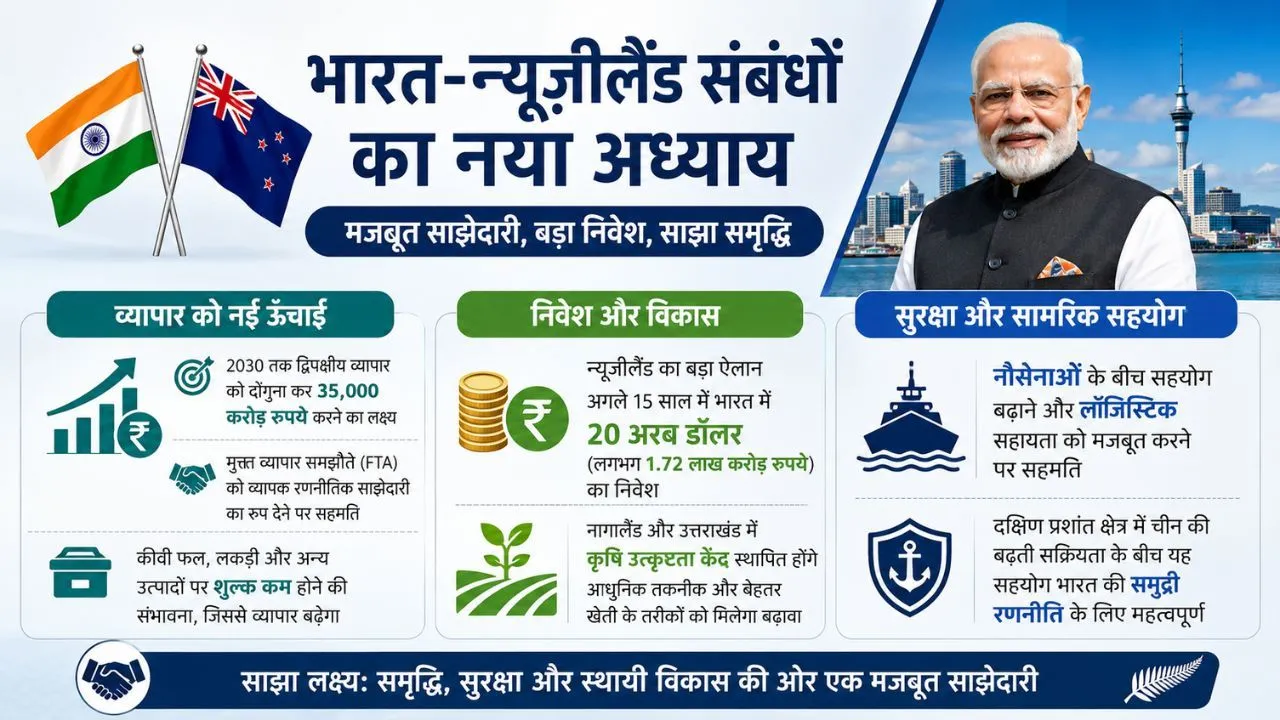
New Zealand will invest billions in India (AI generated image)
New Zealand has announced to invest 20 billion dollars i.e. about Rs 1.72 lakh crore in India in the next 15 years. Apart from this, Agricultural Centers of Excellence will be established in Nagaland and Uttarakhand. Modern agricultural techniques and better farming methods will be promoted through these centres.The two countries also agreed to enhance cooperation between their navies and strengthen logistics support. In view of China’s increasing activism in the South Pacific region, this cooperation is considered very important for India’s maritime strategy.
India’s Indo-Pacific strategy strengthened
This 144-hour foreign trip of Prime Minister Modi was not limited to visiting only three countries, but it also marked India’s ‘Act East’; and ‘Indo-Pacific’ Gave new strength to the policy. Defense and maritime cooperation with Indonesia increased, Australia took important steps towards securing India’s energy and critical minerals needs, while new opportunities opened up for trade, investment and maritime security with New Zealand.
Also read- Companies like Tata-Adani will make missiles, India changed strategy after Operation Sindoor; Know its meaning
The impact of these agreements can be seen in the coming years on India’s defense capability, energy security, economic development and global strategic position. This is the reason why this 144-hour journey is being considered an important step for India’s foreign policy.

Comments are closed.