
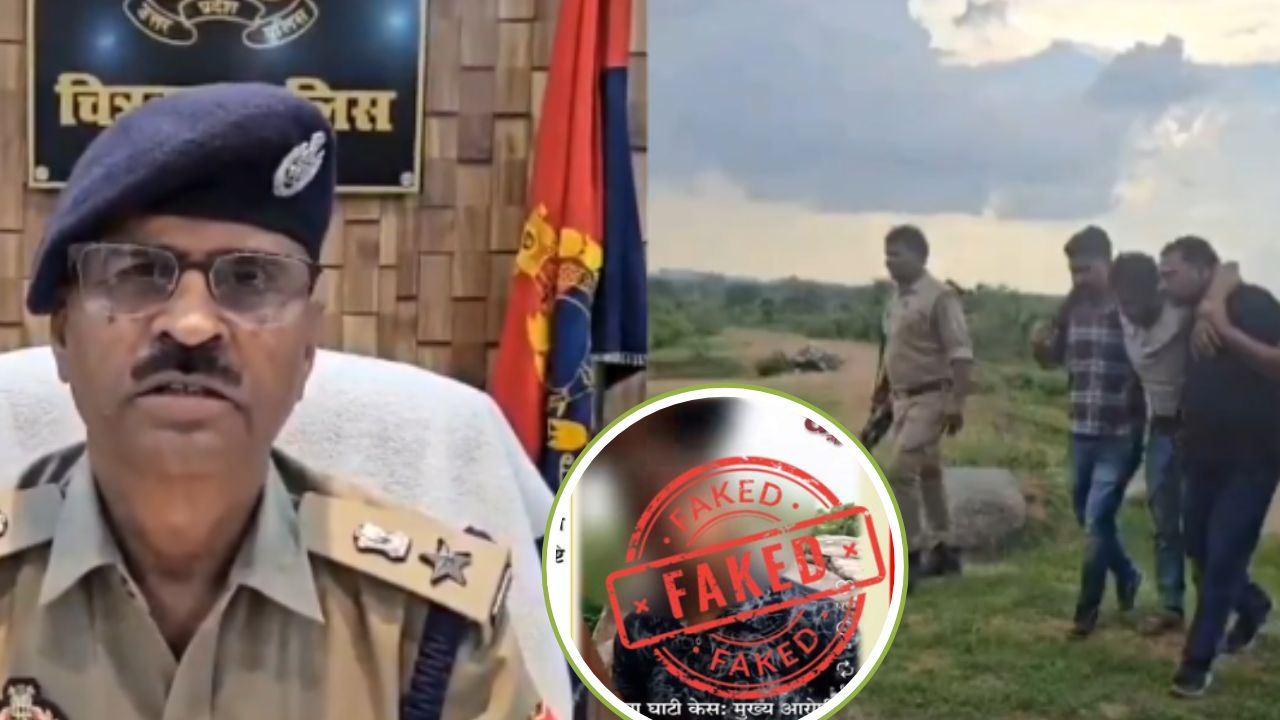

A video linking it to the gang rape incident in Devangana Valley, Chitrakoot, is rapidly circulating on social media. The video is claimed to depict the brutality of a 20-year-old woman in Devangana Valley. However, the Chitrakoot Police have now dismissed this claim as completely false and misleading.
As for the viral video, various claims are being made about its authenticity. Some claim the video is six years old, some claim it’s from Bihar, while others claim it’s from Odisha. However, State Mirror Hindi has not confirmed any of the claims.
Chitrakoot Police, in a statement on social media platforms X, stated that the video circulating on X, Facebook, and Instagram is not of the gang rape incident in Devangana Valley. The police have called it false and misleading, urging people not to share such videos. According to the police, disseminating misleading and false information is punishable by law.
What is the full story of the Devangana Valley gang rape?
On July 22, 2026, a 20-year-old woman was gang-raped in the Devangana Valley. According to the police, the woman had gone to the area with her 17-year-old friend. Three young men on a bike arrived and stopped them, claiming to be forest department employees. The assailants allegedly assaulted the woman’s friend and tied his hands and feet. They then took the woman to nearby bushes and gang-raped her. Following the complaint, the police registered a case and began searching for the accused.
All three accused arrested within 48 hours
Police identified the accused using CCTV footage, informants, and electronic surveillance. The main accused, Jitendra alias Bhola, was arrested on July 25 after a police encounter in the Madtha forest. According to the police, she was shot in the leg during the encounter, while a constable was also injured. Subsequently, the police arrested two other absconding accused, Vivek Kumar Patel and Praveen Patel. A reward of 50,000 rupees each was announced for each of them.
What is the truth about the viral video?
This is the most important part of this entire case. The police investigation into the gang rape incident in Devangana Valley and the arrest of the accused are genuine, but claiming the viral video on social media as a true image of the incident is false. The Chitrakoot police themselves have described the viral video as false and misleading. Therefore, assuming that the video depicts the Devangana Valley victim or the incident is true based on social media is incorrect. Media reports, citing the police, have also stated that the viral video is different from the Devangana Valley incident. In such sensitive matters, sharing a video without verification can not only spread misinformation but also harm the victim’s privacy and dignity.
What is the punishment for sharing false or objectionable videos on social media?
In India, spreading or disseminating a false, offensive, obscene, or misleading video on social media can lead to legal action, depending on the circumstances. However, the punishment depends on the type of content in the video, the manner in which it was shared, and the applicable law.
Punishment for Sharing Obscene Content
Under Section 67 of the IT Act, publishing or disseminating obscene material through electronic media is a crime. A first-time offender can be punished with up to three years in prison and a fine of up to ₹5 lakh. Repeat offenders can be punished with up to five years in prison and a fine of up to ₹10 lakh.
Sexually Explicit Content and Deepfakes
Section 67A of the IT Act deals with publishing or disseminating material containing sexually explicit acts or conduct through electronic media. A first-time offender can be punished with up to five years in prison and a fine of up to ₹10 lakh. A repeat offender can be punished with up to seven years in prison and a fine of up to ₹10 lakh.
Making a private photo or video viral
Recording, publishing, or transmitting a private photo or video without a person’s consent can also be a serious legal matter. Under Section 66E of the IT Act, capturing, publishing, or transmitting a private photo without a person’s consent can result in a jail term of up to three years, a fine of up to ₹2 lakh, or both.
Furthermore, in the case of sharing obscene or objectionable material involving a woman, other sections of the Indian Penal Code (BNS) may also apply, depending on the facts of the case. Therefore, sharing a viral video without verification can create problems both legally and socially.

Comments are closed.