
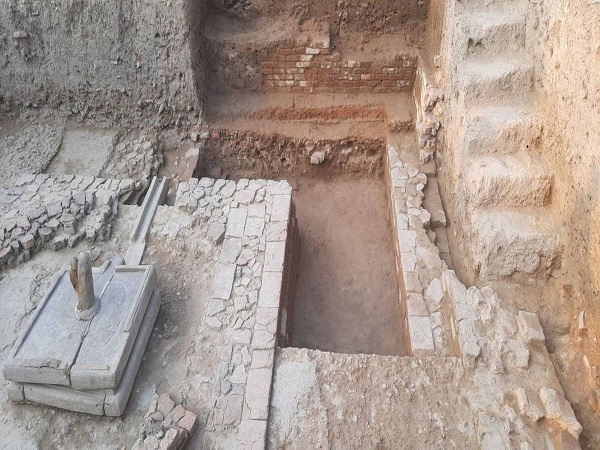
3,000 year old mysterious tomb found in Egypt, ‘T’ shaped structure and artefacts of gods and goddesses become attractions

New Delhi. Another important discovery related to the ancient history of Egypt has attracted the attention of the archaeological world. Archaeologists have discovered a tomb about 3,000 years old in the city of Luxor in Southern Egypt, which is believed to be from the Ramesside Period. Experts say that this discovery can give new information in understanding the religious beliefs, funeral traditions and social life of that period.
This tomb is found in the Sheikh Abd al-Qurna cemetery, located on the west bank of Luxor. It was discovered by the Archaeological Mission of Leiden University (Netherlands), while the Egyptian Ministry of Tourism and Antiquities has also confirmed it.
Signs of being connected to a person named ‘Passer’
Based on the inscriptions and artistic style found in the preliminary study, researchers believe that this tomb may belong to a person named ‘Paser’. Its architecture and wall carvings link it to the Ramesside period of Egypt’s 19th and 20th dynasties.
However, scientists are still conducting detailed studies to find out who was actually buried in the tomb.
Unique ‘T’ shaped structure
The structure of the tomb is like the ancient Theban style tombs. It has an open courtyard leading to a rock-cut chapel. The configuration of the chapel resembles the English letter ‘T’, which is considered an example of the typical architecture of that period.
Special chambers have also been built beneath it for burial, which have been found to be largely safe even after thousands of years.
Pictures depicting worship of gods and goddesses
During the excavations archaeologists also found a platform made of mud bricks, which is believed to have been used in rituals associated with funeral rites. The stairs leading to the entrance are also found in good condition.
The paintings on the walls of the tomb depict Paser worshiping various gods and goddesses. In some pictures he is seen sitting in front of the offering table with his wife. These artefacts give a glimpse of the religious traditions and social life of that time.
The study will continue further
Archaeologists say that detailed investigation of the tomb is still going on. Through research, an attempt will be made to know what was the social role of the person buried here and what were the religious and cultural traditions in Egypt at that time.
The Egyptian government hopes that this new discovery will increase global interest in the country’s archaeological heritage and will also boost the tourism sector.

Comments are closed.