
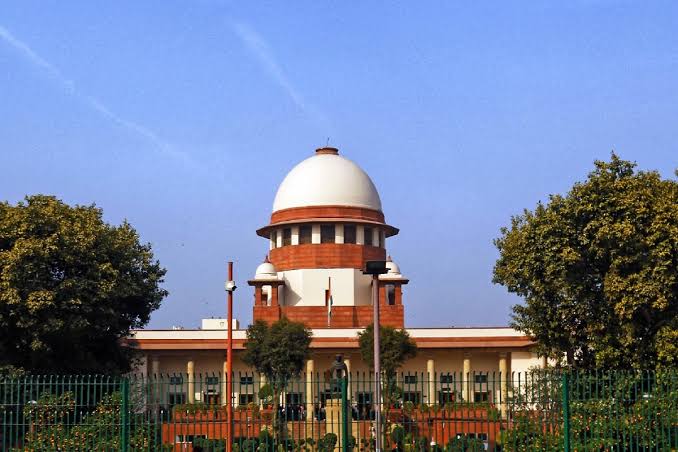
Big step of Supreme Court: 4 special benches to settle old cases, 800 cases will be heard on priority.

Knews Desk- The Supreme Court has taken a major administrative step towards speedy disposal of cases pending for years. Releasing a new special roster, Chief Justice (CJI) Surya Kant has constituted four special benches which will hear the oldest civil and criminal cases of the court. Under this initiative, about 800 pending cases have been identified, which will be disposed of on priority basis.
According to the new roster effective from July 13, these four special benches will hear only old cases three days a week—Tuesday, Wednesday and Thursday. During this period, these benches will not be burdened with other regular cases, which is expected to speed up the disposal of pending cases.
Under the new system, Justice P.K. Mishra and Justice S.V.N. Two division benches headed by Bhatti will hear the oldest civil cases. Two other benches headed by Justice Manoj Mishra and Justice Ujjwal Bhuyan will hear the oldest criminal cases. A list of about 200 cases has been prepared for each bench.
Chief Justice Surya Kant said that the responsibility of the judiciary is not only to deliver judgments but also to ensure timely justice. According to him, every case pending for years is related to someone who has been waiting for justice for a long time. The old age of a matter cannot be a basis for ignoring it.
This initiative has been taken in view of the increasing number of cases pending in the Supreme Court. According to the National Judicial Data Grid (NJDG), there are currently about 95,911 cases pending in the Supreme Court, which includes 74,145 civil and 21,766 criminal cases.

CJI Surya Kant has already clarified that it is not possible to solve the problem of pending cases only by increasing the hearing in the courts. He believes that systems like improvement in judicial management and alternative dispute resolution will also have to be strengthened. The formation of new special benches is being considered a part of this broader reform process.

Comments are closed.