Minister of Public Health Pattana Promphat was quoted by local media as announcing the Thai Government’s ambitious plan to transform the nation’s medical and wellness sector into a major health economy, citing strong infrastructure development as a key driver of growth.
The announcement comes ahead of the 2026 Global Wellness Summit, scheduled for Nov. 10-13 in Phuket. The event, marking its 20th anniversary, gathers more than 600 participants, including business leaders, doctors, academics, investors, tech innovators and policymakers.
The country expects the summit to generate at least 300 million baht (US$8.91 million) in economic value, reinforcing Thailand’s role in the global wellness industry.
|
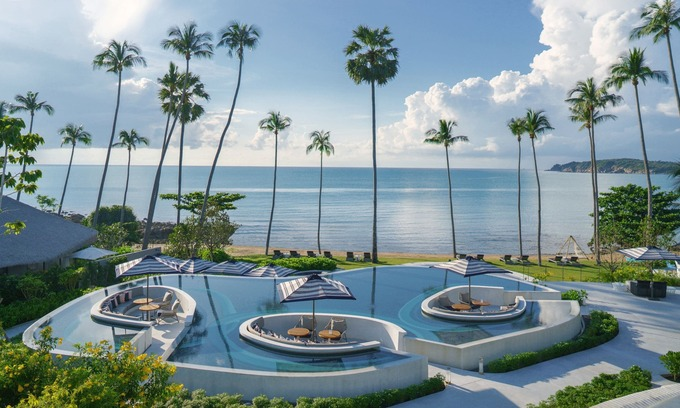
A swimming pool inside a resort in Thailand. Photo courtesy of the resort |
Cathy Feliciano-Chon, co-chair of the summit, said Thailand’s wellness industry is expanding, alongside global growth trends.
According to the Global Wellness Institute, the worldwide wellness economy is projected to grow by 7.6% annually between 2024 and 2029, increasing from $6.8 trillion in 2024 to $9.8 trillion in 2029.
Growth is being driven by ageing populations, the increasing prevalence of chronic diseases, rising demand for mental health services and longevity care, and stronger investment in healthcare infrastructure.
Asia has emerged as the world’s fastest-growing wellness market, valued at around $2 trillion, with annual growth averaging 31%, outpacing the Middle East and North Africa. In 2024, the region recorded 563 million wellness tourism trips, well above Europe’s 348 million, with medical tourism, spas and traditional medicine remaining the leading growth segments.
Thailand has also demonstrated a strong post-pandemic recovery. Revenue from its wellness sector fell from $41.7 billion in 2019 to $31 billion in 2020, but rebounded to $39 billion in 2023 and reached $43 billion in 2024, making Thailand the ninth-largest wellness market in the Asia-Pacific region.