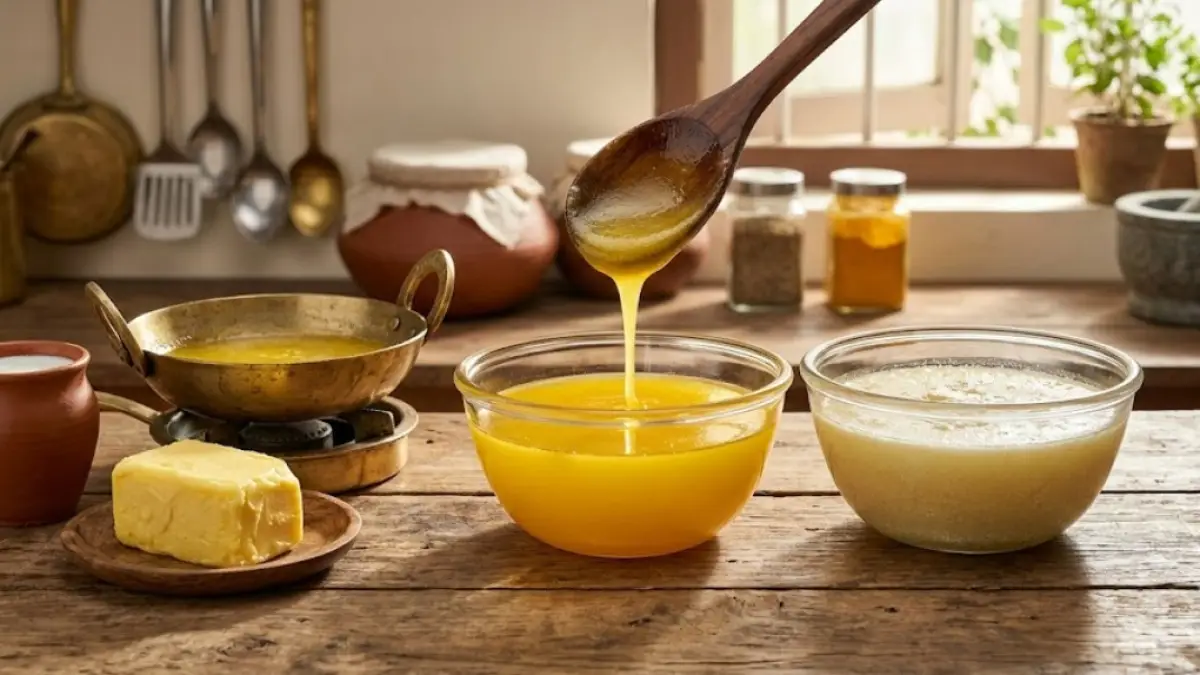
If you buy untested ghee, it could be detrimental to your health. Adulterated ghee may contain cheap oils, vegetable oil, or other ingredients, which can reduce its nutritional value and potentially impact your health. In such a situation, you can determine the purity of pure ghee using a few simple home remedies.
Tips to identify the purity of Desi Ghee
Test by rubbing it on your palm.
Place a small amount of ghee in your palm and rub it gently. Pure desi ghee melts quickly due to body heat, and its natural fragrance is noticeable. If the ghee remains solid for a long time or has a strange odor, its quality may be questionable.
Pay attention to the aroma and taste.
Genuine desi ghee has a natural and mild aroma. It dissolves easily in the mouth when eaten, and the flavor lingers. Any artificial aroma, excessive greasiness, or unusual taste in the ghee could be a sign of adulteration.
Heat Test:
Heat a spoonful of ghee in a pan. Pure ghee melts quickly, turning golden and emitting a fragrant aroma. If excessive foaming occurs upon heating, the color appears unusual, or a strong artificial odor is present, the quality of the ghee may be questionable.
Try the Fridge Test:
Place ghee in the refrigerator for a few hours. Pure ghee usually sets evenly. If distinct layers appear, or if some areas are hard and others are soft, this could indicate adulteration with different types of fat or oil. However, this test alone cannot be considered conclusive evidence.
Always check for trusted brands and labels.
When purchasing ghee, be sure to check the packaging, manufacturing date, FSSAI license number, seal, and ingredients. When purchasing loose ghee, purchase from a reputable seller. If possible, choose a certified and trusted brand.
Keep these important things in mind while buying ghee
- Always buy ghee from a trusted shop or brand.
- Be sure to check the packaging and expiry date.
- Avoid buying very cheap ghee.
- Store ghee in a cool and dry place.