

Summary
- Tokyo government officials are embracing a more relaxed office dress code by swapping traditional business suits for shorts as Japan battles another intense summer heatwave.
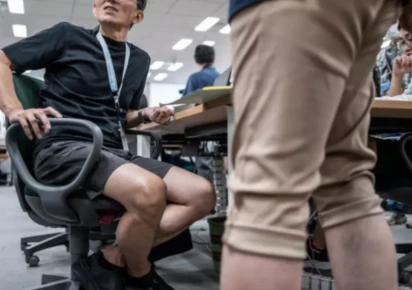
- On one of the hottest days of the summer, temperatures in Tokyo climbed to around 35 degrees Celsius, prompting several government employees to report to work wearing polo shirts, knee-length shorts and sneakers instead of their usual business attire.
- Although the relaxed dress code has gained acceptance within parts of the Tokyo Metropolitan Government, many private companies continue to require formal business attire, particularly for employees meeting clients.
AI Generated Summary
Tokyo government officials are embracing a more relaxed office dress code by swapping traditional business suits for shorts as Japan battles another intense summer heatwave. The move is part of an expanded effort to help employees stay comfortable while reducing electricity consumption in government offices.
The initiative forms part of Tokyo’s updated “Cool Biz” campaign, which encourages workers to replace jackets, ties and formal trousers with lighter clothing during the hottest months of the year. Officials say the relaxed dress code is intended to reduce reliance on air conditioning as rising temperatures and higher energy costs continue to pose challenges.
On one of the hottest days of the summer, temperatures in Tokyo climbed to around 35 degrees Celsius, prompting several government employees to report to work wearing polo shirts, knee-length shorts and sneakers instead of their usual business attire. Many admitted they initially felt uncomfortable dressing so casually in a traditionally formal workplace but soon appreciated the added comfort.
Tokyo Governor Yuriko Koike has strongly supported the initiative, describing it as more than just a change in clothing. She said the campaign represents a broader shift in thinking about how workplaces should adapt to increasingly severe weather conditions linked to climate change.
Japan recorded its hottest summer on record last year, with heat-related illnesses sending thousands of people to hospitals. Authorities have already issued this season’s first heatstroke alerts, urging residents to avoid prolonged outdoor activities and use air conditioning when necessary.
Although the relaxed dress code has gained acceptance within parts of the Tokyo Metropolitan Government, many private companies continue to require formal business attire, particularly for employees meeting clients. Nevertheless, a growing number of organisations are beginning to allow greater flexibility during periods of extreme heat.
The changing workplace culture has also influenced clothing retailers, with many companies expanding their collections of lightweight, breathable office wear designed for hot weather. Manufacturers are promoting quick-drying fabrics and stretch materials that balance professionalism with comfort.
The move has generated widespread discussion on social media, where many users praised Tokyo officials for prioritising employee wellbeing and adapting workplace traditions to modern climate realities. Others said similar policies could benefit offices in other countries facing increasingly frequent heatwaves.
Experts believe flexible workplace policies will become more common as global temperatures continue to rise. Supporters argue that allowing lighter clothing can improve employee comfort, productivity and energy efficiency without compromising professionalism.
As Japan prepares for another challenging summer, Tokyo’s decision to let officials wear shorts signals a growing willingness to rethink long-standing workplace traditions. The initiative reflects the city’s efforts to balance employee wellbeing, environmental concerns and energy conservation in an era of increasingly extreme weather.
We welcome your contributions! Submit your blogs, opinion pieces, press releases, news story pitches, and news features to opinion@minutemirror.com.pk and minutemirrormail@gmail.com
Comments are closed.