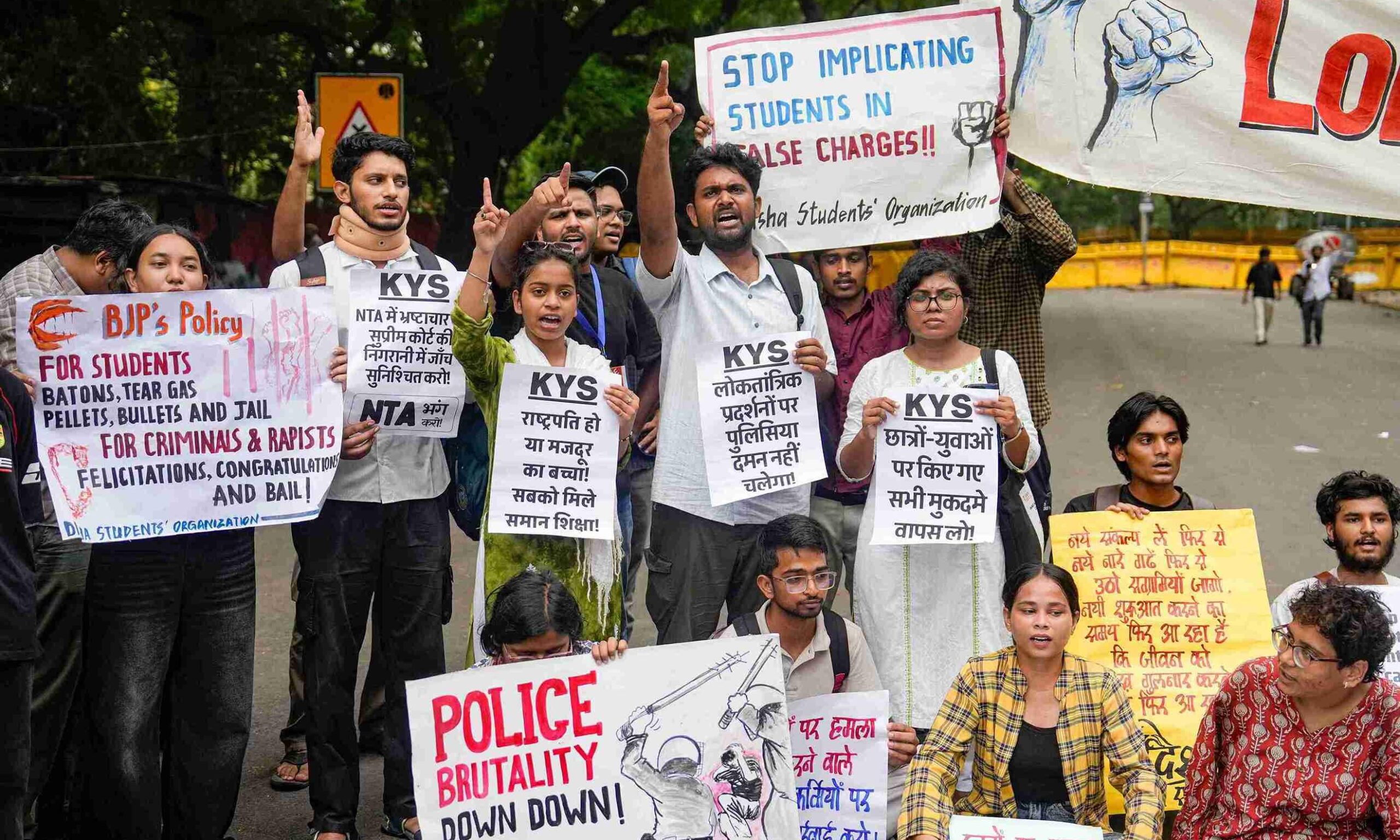
A day after Prime Minister Narendra Modi said he had forgiven the youngsters whose abusive remarks against him went viral during the Jantar Mantar protest, political commentators, academics and Opposition voices questioned whether the BJP could credibly lecture young people on political discourse while ignoring abusive rhetoric from within its own ranks.
In a video posted on Instagram on Friday (July 31), Modi said he had forgiven the “misguided youth” and appealed to Gen Z to join him in building the nation. The remarks came after a 15-year-old girl released a video apologising for using abusive language against the Prime Minister, a woman leader and the PM’s late mother during the protest. Her family had earlier submitted a written apology to the police after an FIR was registered against her.
Also read: Congress accuses PM Modi of ‘playing victim’, demands apology for police crackdown
PM Modi’s “outreach” triggered a sharp debate on The Federal’s Capital Beat, where panellists questioned whether the controversy reflected a broader political culture that had normalised abusive language and whether Gen Z would accept Modi’s appeal.
‘Who created this political culture?’
Senior journalist and political commentator TK Rajalakshmi argued that while the teenager’s language may have been inappropriate, the larger question was who had created an environment where such rhetoric had become commonplace.
She alleged that BJP leaders, including PM Modi, had themselves often used inflammatory language against political opponents and minorities. “There have been many occasions when the PM himself made outrageous remarks against minorities and Opposition leaders. Several BJP MPs have also made communal remarks on the floor of Parliament,” she said.
Also read: ‘She wasn’t a protester’: Advocate Singh defends FIR against content creator Ruchika
Rajalakshmi also criticised the Prime Minister for not calling for the withdrawal of the FIR against the teenager despite saying he had forgiven her. “If forgiveness was genuine, he could have at least urged the authorities to reconsider the criminal case,” she said.
Questions over juvenile identity and legal action
Supreme Court lawyer and Samajwadi Party spokesperson Sarvesh Tripathi questioned the handling of the case involving a minor.
He pointed to Section 74 of the Juvenile Justice Act, 2015, which prohibits disclosure of the identity of children in conflict with law, and argued that the controversy had raised broader concerns about the treatment of minors.
Tripathi also criticised the government’s handling of the issue, alleging that the episode would remain a blot on its democratic record.
‘Double standards on abusive language’
YouTuber and Yuva Halla Bol researcher Anchal Gupta accused the BJP of displaying double standards by condemning abusive remarks while ignoring similar behaviour by its own leaders and supporters.
Also read: PM Modi in new video: ‘I was subjected to abusive language at Jantar Mantar’
“There are countless videos of BJP leaders and functionaries using abusive language against Opposition leaders, students and activists. It is hypocrisy to suddenly project an image of political civility,” she said.
Gupta argued that abusive political discourse had become normalised over the years and could not be viewed in isolation.
‘A patronising message to protesters’
Delhi University professor Tanveer Aeijaz described Modi’s video as patronising, arguing that it attempted to portray protesting students as “misguided” rather than addressing the issues they had raised.
He questioned why the Prime Minister had singled out a minor girl while ignoring similar remarks made by others and said the message reflected a paternalistic approach towards young protesters.
Aeijaz also drew parallels with previous protests, alleging that the government had frequently dismissed dissent by branding protesters as “misguided”, whether they were farmers or students.
Also read: Meta apologises after PM Modi’s Facebook video got briefly removed
According to him, the Prime Minister’s message sought to delegitimise the protest movement instead of engaging with the concerns that had brought young people onto the streets.
Even as PM Modi reached out to Gen Z with a message of forgiveness, the discussion suggested that winning the trust of young protesters may depend as much on addressing their concerns as on appealing for restraint in public discourse.