
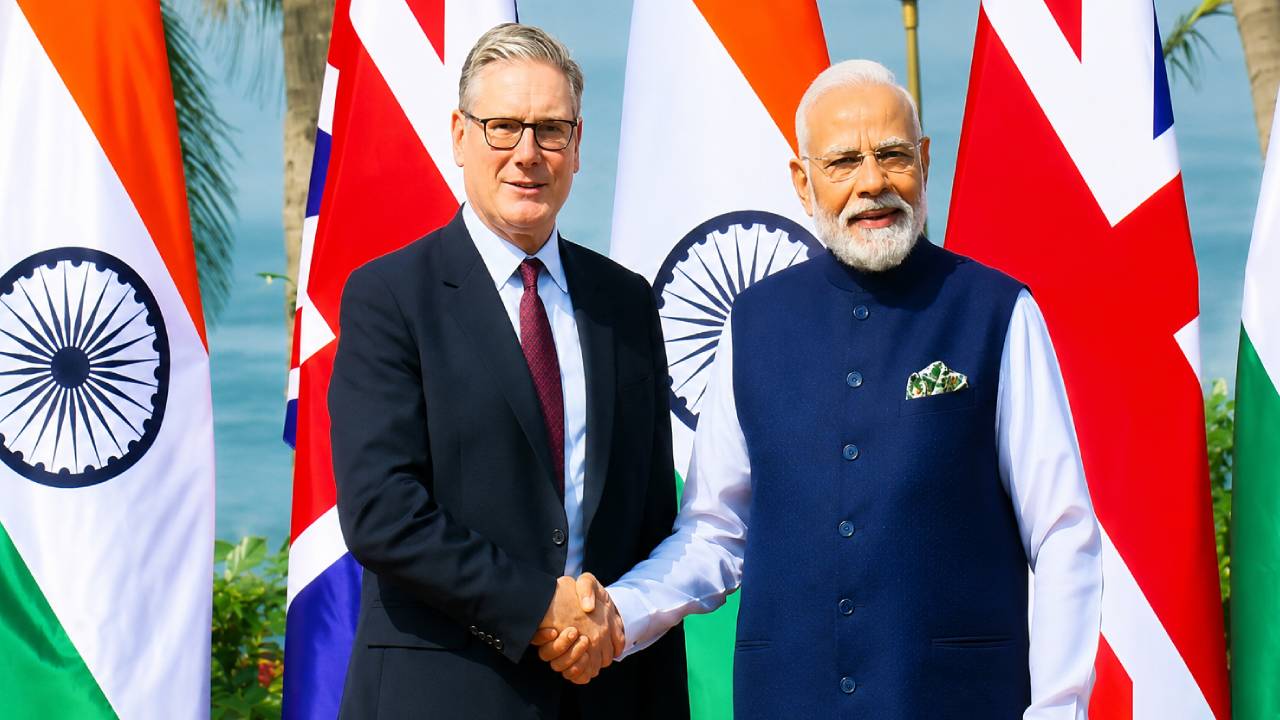

After nearly three years of negotiations, the Free Trade Agreement (FTA) between India and the United Kingdom (UK), officially called the Comprehensive Economic and Trade Agreement (CETA), came into effect from Wednesday. After the agreements with United Arab Emirates (UAE) and Australia, this is considered to be India’s biggest trade agreement with any developed country.
With the implementation of this agreement, on one hand, Scotch whiskey, gin and future luxury cars coming from Britain are expected to become cheaper in India, while on the other hand, the UK market, one of the world’s largest consumer markets, will become more open for Indian exporters.
What is India-UK Free Trade Agreement?
Under the India-UK Free Trade Agreement, custom duty has been eliminated or reduced on thousands of products traded between the two countries. Apart from this, rules related to market access, investment and services have also been simplified. According to the government, now 99 percent of India’s exports on value basis will get the benefit of zero duty in Britain. Many important sectors are included in this.
In return, India has agreed to gradually reduce import duties on many British products including Scotch whiskey, gin and automobiles. The government believes that this agreement will increase trade between the two countries by billions of dollars in the coming years and will also strengthen the flow of investment.
What will be cheaper in India?
- Scotch Whiskey and Gin
The biggest impact of this agreement can be seen on the prices of Scotch whiskey and gin. At present, India imposes 150 percent import duty on Scotch whiskey and gin imported from Britain. With the implementation of the Free Trade Agreement, this duty will immediately reduce to 75 percent. After this, it will be reduced to 40 percent in a phased manner in the next 10 years.
Industry estimates suggest that retail prices of many premium Scotch brands may decline by 5 to 10 percent in the future. However, the actual prices will also depend on the excise duty of the state governments, distributor margins and pricing strategy of the companies.
- luxury british cars
Under this agreement, import duty on luxury cars made in Britain will also be reduced, but its benefits will be available gradually. Currently, up to 110 percent import duty is imposed on cars imported from Britain. Under the agreement, it will be reduced to 10 percent in a phased manner in 15 years. Initially, only a limited number of cars imported under Tariff Rate Quota (TRQ) will get the benefit of concessional duty.
Luxury brands like Aston Martin, Bentley, Jaguar Land Rover (models manufactured in UK), McLaren and Rolls-Royce are likely to benefit the most from this. However, customers should not expect huge price cuts immediately. In the first year, only 20,000 completely built-up petrol and diesel passenger cars will get the benefit of concessional duty. After this, the fee will be reduced to 10 percent in a phased manner by the 15th year.
Which products will not become cheaper immediately?
Many people hope that after this agreement the prices of all products coming from Britain will fall immediately, but this will not happen. Where duty has been reduced on chocolates, cosmetics, premium food products and fashion accessories, price competition may increase over time. However, the final retail price will depend on freight charges, foreign currency exchange rates, GST, distributor margins and pricing policy of retailers.
How will Indian exporters get the benefit?
Although cheap imports are being discussed the most in this agreement, economists believe that India’s export sector will get the biggest benefit from it. Now almost all Indian products going to Britain will get duty-free (zero duty) access. This will increase the competitiveness of Indian exporters compared to countries on which import duty is still applicable in Britain.
According to analysis by the Global Trade Research Initiative (GTRI), the biggest opportunities are in sectors where India has strong production capacity, there is large demand for that product in the UK and significant reduction in import duties.
Which sectors will benefit the most?
Garments: India already exports readymade garments worth more than $1.3 billion to Britain and India’s share in Britain’s total garment imports is about 6 percent. With the abolition of duty, the competition of Indian exporters will become stronger.
Textile, Leather and Footwear: Britain buys more than 10 percent of India’s footwear exports. India also has a good presence in textile and leather products. These sectors are considered to be among the biggest beneficiaries.
Processed Food: There is a possibility of increase in exports of ready-to-eat food, sauces, bakery products and Indian traditional food items. However, it will be mandatory to follow Britain’s food safety standards.
Marine Products: At present, India’s share in Britain’s marine product imports is less than 1 percent. There is a huge opportunity in this sector if Indian exporters meet the standards related to cleanliness and traceability.
Automobiles and Auto Components: Britain imports automobiles worth more than $92 billion every year, but India’s share is only 0.4 percent. Lower duties could create new opportunities for Indian automakers and auto component companies.
Engineering, Electronics and Machinery: There is also potential for export growth in these sectors, although success will depend on the quality of products, international certification and greater participation in the UK supply chain.
Which sectors will get limited benefits?
According to GTRI, mere reduction in import duty will not eliminate the challenges of all industries. Sectors like pharmaceuticals, chemicals, plastics and rubber, precious metals, iron and steel, petroleum products, tobacco and alcohol exports from India will still face challenges like regulatory approvals, technical standards, environmental regulations, quality certification and limited market presence.
How important is this agreement?
In the year 2025, Britain imported goods worth about $929 billion, but India’s share in this was only $15.2 billion or about 1.6 percent. At the same time, Britain’s share in India’s total global merchandise exports is about 3.4 percent.
In such a situation, the India-UK Free Trade Agreement is being considered an important step towards increasing trade, investment and economic cooperation between the two countries. The government estimates that this agreement will increase bilateral trade by billions of dollars in the coming years and will further strengthen the economic relations between the two countries.

Comments are closed.