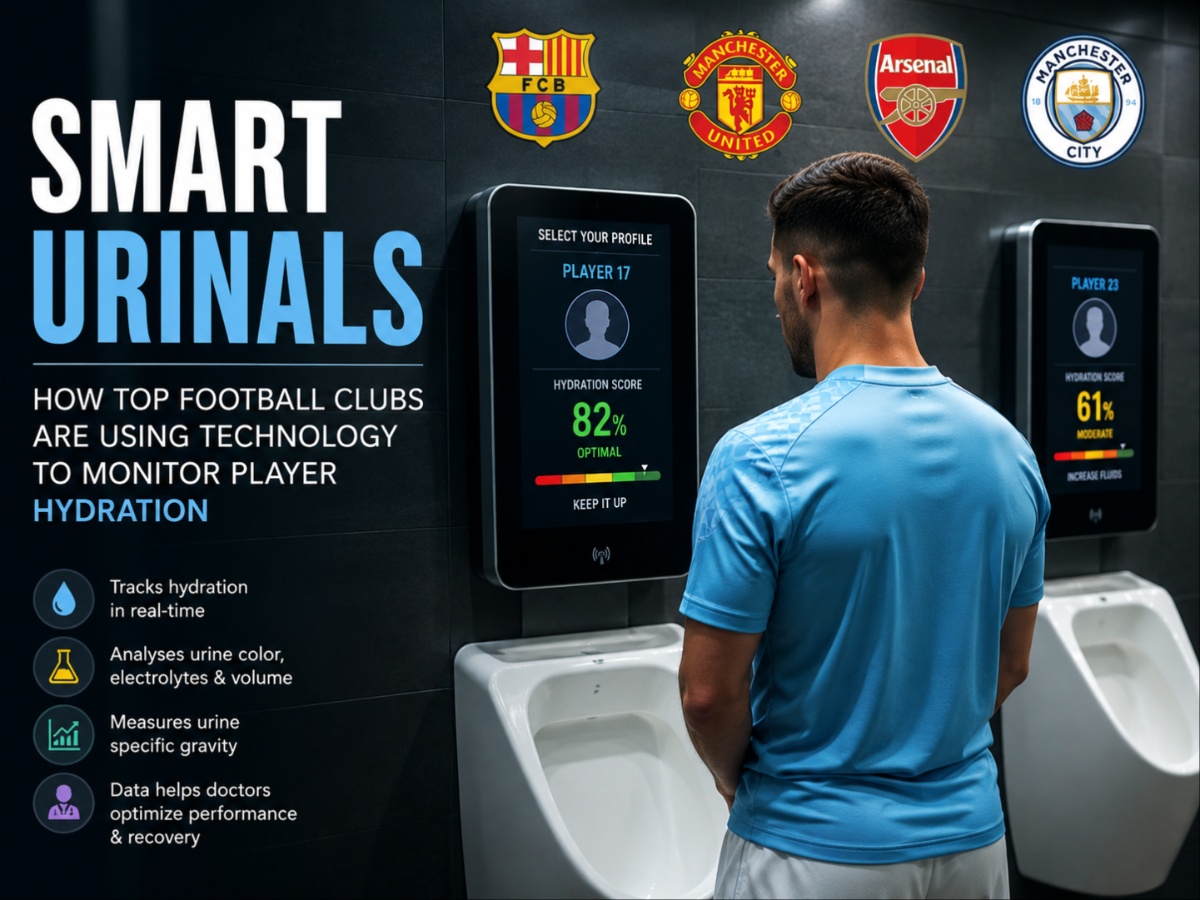
The pursuit of marginal gains in elite football has moved into an unexpected area, with some of the world’s biggest clubs reportedly using high-tech urinals to monitor the hydration levels of their players.
As the financial stakes in football have grown, clubs have increasingly looked for ways to improve even the smallest aspects of performance. From nutrition and recovery to sleep monitoring and data analysis, teams are attempting to control as many variables as possible in a sport where the smallest advantage can influence the outcome.
Arsenal manager Mikel Arteta recently highlighted the importance of those small improvements while discussing the club’s transfer plans.
“Because the margins are very small,” Arteta said when asked about the importance of adding new players during the transfer window.
“Because we want to get better and the level is going to increase. We need to increase the competition internally. We need to make sure we identify the things that we don’t have in the team. We have bigger margins and that’s the way we have to see it,” he added.
One of the latest examples of this obsession with detail can reportedly be found in football club bathrooms.
According to Tifo Football, several prominent European clubs, including Barcelona, Manchester United, Arsenal and Manchester City, have introduced so-called ‘smart urinals’ in their men’s facilities to help monitor players’ hydration in real time.
The technology reportedly requires players to select their individual profile on a touchscreen positioned above the urinal before providing a urine sample. The system then analyses the sample and produces a hydration assessment, allowing players and medical staff to determine whether their fluid intake needs to be adjusted.
The information gathered can go beyond a basic hydration reading. According to the report, medical teams can examine factors such as urine colour, electrolyte levels, volume and frequency.
Another measurement available through urine analysis is specific gravity. This indicates how concentrated a urine sample is compared with water and can provide medical staff with an indication of a person’s hydration status and how effectively the body is regulating fluids.
For professional footballers, maintaining appropriate hydration can be particularly important because fluid loss during training and matches can affect physical performance and recovery.
The use of such technology reflects how far elite clubs are prepared to go in their pursuit of incremental improvements. With huge sums invested in players and increasingly sophisticated performance departments, even routine biological data can become part of a team’s broader strategy.
Football remains a low-scoring sport in which fine margins often decide matches. As clubs continue searching for ways to gain an advantage, the latest battleground appears to be one few fans would have expected: the players’ restroom.