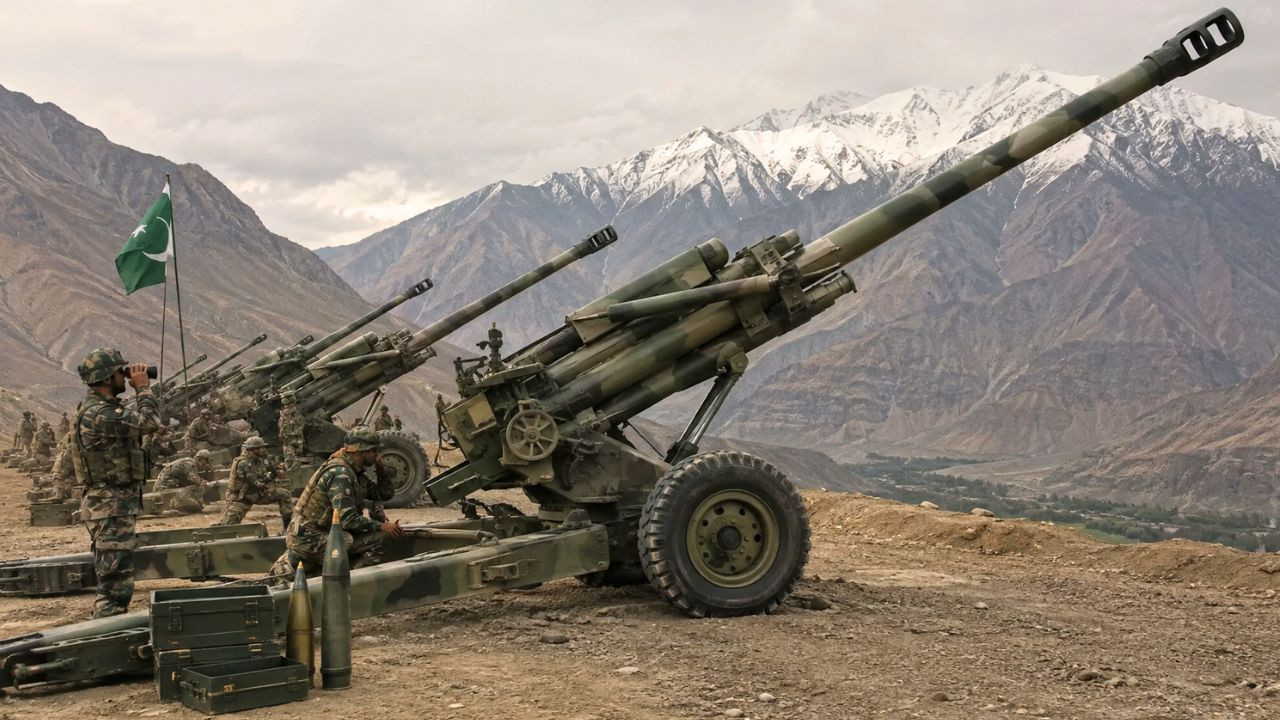
New Delhi: Following Operation Sindoor, Pakistan has begun rapidly increasing its artillery strength. According to intelligence sources, Pakistan has purchased 250 SH-15 155mm truck-mounted howitzer systems from China and has begun deploying them along its western border with India. These high-mobility artillery guns are being installed at strategic points from north to south.
What is the specialty of SH-15 howitzer?
The SH-15 is manufactured by the Chinese state-owned company Norinco. It is the export version of the PLA’s PCL-181. Mounted on a 6×6 armored Shaanxi truck, this self-propelled artillery gun has a top speed of up to 90 kilometers per hour on road. It can also rapidly change positions off-road and has a long range.
The standard 155mm NATO round has a range of 30 to 40 kilometers, while the rocket-assisted V-LAP projectile can hit targets 53 to 72 kilometers. It features an automated fire-control system and hydraulic spades. Setup takes a few minutes and it can fire up to 6 rounds per minute.
The biggest advantage is its “shoot and scoot” capability. It quickly repositions after firing, making it easier to evade counter-battery radar. This is why it is considered more lethal than conventional towed guns.
Changes after Operation Sindoor
In May 2025, India’s three armed forces launched Operation Sindoor, targeting terrorist hideouts across the Line of Control and the Line of Control (LoC). Several Pakistani artillery positions were damaged in the operation.
To fill this gap, Rawalpindi prioritized the shipment of 250 SH-15s. This large number is enough to fully equip several artillery regiments. Pakistan has previously deployed some SH-15s near the Line of Control and used them in the 2025 conflict.
Increased tension on the border, a challenge for India
The deployment of these guns has brought many Indian military bases, logistics routes, and forward posts within their range. India has tracked systems like the K-9 Vajra, which are considered more secure, but Pakistan benefits from wheeled mobility.
Defense experts believe that such a large deployment has increased the risk of misunderstandings along the border. Even a small incident could escalate into a major conflict. The growing China-Pakistan defense partnership is also a part of this. Both countries are now emphasizing joint exercises, networked command, and interoperability.
The challenge for Pakistan is that operating and maintaining such an expensive system will be difficult given its economic constraints. Dependence on China will also increase. This artillery competition in South Asia demonstrates that conventional warfare remains a significant security issue.