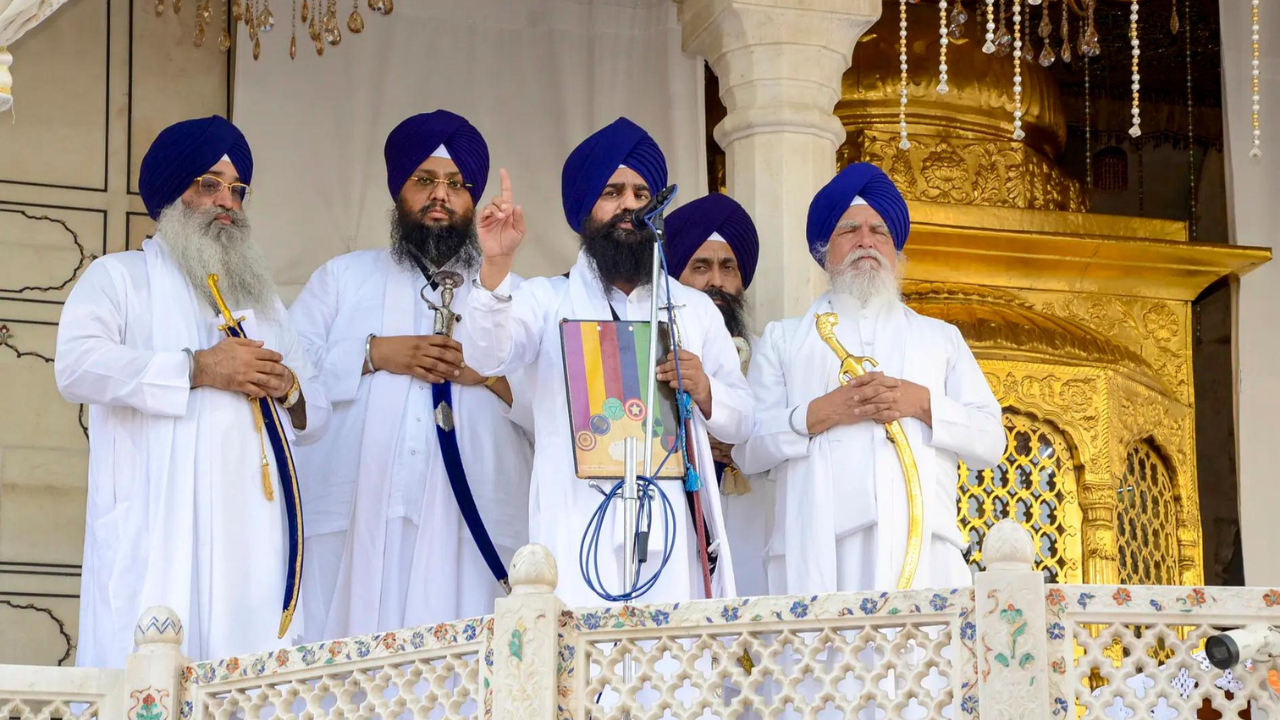
Punjab’s Monsoon Session, scheduled from August 3 to August 10, is set to begin under the shadow of an unprecedented confrontation between the state’s highest temporal Sikh authority and the Aam Aadmi Party government. For the first time in Punjab’s political history, Sikh legislators have been advised by the Akal Takht not to engage with a sitting Chief Minister inside the Legislative Assembly after Bhagwant Mann was declared a “Guru Dokhi”. The directive, issued by officiating Akal Takht Jathedar Giani Kuldeep Singh Gargaj, came in response to a written query from Leader of Opposition Partap Singh Bajwa, who had sought guidance on how Sikh MLAs should conduct themselves during the Assembly session in view of the Akal Takht’s earlier declaration against the Chief Minister. The Akal Takht advised Sikh legislators to limit their interaction to the Speaker and participate only in the proceedings of the House. It further said they should neither face Chief Minister Bhagwant Mann, nor look at him, nor respond to anything he says during the proceedings. The advisory comes even as the standoff over the Jaagat Jot Sri Guru Granth Sahib Satkar (Amendment) Act remains unresolved, making it almost certain that the issue will dominate the Assembly session beginning August 3.
How the confrontation began
The controversy traces its origins to a viral video that surfaced earlier this year, purportedly showing a man alleged to be Chief Minister Bhagwant Mann sprinkling liquor on photographs of Sikh Gurus and performing acts considered objectionable by members of the Sikh community. The Punjab government and the Aam Aadmi Party rejected the allegations, maintaining that the video was fabricated and disputing that the person seen in it was the Chief Minister. The Akal Takht, however, ordered an independent examination of the video. According to the Sikh temporal authority, forensic analysis conducted by two governmentrecognised forensic laboratories concluded that the video was authentic, had not been tampered with and was not generated using artificial intelligence. Relying on those forensic findings and after hearing the matter, the Akal Takht declared Bhagwant Mann a “Guru Dokhi” and Khalsa Panth Virodhi, holding him responsible for acts that it considered offensive to Sikh religious sentiments. The Punjab government, however, continued to reject the Akal Takht’s conclusions, maintaining that the forensic reports did not establish that the person seen in the video was Bhagwant Mann. The AAP government has maintained that the individual shown in the footage was not the Chief Minister.
Satkar act adds another flashpoint
The dispute further escalated after the Punjab Assembly passed the Jaagat Jot Sri Guru Granth Sahib Satkar (Amendment) Act, which the Mann government described as landmark legislation aimed at protecting the sanctity of Sri Guru Granth Sahib through stringent punishment for sacrilege. However, the Akal Takht objected to both the contents of the legislation and the manner in which it was enacted. It maintained that a law concerning Sikh religious matters should not have been passed without consulting the Panth and Sikh religious institutions. On June 29, the Akal Takht held a special hearing, summoned Sikh ministers and legislators from different political parties and directed the Punjab government to suspend implementation of the Act while removing the objections raised by the Sikh clergy within one month. Subsequently, the Akal Takht forwarded around ten suggested amendments to the Punjab government for incorporation into the legislation. The Mann government referred the suggestions to the office of the Advocate General for legal opinion. Chief Minister Bhagwant Mann indicated that any amendments would be introduced only after receiving legal advice and hinted that the matter could be taken up during the Monsoon Session. As the one-month deadline expired, the Punjab government submitted its response to the Akal Takht. It informed the Sikh temporal authority that it intended to urge the Union Government to enact a nationwide anti-sacrilege law on the lines of Punjab’s legislation and that legal consultations on the proposed amendments were continuing. The Akal Takht, however, rejected the government’s reply, terming it unsatisfactory, and instead constituted a committee to hold fresh discussions with the state government. Advisory ahead of Assembly session It was against this backdrop that Partap Singh Bajwa sought guidance from the Akal Takht regarding the participation of Sikh legislators in the upcoming Assembly session. The Akal Takht’s response has now added an entirely new dimension to Punjab politics. Its directive asking Sikh MLAs not to engage with the Chief Minister is likely to have direct implications inside the Assembly, where Bhagwant Mann is expected to make statements, reply to debates, answer questions and pilot government legislation. While the Akal Takht has no constitutional authority over the functioning of the Legislative Assembly, its directives carry considerable religious and moral significance among Sikh politicians. The advisory places Sikh legislators across political parties, including ministers and MLAs belonging to the ruling Aam Aadmi Party, in a difficult position as they balance their constitutional responsibilities with the directions issued by the Sikh temporal authority.