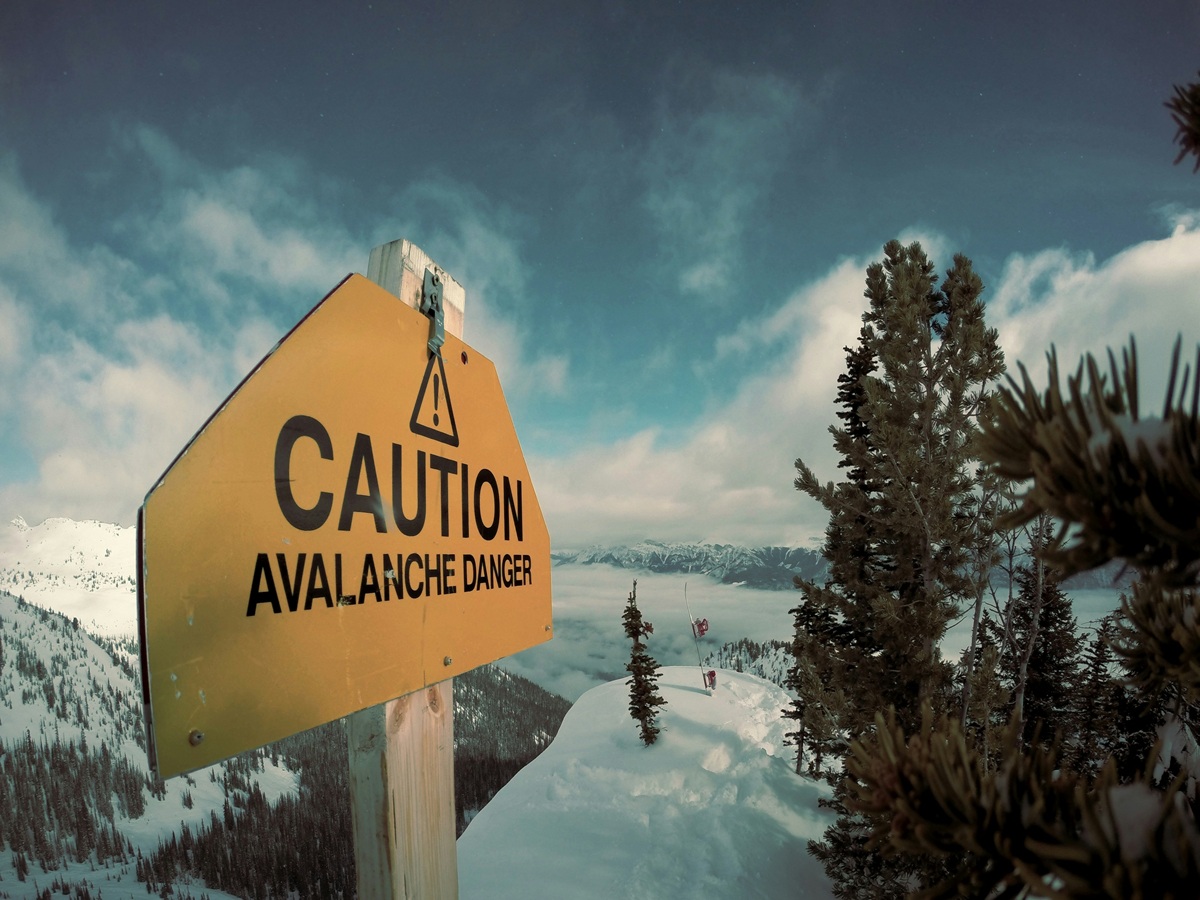
The recent death of famous mountaineer Nirmal Purja has brought back the global focus on one of the biggest threats to mountaineers: avalanches. Although the tall mountains in the world pose great challenges and are an invitation for adventure and courage, these mountains have always been full of threats from nature. One of the biggest threats among those is avalanches.
Avalanches claim the lives of hundreds of people each year on various mountain ranges around the world, like the Himalayas, the Alps, the Andes, and the Rockies. These disasters affect not only mountaineers but also skiers, snowboarders, rescue teams, and even the local residents living in the mountains. Despite being very experienced, climbers cannot avoid avalanches completely, as they happen suddenly and offer no reaction time.
The tragedy has once again raised several questions. With the demise of mountaineer Nirmal Purja, people want to know what exactly an avalanche is. Why does it happen? Can it be predicted before it strikes? And why are these massive snow slides so difficult to survive? Here’s a closer look.
What is an Avalanche?
An avalanche is a rapid flow of snow, rocks, and sometimes ice flowing down from the slope of a mountain. This occurs after the snow begins sliding from the surface on which it is resting due to triggering factors.
Most of us tend to visualise avalanches as large snow waves which emerge abruptly out of nowhere. However, the real scenario usually goes in a different manner. The beginning of an avalanche starts with a small crack appearing on the snowpack, which leads to the detachment of the whole snow cover. Within a very short period of time, a small crack turns into a deadly wave of snow which carries ice, boulders, trees, and other kinds of debris with it.
The volume of an avalanche may be small and comprise only loose snow, or it may grow into the largest landslide able to destroy forests, roads, houses, and other constructions in its way.
How Does an Avalanche Occur?
It should be emphasised that the snow does not lie in one layer during winter months. Rather, each snowfall causes the formation of a new layer. As days pass and weeks turn into months, many snow layers accumulate in mountains. Each of them has its unique properties. Some are compact and tough, others are loose, icy or weak.
A danger is caused by the occurrence of a weak layer under the heavy and solid layer of snow. At first, the snowpack seems absolutely stable. Yet, with the continuous accumulation of fresh snow and changing weather conditions, pressure on the weak layer rises.
Ultimately, the weak layer collapses and cannot endure the weight of the upper layers anymore. The bond between the layers breaks, and the upper part slides down the mountain due to gravity. In a matter of seconds, the speed of movement increases significantly, and the avalanche drags the layers along.
As a rule, the cause of the disaster is quite insignificant. It can be a skier walking across the slope, a mountaineer making a step, a snowmobile or just vibrations of the earth’s surface. Therefore, avalanches are considered an unexpected event.
What Causes Avalanches?
Various factors can lead to the development of avalanches, both natural and anthropogenic. Often it is not one reason that causes an avalanche, but their combination.
The main reasons for avalanches are heavy snowfalls. If the snow accumulates quickly, they create additional weight. If there are weak layers in the snowpack, the additional load can lead to the collapse of such layers.
Strong wind is another very important factor that causes avalanches. The wind brings snow from one mountain range to another, which leads to the accumulation of snow in some areas. Such slopes with wind-loaded snow can seem safe, but actually they are quite dangerous.
The changes in temperature can increase the risks of avalanches. An increase in temperature decreases the cohesion between snow crystals. Also, the snow starts melting, therefore becomes heavier and less stable. Therefore, it happens more often on warm afternoons and in springtime.
The precipitation also contributes to the formation of the avalanche. The water is accumulating in the snowpack and creates additional weight, which makes snow layers weaker. The appearance of rain in high-mountainous regions after snowfall is a significant alarm.
There may also be natural factors which cause an avalanche, such as an earthquake or rock fall. Nevertheless, one should bear in mind that there are a great number of human-related activities that may trigger avalanches. Most of them are triggered accidentally by skiers, snowboarders or climbers moving through unstable ground.
Why are Avalanches so Dangerous?
First of all, avalanches are very fast. A small avalanche usually moves at a speed of 30-50 kilometres per hour; however, large avalanches may reach the speed of 250 kilometers per hour. This makes the survival chances for people very slim.
Nevertheless, it is not only the impact of the avalanche that is so dangerous. People usually do not die from the impact but rather because they get buried alive under several meters of solidly packed snow after the avalanche stops.
After settling, the avalanche snow hardens rapidly and almost turns into concrete. A person who gets trapped is unable to move his or her arms and legs. Furthermore, it is increasingly difficult to breathe because the air pocket around the person’s head disappears.
Medical experts say that survival chances drop sharply if a buried person is not rescued within the first 15 to 20 minutes. Apart from suffocation, victims may also suffer severe injuries after colliding with rocks, trees, or chunks of ice during the slide. Cold temperatures further increase the risk of hypothermia.
Can Avalanches be Predicted?
It is possible to forecast potentially hazardous avalanche conditions, but it is impossible to forecast avalanche times and locations. Specialists carefully observe the weather conditions, amount of precipitation, wind direction, temperature variations, rainfall, and state of the snowpack. All this information is used by avalanche forecasting centres to give a daily evaluation of the risk in various mountain areas.
The development of modern technologies is helpful in avalanche forecasting as well. Satellites, weather forecasts, drones, and remote sensing enable scientists to investigate the mountainous region in greater detail than ever before. Nowadays, many countries provide their avalanche bulletins for climbers, skiers, and rescuers to use before their adventures into avalanche-prone areas.
Despite all efforts to improve the prediction system, avalanche occurrence is still very unpredictable. The slope may be stable for several days, but after a single move it will slide suddenly down.
How Do Mountaineers Reduce Avalanche Risk?
Professional climbers know well that being protected from avalanches starts way ahead of setting foot in a mountain area. They analyse weather forecasts, amount of snowfall, and avalanche warnings before organising their climbing expedition. Experienced teams may even decide not to climb if they find the weather conditions to be unsafe.
Professional climbers usually have all kinds of special equipment, which includes transceivers, probes, shovels, helmets, and communication devices to help to save a life in case of an emergency situation.
Proper training also plays an essential role. The climbers can recognise dangerous snow, look out for warning signs, and traverse unstable slopes only one person at a time. Although the climbers take precaution measures to minimise danger, nature will still always be unpredictable.
Why are the Himalayas Especially Prone to Avalanches?
Himalayas belong to those ranges which are highly vulnerable to avalanches owing to heavy snowfall, wind storms, and rapid changes in the weather.
Recently, scientists have started raising the alarm that climate change has started impacting snowfall in mountain ranges. The rising temperatures, melting glaciers, and unpredictable weather may cause problems for snow stability in certain areas; however, its effect differs from place to place.
These changed circumstances have added a new challenge for mountaineers who now have to confront not only the altitude and weather conditions but also mountain dangers.
Sudeep Singh Rawat is a Copy Editor at NewsX Digital with over five years of experience in digital journalism. He covers national and international news, with a focus on politics, crime, technology, public affairs, and trending topics. Before joining NewsX Digital, he worked with Business Standard, The Sunday Guardian, and other digital media organisations. His reporting focuses on breaking news, enterprise stories, and explainers that inform readers through accurate, balanced, and context-driven journalism.
The post What Is an Avalanche and Why Is It So Deadly? Mountaineer Nirmal Purja’s Death Puts Spotlight on Mountain Risks appeared first on NewsX.