
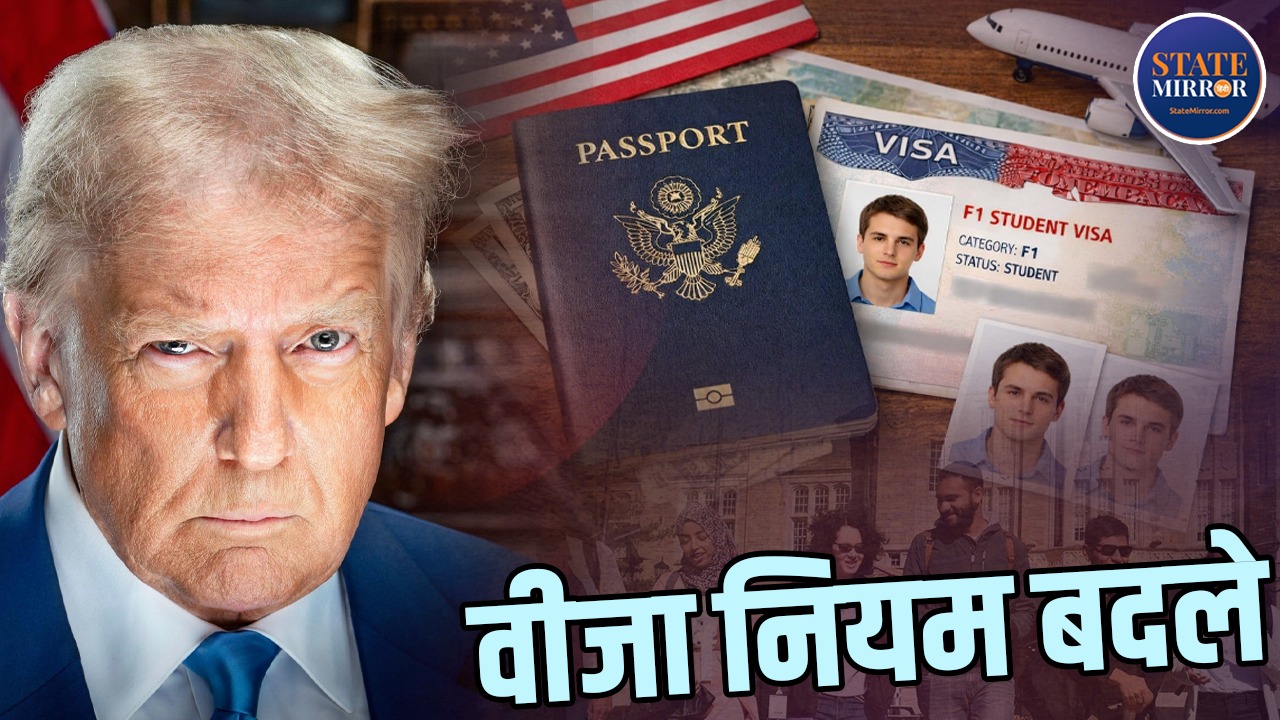
Trump’s big visa shock! Rules changed for 3.3 lakh Indian students, how much will be the impact and what to do now?

If your dream is to study, do research or work as a journalist in America, then this news is very important for you. The Trump administration has made major changes in the visa rules for students, exchange visitors and foreign journalists. Now the old system of indefinite stay in America has been abolished and in its place a fixed period of maximum four years has been implemented. This decision will affect more than 12 lakh people around the world, which includes about 3.3 lakh Indian students. In such a situation, know what has changed, what effect it will have on India and what things Indian students will have to take special care of now.
What is the big change in visa rules?
The US Department of Homeland Security (DHS) has ended the Duration of Status (D/S) system that has been in place for decades for F (Student), J (Exchange Visitor) and I (Foreign Media Representative) visas. Instead of this, the rule of maximum fixed period of four years has been implemented. This means that now visa holders will not be able to stay in America indefinitely and after the completion of the stipulated period, they will have to take fresh permission under the legal process to stay there further.
What about the old rules?
1. Duration of Status (D/S)” was applicable on F, J and I visas.
2. The student could stay in America till the completion of the course.
3. There was no separate time limit for extension of the course.
4. The status remained as long as the SEVIS record remained valid.
5. Long courses like PhD could be completed easily.
6. EOS from USCIS was not necessary every time to expand the program.
7. A grace period of 60 days was available.
8. Changing schools or programs was relatively easy.
9. Immigration surveillance was relatively low.
10. There was no fixed maximum period of authorized stay.
What will be the impact on Indians?
The new visa rules of the Trump administration may have the biggest impact on Indian students. Currently, about 3.3 lakh Indian students are studying in America, out of which a large number are students whose courses or research take more than four years. Now such students will have to apply separately for Extension of Stay (EOS) after the stipulated period. With this, studies, research, internship and further planning will become more systematic than before.
This may lead to additional documents, biometric checks, background verification and increased administrative processes. After graduation, the time available to change job, status or go to another institution will also reduce. Due to this, students will have to plan better than before and strictly follow the visa rules.
What will be the impact on students already living there?
The foreign students who are currently living in America under the Duration of Status (D/S) system will also automatically come under the purview of the new system after the implementation of the new rules. That is, from the date of implementation of the new rules, the maximum limit of their authorized stay will be considered to be four years. If they need more time than that, they will have to apply for extension as per the prescribed procedure.
What changes occurred in the new rule?
Duration of Status (D/S) system was abolished. A maximum fixed period of 4 years will be applicable on F, J and I visas. Extension of Stay (EOS) will be mandatory for additional time. For EOS, a formal application must be made to USCIS. There will be biometric and background checks before extension. The grace period of F-1 students will be reduced from 60 days to 30 days. The rules for changing school or status will be more strict. There will be additional restrictions on changing academic programs. DHS will conduct regular monitoring and screening. Old D/S visa holders will also come under the maximum limit of 4 years under the new system.
What will happen due to change in overall visa rules?
The new rules aim to increase immigration surveillance of foreign students, exchange visitors and journalists. Now it will not be easy to stay in America for a long time without new approval. Every additional stay will require formal permission, giving the government more scope for screening and security checks.
On the other hand, administrative processes for students and universities may increase and applying on time will become more important than ever. This change makes the US immigration system more controlled and surveillance-based, while also increasing the pressure for students to comply with the rules.
What should Indian students do now?
After the new visa rules of America, Indian students will have to be more cautious than before about all the deadlines related to their studies and visa. First of all, regularly check the validity of your visa, I-20 (for F-1 students) or DS-2019 (for J-1 exchange visitors) documents. If the course or research is likely to last more than four years, start the Extension of Stay (EOS) process in time.
Students should keep in constant touch with the International Student Office (ISO) or Designated School Official (DSO) of their university so that they can get timely information about any changes in the rules. Also, it will be necessary to follow all the new guidelines issued by USCIS and DHS.
Additionally, complete the required document, biometric and background verification processes on time for any application related to extension or status. The grace period after graduation will now be 30 days instead of 60 days, so it is more important than ever to plan ahead for a job, status change, or leaving the US.

Comments are closed.