
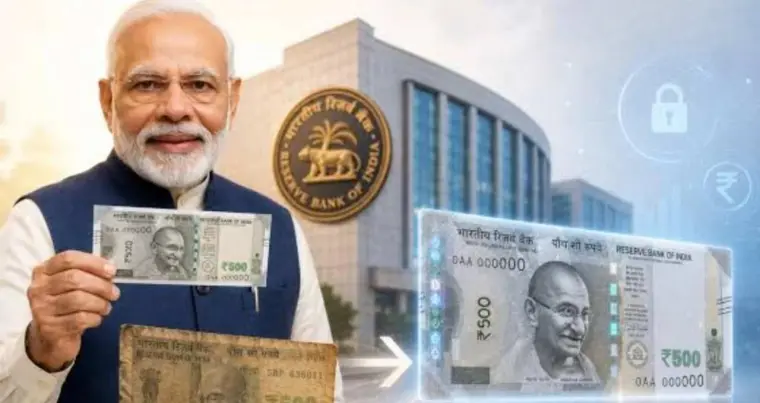

The discussion regarding polymer (plastic) notes has once again intensified in India. According to media reports, the Reserve Bank of India (RBI) may soon start a pilot project to assess the possibilities of using polymer notes in the country.
Business News: A big step can be taken towards making the currency system in India more modern, sustainable and secure. The Reserve Bank of India (RBI) is reportedly preparing to introduce polymer i.e. plastic based bank notes in a phased manner. In this direction, the note printing unit of RBI has issued Expression of Interest (EOI) globally for the supply of polymer substrate sheets. This move is being linked to the start of a possible pilot project of plastic notes in the country.
If this project is successful, India can also join the list of countries where polymer based bank notes are being used for a long time. Experts believe that this will significantly improve the quality, security and shelf life of the notes.
Why did RBI issue global tender?
According to media reports, the note printing unit of RBI has issued an international tender for the procurement of special opacified polymer substrate sheets to be used in the manufacturing of polymer notes. Applications have been invited from interested global companies within the stipulated time limit. This process is considered to be an indication that India is seriously moving towards testing polymer currency and its large-scale use in the future. However, the central bank has not yet announced the official launch date of the plastic notes.
Which denomination of notes can we start with?
According to sources, if the pilot project is approved, it could be started with smaller denomination notes of ₹10 and ₹20. These notes are used the most, so it will be easy to evaluate the practicality and durability of the new technology through them. If the results of the pilot project are positive, notes of other denominations may also be printed on polymer material in future.
What are polymer notes?
Polymer notes are made from a special type of plastic-based material, which is much stronger and more durable than traditional paper notes. The biggest feature of these notes is that they are relatively less affected by water, moisture, dust and dirt. Despite frequent use, their quality remains intact for a long time, reducing the need for frequent replacement. Several important benefits of polymer based notes are said to be:
- Many times more durable than traditional paper notes.
- They do not get spoiled easily due to water and moisture.
- Holds less dirt, resulting in cleaner looks for longer periods of time.
- It’s easy to add advanced security features that help prevent counterfeit currency.
- Longer shelf life reduces the need to frequently print new notes, which may reduce costs in the long run.
- These are also considered a better option from environmental point of view because resources are saved due to long-term use.
Higher initial cost, but savings in the long run
According to experts, manufacturing of polymer notes may be costlier than paper notes in the initial stage. However, their long life reduces the expense on frequent printing, transportation and replacement. This is the reason why many countries have considered polymer currency beneficial from a long-term economic point of view, despite the initial investment.
Polymer notes are not a new concept. Australia was the first to adopt them on a large scale. Subsequently, plastic based banknotes are successfully in circulation in about 60 countries including Canada, United Kingdom, Singapore, New Zealand, Malaysia, Thailand, Romania and Brunei. Experiences from these countries show that polymer notes deliver positive results in areas such as control of counterfeit currency, improved durability and lower maintenance costs.
Comments are closed.