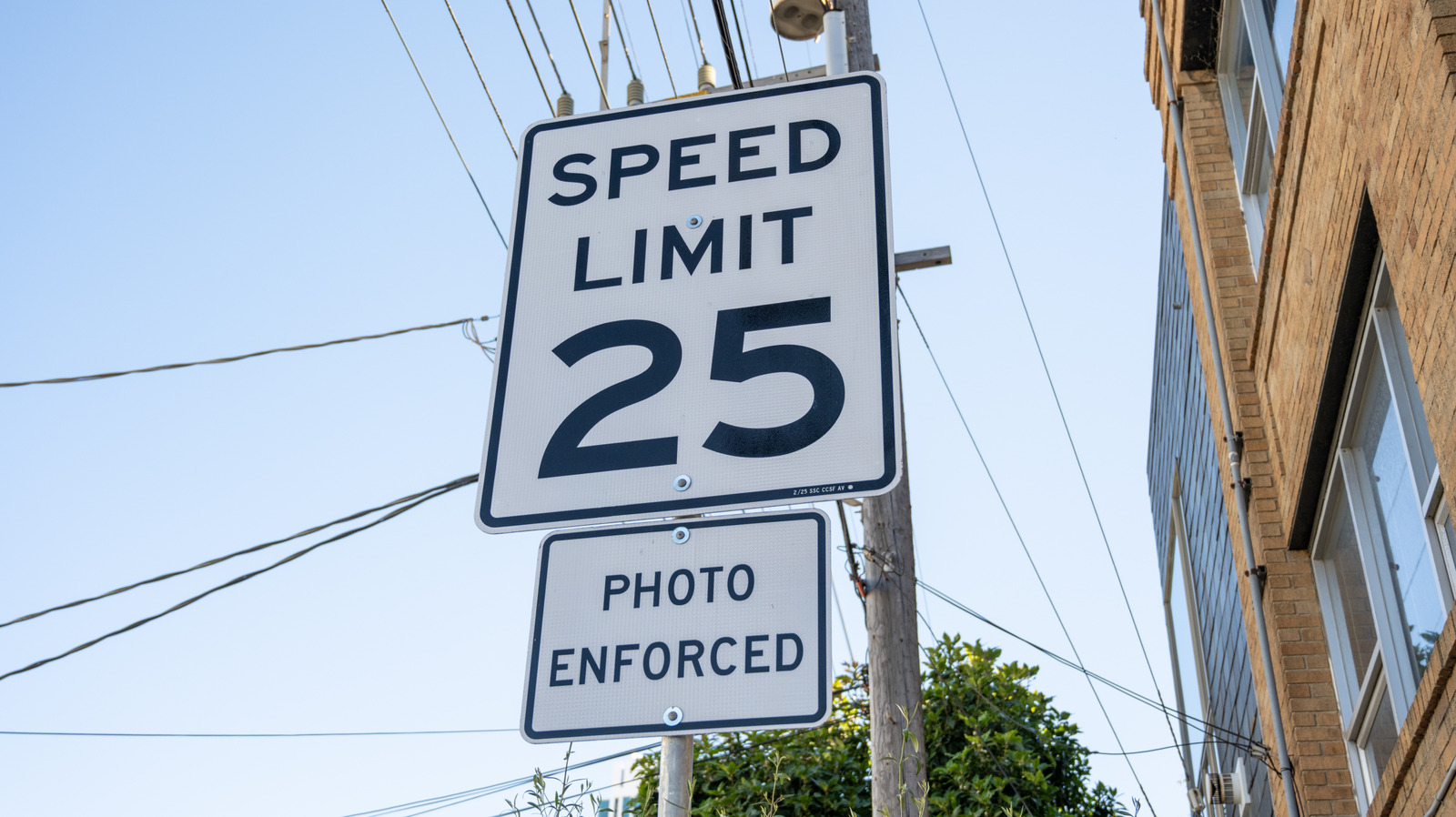
Most drivers in the U.S. likely have a good idea what “radar enforced” means on some speed limit signs. But this isn’t the only method law enforcement uses to help ensure that vehicles are moving at safe speeds, whether on a rural road or on a major highway. For example, “photo enforced” means that a speed camera is indeed being used to identify drivers going beyond the speed limit.
This use of cameras is part of an Automated Speed Enforcement (ASE) system. ASE systems are often seen in work zones and school zones, but can be placed in high-speed locations as well. The speed limit signs themselves may be posted before the actual speed camera. This is done in order to notify drivers of the speed limit and also that automated enforcement is being used ahead. If one of these cameras catches a driver speeding, they may receive a speeding ticket that is issued automatically based on the violation recorded by the system.
ASE systems are designed to improve safety by encouraging drivers to slow down. This is especially important in work zones, though workers may not have to be present for you to receive a speeding ticket. According to the Federal Highway Administration (FHWA), these systems have been shown to reduce the number of speeding drivers, as well as crashes, injuries, and fatalities in work zones.
How ASE camera systems are regulated

ASE systems can come in several different forms, depending on where they are used. These include fixed pole-mounted cameras, semi-fixed cameras that can be moved between locations, speed-on-green cameras that detect vehicle speeds at intersections, and mobile ASE units. The type of ASE system used depends on the location, as well as the needs of the affected community. But are these systems actually legal?
The answer depends on where you are, because state laws and local regulations governing photo-enforcement cameras can differ. Some jurisdictions allow automated speed enforcement programs only in certain areas, as long as specific controls are in place. This can include posted warning signs notifying drivers of speed enforcement zones, as well as equipment calibration and certification. There may even be a required review process before citations are issued. The way violations are handled can also differ, with some jurisdictions holding the driver responsible, while others hold the registered vehicle owner accountable.
It’s important to know that while posted warning signs may seem like a logical component in ASE systems, their use can vary by state. The FHWA does not establish a nationwide set of rules for speed safety camera programs, including whether or not warning signs must be put in place. Those decisions are determined by state and local laws, which also govern where the cameras will be installed.