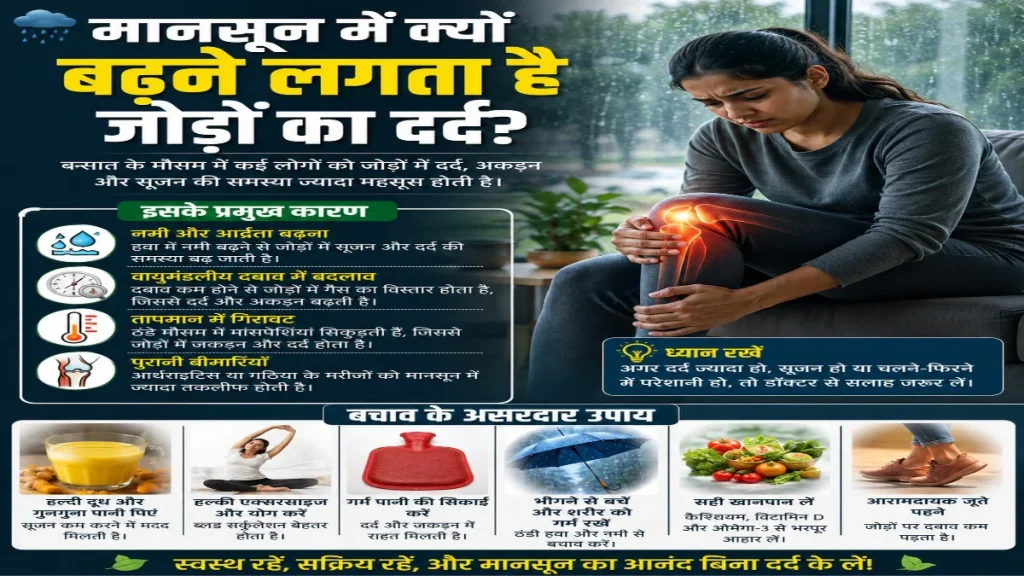
While the arrival of monsoon brings a cool breeze after the scorching heat, it can also pose serious physical challenges for those suffering from arthritis and chronic injuries. Complaints of swelling, stiffness, and pain in the knees, ankles, and fingers rapidly increase as soon as the rains begin. According to doctors, this change in weather is not just due to physical sensitivity, but also due to atmospheric pressure and biological changes.
Why does joint pain increase during the monsoon? Learn about the scientific reasons and effective prevention measures.
4 Scientific Reasons for Increased Joint Pain During the Rains
During the monsoon, the body’s muscles and joints are directly affected by three major environmental changes:
Drop in Barometric Pressure: Atmospheric pressure decreases just before and during the rains. This pressure drop causes a slight expansion of the soft tissues surrounding the joints. This expansion puts additional pressure on the nerves in areas affected by arthritis or chronic injuries, leading to severe pain.
Temperature drop and vein constriction: When temperatures drop suddenly, the body constricts blood vessels to maintain internal heat. This slows blood flow to the extremities. Tendons and ligaments supporting joints become stiff due to exposure to cold air, causing stiffness during movement.
Impaired air humidity and fluid balance: Increased humidity disrupts the natural process of sweating. This causes fluid to accumulate in body tissues, leading to swelling in the knees and ankles.
Lack of physical activity: Frequent waterlogging or rain keeps people indoors. Inactivity slows the flow of synovial fluid, which lubricates joints, causing stiffness when suddenly getting up after sitting for a long time.
Local Expert Opinion
“Changes in temperature and barometric pressure during monsoon directly affect joint fluids and nerves. During this season, patients should protect their joints from cold air and continue light indoor exercise to maintain blood circulation.”
— Senior Orthopedic Specialist
5 Easy and Effective Ways to Care for Joints in the Monsoon
According to health experts, small changes to your daily routine can help relieve pain and swelling during this season:
Avoid cold and humidity: Avoid sitting directly in front of an air conditioner or in the direct cold air of a fan. Change wet clothes immediately. Wear knee caps or light cotton/woolen sleeves.
Light indoor exercise: If going outside is not possible, take a walk indoors. Practice stretching and low-impact yoga to maintain joint mobility.
Use warm compresses: Apply a heating pad or hot water bag to the affected area for 15 to 20 minutes daily. This relaxes muscles and increases blood circulation.
Include anti-inflammatory foods in your diet: Drink plenty of lukewarm water. Include foods rich in turmeric, ginger, walnuts, and omega-3 fatty acids, which naturally help reduce inflammation.
Maintain vitamin D levels: Reduced sunlight due to cloudy weather can lead to vitamin D deficiency. Take vitamin D3 supplements as recommended by your doctor.
When is it necessary to see a doctor?
If your joints continue to be extremely swollen, the skin becomes red, it feels very hot to the touch, or it becomes impossible to put weight on your foot, do not ignore it as normal and consult a specialist immediately.