
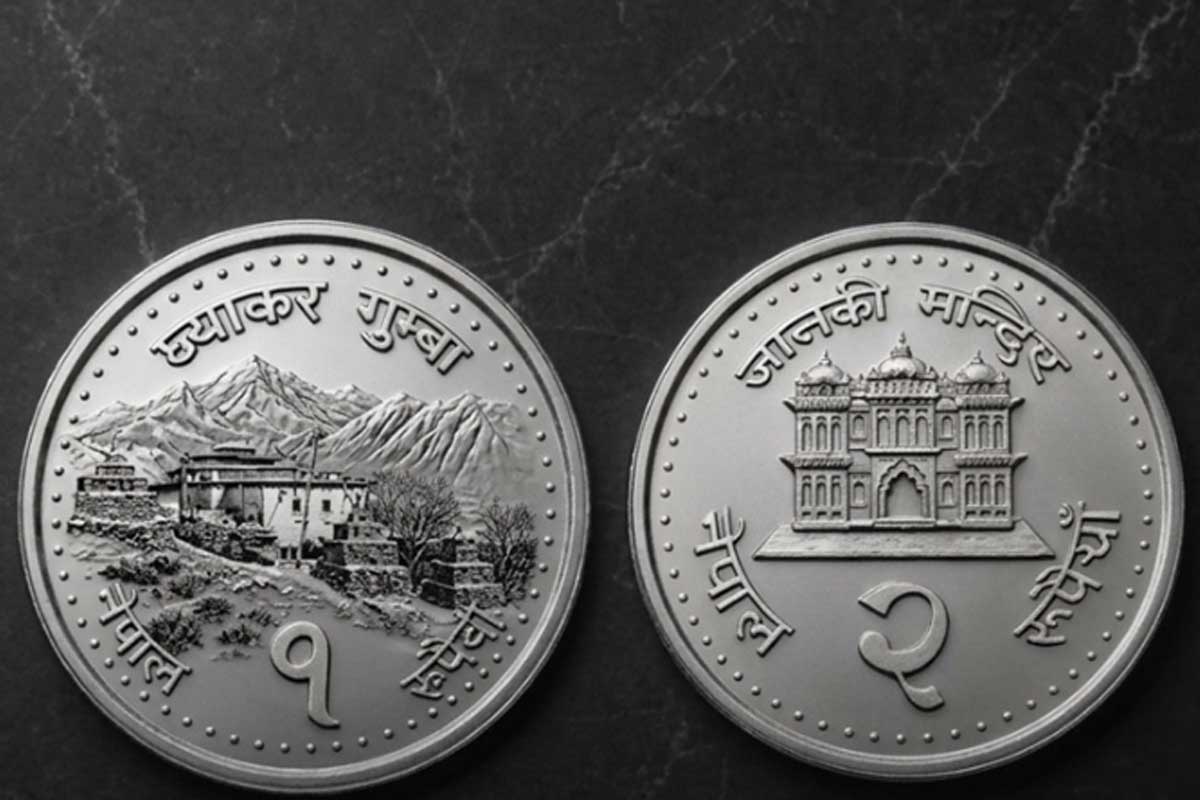
Part of India visible on the map of Nepalese rupees! Kathmandu finally retreated in the face of controversy

This time Nepal created a controversy by including part of India on its map. But finally Kathmandu retreated under pressure. The map has been removed in the new single currency. As a result, a Buddhist monastery is shown there instead of Limpiyadhura, Lipulekh and Kalapani. However, the old Rs 2 currency is still in the market. There, however, the confusing map is visible.
Incidentally, the former Prime Minister KP Sharma Oli-led government updated the country’s map in May 2020. Kalapani, Lipulekh and Limpiyadhura regions were added to the map of Nepal through the approval of Parliament. India protested about this map change of Nepal. Lipulekh, Kalapani and Limpiyadhura regions have been repeatedly claimed as part of India. In that situation, India said that the revised map of Nepal is a ‘one-sided work’. India claimed that this incident was actually an attempt to forcibly change the borders of the country. Nepal has a 1850 km long border with India. Nepal shares borders with five Indian states namely Sikkim, West Bengal, Bihar, Uttar Pradesh, and Uttarakhand.
Finally, the new single currency has changed. There, instead of showing the controversial part, a picture of a Buddhist monastery is given. Located in Marang village of Mustang district, Lo Ghaikar Monastery is one of the oldest Buddhist monasteries in Nepal.
Bhim Rawal, a senior leader of the Communist Party of Nepal, expressed his anger at this decision. Who protested the removal of the map. In his words, “The Prime Minister said if the Shah-led government really decided to remove the map of Nepal including Limpiyadhura, Lipulekh and Kalapani from the one rupee coin and replace it with the image of Lo Ghiakar Monastery, it is another serious anti-national decision. It is a blow to the territorial integrity of Nepal.”
Comments are closed.