
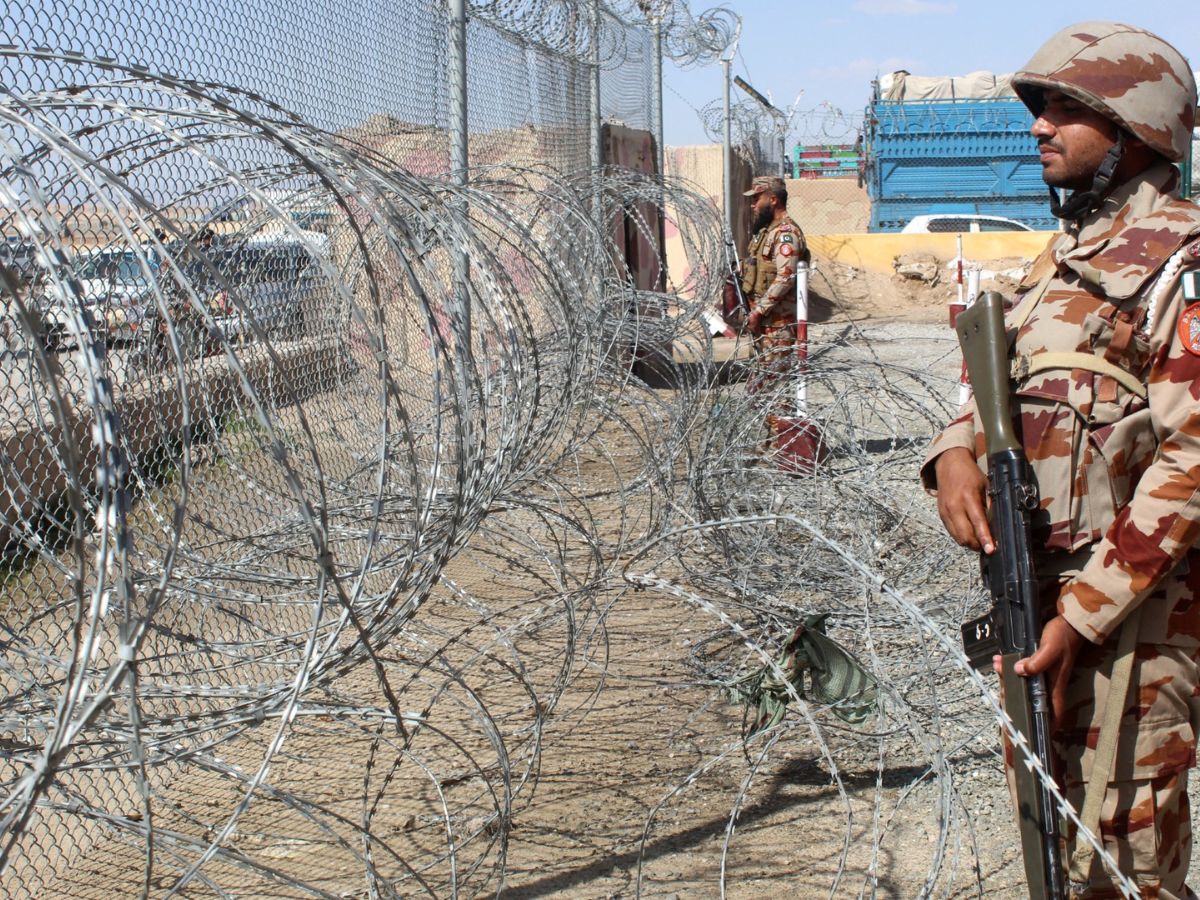

A supposed letter which was issued under the “Republic of Balochistan” has created further controversy as to whether the territory has actually declared its independence from Pakistan. The letter states that Baloch separatists have taken control of about 85 percent of Balochistan and created a separate state. It is yet to be proven whether the statements made in the letter are indeed true as Pakistan still controls the territory of Balochistan. Nonetheless, besides the legitimacy of the letter, the situation has raised a much broader issue relevant for all separatist movements worldwide – is there anything else required by international law apart from a declaration of independence in order for the territory to become an independent country?
The answer consists of legal, diplomatic and political aspects. The declaration may draw the attention of the international community, but it does not mean that the country has been officially formed. In any case, a region aspiring to independence should meet certain legal criteria and deal with political issues which turn out to be much more challenging than the declaration itself.
The Republic of Balochistan’s Defense and Security Forces Have Secured 85% of Balochistan’s Territory#Balochistan has declared its independence, adopted its national anthem, “”Ma Chukain Balochani,” introduced its national flag, established its own currency the “Balochi… pic.twitter.com/KM1ZsqhNXn
— Sajeda Akhtar (@Sajeda_Akhtar) July 14, 2026
How the Balochistan debate explains what international law considers a country
There are no universally accepted international bodies that accept or reject the formation of a new country. However, the most internationally recognized convention comes from the 1933 Montevideo Convention, and it defines four conditions usually taken into account when establishing whether an entity is to be considered a state in the sense of international law.
The first condition concerns a permanent population. The country should have its own stable population residing within the territory. The Balochistan region already boasts its long history of the presence of the population with unique culture, ethnicity and language. Nevertheless, any newly created independent state would also have to solve the problems regarding citizenship, minority issues, as well as status of various communities residing there.
The second condition refers to the issue of a defined territory. The country should be able to rule over its territory. This is one of the most problematic issues associated with Balochistan’s independence. The historical region of Balochistan has always extended beyond Pakistan’s borders and included territories of Iran and Afghanistan, as well as the largest part of Balochistan province of Pakistan.
Why Balochistan would need more than territory and people to qualify as a state
For international law, an efficient government is also crucial. The mere declaration of independence does not suffice. The aspiring state needs to prove it has the capacity to uphold law and order, administer the area under its jurisdiction, manage governmental institutions, and deliver necessary services to its citizens. In the absence of working governance, the declaration of independence cannot be considered anything more than a purely political one.
The fourth point is about the capability of conducting foreign policy. In an independent nation, the state must be capable of positioning itself as a subject of international politics and of making treaties and having relationships with other nations independently. Meeting the above four requirements will strengthen the case for the new state’s legitimacy; however, it does not guarantee international recognition of the same.
The reason for that is in the way international law considers the question of recognition. According to the declaratory theory of recognition, an entity becomes a state through fulfilling the fundamental conditions of statehood, whereas recognition is just the acknowledgement of the fact. The constitutive theory of recognition claims the opposite position.
Why international recognition matters as much as international law for Balochistan
In reality, recognition turns out to be the greatest barrier. Despite meeting all criteria for statehood in terms of law, such a state may not be able to operate effectively on the international stage unless it gains diplomatic recognition. Without it, an established country might find it hard to enter international organizations, have its embassies, have passports recognized by other countries, etc.
The clearest symbol of international legitimacy is membership of the United Nations. But joining the UN is a lengthy political process rather than an automatic legal consequence of declaring independence.
The first stage begins at the UN Security Council. An applicant must receive a recommendation from the 15-member council by securing at least nine votes in its favour. Even then, the proposal can fail if any one of the five permanent members, the United States, the United Kingdom, France, Russia or China, exercises its veto power. A single veto is enough to stop the application.
Only after clearing that stage does the application move to the 193-member UN General Assembly, where it must secure a two-thirds majority before the applicant can become a UN member.
Why the Balochistan question is ultimately shaped by geopolitics
Legal considerations are only one aspect of the picture. Political circumstances in Balochistan make international recognition more challenging. Balochistan is an integral part of Pakistan’s territory according to Pakistan’s government and it has always resisted the idea of any separatist movement in the province.
An international reaction in case of such a situation would not be limited to Pakistan alone. Given that the historical territories of the Baloch region extend into Iran and Afghanistan, these two neighboring countries will also play an essential role in determining their regional reaction. China will be another crucial player, as the country makes significant investments in Pakistan in terms of China-Pakistan Economic Corridor (CPEC) and Gwadar port construction project. Generally, major countries will be guided more by the principle of maintaining stability and security in the region than by strictly following the law.
Historically, recognition depended on both legal and political aspects. South Sudan gained its independence from Sudan in 2011 after negotiation of the peace agreement and immediately became internationally recognized, including receiving membership of the UN. Taiwan presents the opposite example. Despite having a functioning government, economy and military, it continues to face diplomatic isolation because of geopolitical considerations.
That is why the current debate over Balochistan goes far beyond a purported declaration of independence. Even if such a declaration were genuine, it would represent only the opening step in a much longer process. Before Balochistan could ever become a recognised country, it would need to demonstrate effective governance, establish control over clearly defined territory, build the capacity to conduct international relations and secure acceptance from major global powers as well as the wider international community. Only then could a declaration evolve into internationally recognised statehood.
Also Read: From Balochistan to the Afghan Border: Pakistan’s Four-Front Crisis Explained and Could a New Country Emerge?
Khalid Qasid is a media enthusiast with a strong interest in documentary filmmaking. He holds a Master’s degree in Convergent Journalism from AJK MCRC. He has also written extensively on esports at Sportsdunia. Currently, he covers world and general news at NewsX Digital.
The post Balochistan And Rules Of Statehood: Who Recognises A New Country And How It Happens appeared first on NewsX.

Comments are closed.