
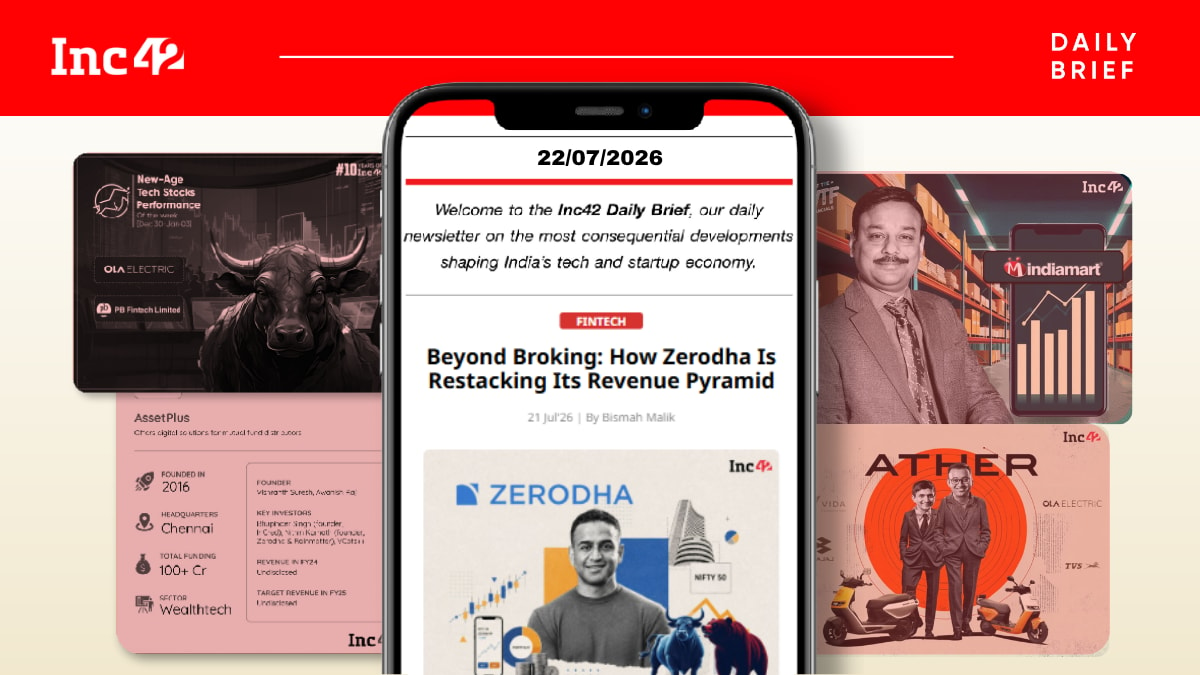

Zerodha Restacks Its Pyramid
Zerodha is quietly rewriting its own playbook. India’s discount broking poster child now wants to help companies list on the bourses, borrow capital and navigate complex deals. As regulations squeeze high-octane derivatives trading, can Zerodha’s second take off?
Zerodha’s New Avatar: Last month, Zerodha applied to SEBI for a Category-I merchant banking licencea gateway to managing IPOs and advising on M&As. Once approved, this licence would place Zerodha in the same league as SBI, Kotak, Axis Capital and ICICI Securities. For a platform built on zero commissions, this is a big evolution .
The Retail Edge: Inside Zerodha, the bet is that its deep retail and HNI footprint can become a differentiator in the investment banking space. While a traditional merchant bank has to stitch together syndicate networks to distribute IPOs, Zerodha aims to tap into its 68 Lakh+ users and purported 10% of retail and HNI AUM through its wealth tech arm to carve a niche.
The idea is to walk into boardrooms with built-in investor access and data, positioning Zerodha as a more compelling partner for IPO-bound companies.
Beyond Broking: Beyond corporate dealmaking, the broking giant is also quietly building other monetisation channels through margin trading facilities, wealth management services and secured lending against securities. Many of these are already paying off, helping it insulate from speculative market swings.
Diversification Mandate: This reinvention is not happening in a vacuum. Over the past two years, SEBI has tightened norms and higher securities transaction taxes have deflated the F&O boom. This, in turn, dragged Zerodha’s operating revenue and net profit down in FY25. The new verticals aim to flatten the company’s revenue pyramid and lock in long-term enterprise predictability.
As the broking giant expands into new horizons, can Zerodha’s bid to morph into a full-stack financial institution pay off? Let’s find out…
From The Editor’s Desk
📈 IndiaMART’s Q1 Snapshot
- The B2B ecommerce major’s consolidated net profit rose 12% YoY to ₹172.2 Cr in Q1 FY27. This came on the back of operating revenue jumping 11% YoY to ₹414.4 Cr and EBITDA improving 10% YoY to ₹14.6 Cr during the quarter.
- On the operational front, IndiaMART said it generated 26 Mn unique business enquiries during the quarter. Supplier storefronts increased 5% YoY to 8.8 Mn, while the number of paying suppliers stood at 2.18 Lakh at the end of June.
- Separately, IndiaMART’s board approved the incorporation of a wholly owned subsidiary to provide short-term working capital financing to its business users. The incorporation remains subject to approvals from various regulatory authorities.
💰 Ather Nets ₹1,300 Cr Via QIP
- The EV maker has raised about ₹1,300 Cr through a qualified institutional placement (QIP), allotting 1.08 Cr shares to investors at an issue price of ₹1,202 per share. This was 2.8% higher than the ₹1,169.70 apiece floor price set by the company.
- Among the largest allottees were HDFC MF, Aditya Birla Sun Life MF, Axis MF and Edelweiss MF, each receiving more than 5% of the total issue size. Following the allotment, Ather’s paid-up equity share capital increased to 39.41 Cr shares.
- The fundraise is part of Ather’s previously announced plan to raise up to ₹2,500 Cr to repay or prepay borrowings, invest in R&D, and support marketing initiatives. The remaining ₹1,200 Cr is proposed to be raised through a preferential issue.
✈️ 30 Sundays Bags ₹61 Cr
- The travel tech startup has raised about $6.7 Mn in a Series A round led by Bessemer Venture Partners to strengthen its AI capabilities, expand its engineering team, invest in brand building, and enter new international markets.
- Founded in 2024, 30 Sundays is an AI-native, full-stack holiday planning and booking platform for Indian travellers. It previously raised $770K in 2024 and currently clocks an annualised gross booking value run-rate of about ₹200 Cr across four destinations.
- The fundraise comes amid sustained investor interest in India’s travel tech sector on the back of recovery in demand, AI integration and bundled packages. At the heart of all this is the homegrown online travel market, which is expected to cross $38.58 Bn by 2031.
🎯 Zaggle’s Acquisition Spree
- The fintech SaaS company will acquire a 20% stake in cross-border payments enabler Unobanc in an all cash deal for up to ₹7.97 Cr. The investment, which will be made in one or more tranches, is expected to be completed within the next 90 days.
- The acquisition is expected to strengthen Zaggle’s cross-border payments, forex and remittances businesses. Founded in 2019, Unobanc provides technology infrastructure for digital cross-border payments and remittances in India.
- This is the latest in a series of inorganic deals undertaken by Zaggle in the past year. The listed company acquired GreenEdge last year for ₹125 Cr, followed by Rio.Money for ₹22 Cr. It is also acquiring DICE for ₹68 Cr.
📊 LenDenClub’s FY26 Show
- The P2P lending startup’s parent entity Vartis Platforms reported a 183% YoY jump in profit to ₹96.2 Cr in FY26, driven by stronger credit infrastructure and growth across its lending businesses. This marked the startup’s second consecutive profitable fiscal.
- Operating revenue rose 43% YoY to ₹338 Cr in FY26 on the back of improving underwriting efficiency and reducing failed transactions. Meanwhile, total expenses zoomed 28% YoY to ₹241.7 Cr in the fiscal under review.
- Founded in 2015, Vartis offers retail credit, digital lending and lending technology via three platforms — LenDenClub, InstaMoney and Vartis One. Overall, it processed transactions worth ₹5,000 Cr in FY26 and is targeting a revenue of ₹550 Cr in FY27.
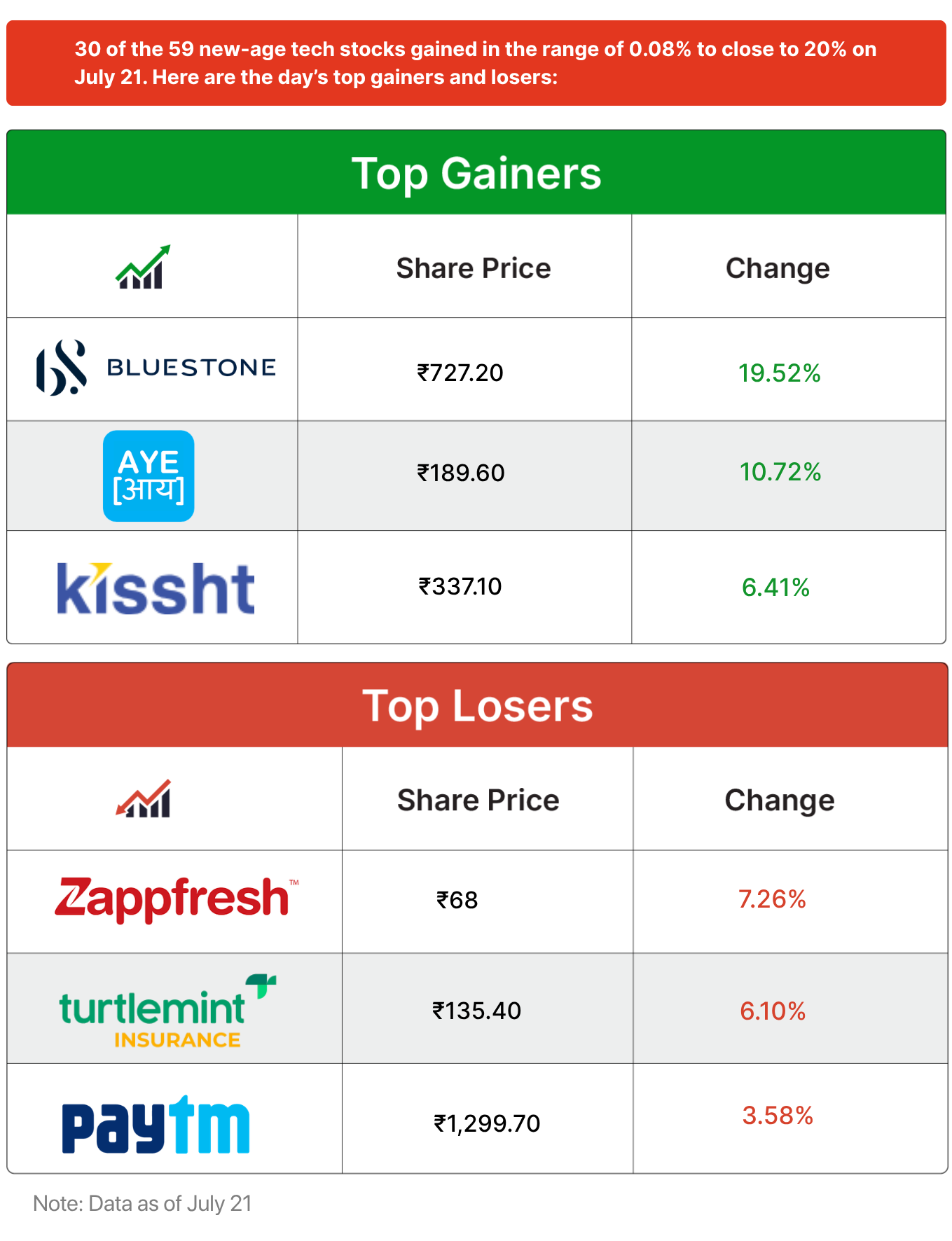
Inc42 Markets
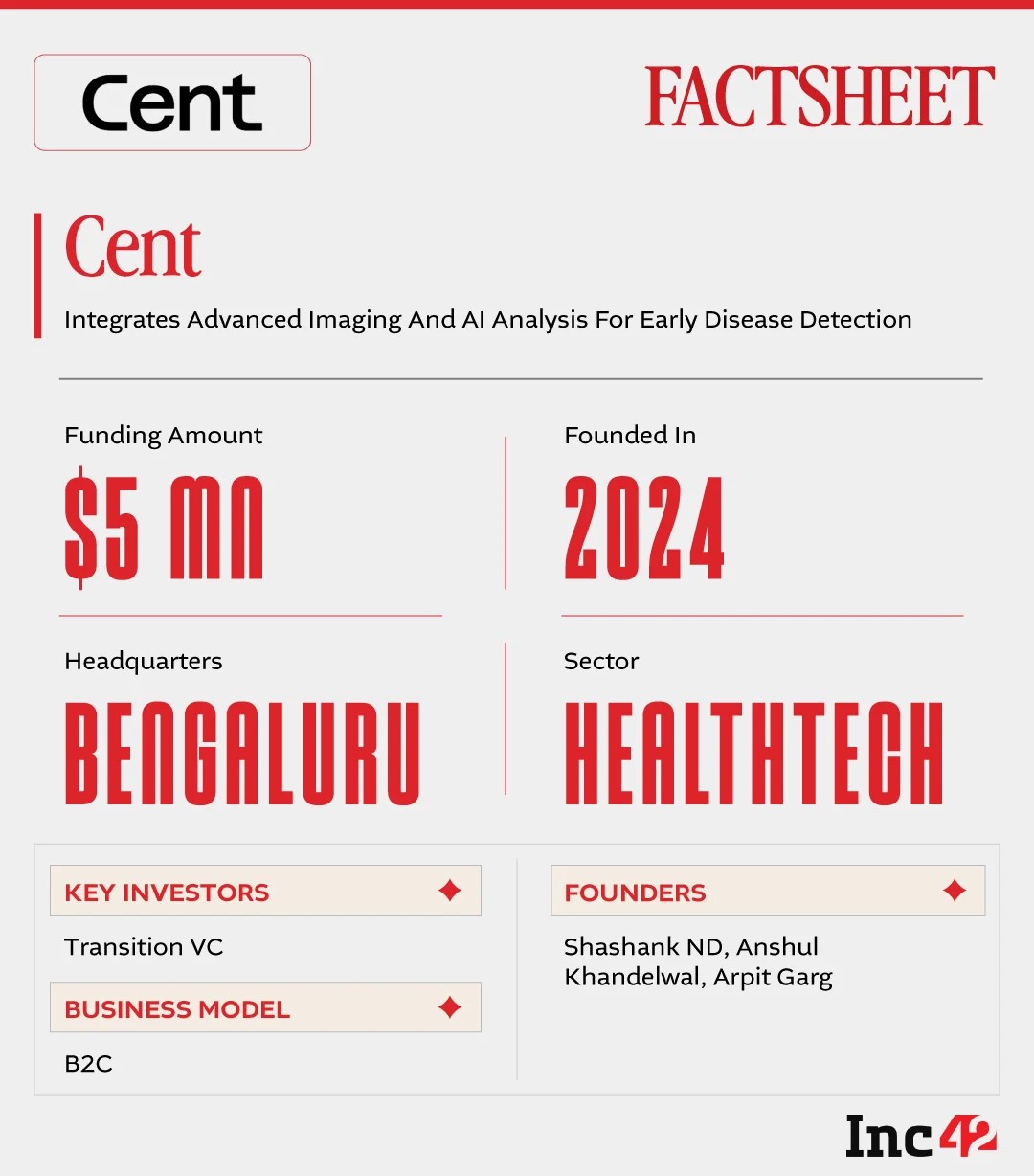
Inc42 Startup Spotlight
Inside Cent’s AI Stack For Early-Disease Detection
In India, most people enter a diagnostic centre only after a serious symptom appears. Even full-body checkups don’t catch life‑threatening conditions soon enough to change the outcome. Cent wants to flip this script by turning AI-led detection into a routine, annual ritual.
The Diagnostics Platform: Founded in 2025, Cent is a preventive healthcare platform that runs its own diagnostic centres in Bengaluru, Delhi-NCR and Mumbai. The idea for the startup began with longevity, but quickly narrowed to diagnosing diseases like cancers, cardiac disease and neurological conditions in time.
The Preventive Protocol: Cent’s core product is a once-a-year protocol built around a full-body MRI, which generates three to four GB of imaging data and screens for more than 300 conditions. The protocol also adds ECG and echocardiogram for heart function, a DEXA scan for metabolic health and over 120 blood and urine biomarkers, all bundled into a single package priced at around ₹27,500.
The AI Synthesis Layer: Cent’s proprietary AI system pulls together imaging, biomarkers and clinical data into an organ-by-organ risk score and prioritised action plan. Users book online, followed by a mandatory doctor consultation within 48 hours and an ongoing access to an AI companion that helps interpret reports.
Healthy Traction: Cent claims to have already completed around 7,000 scans, with current capacity at up to 3,000 scans per centre per month. It plans to open 20 to 25 new centres across India’s top cities over the next nine months. With the homegrown healthtech market projected to cross the $37 Bn+ mark by 2030, can Cent build an Indian AI stack for early-disease detection?
Infographic Of The Day
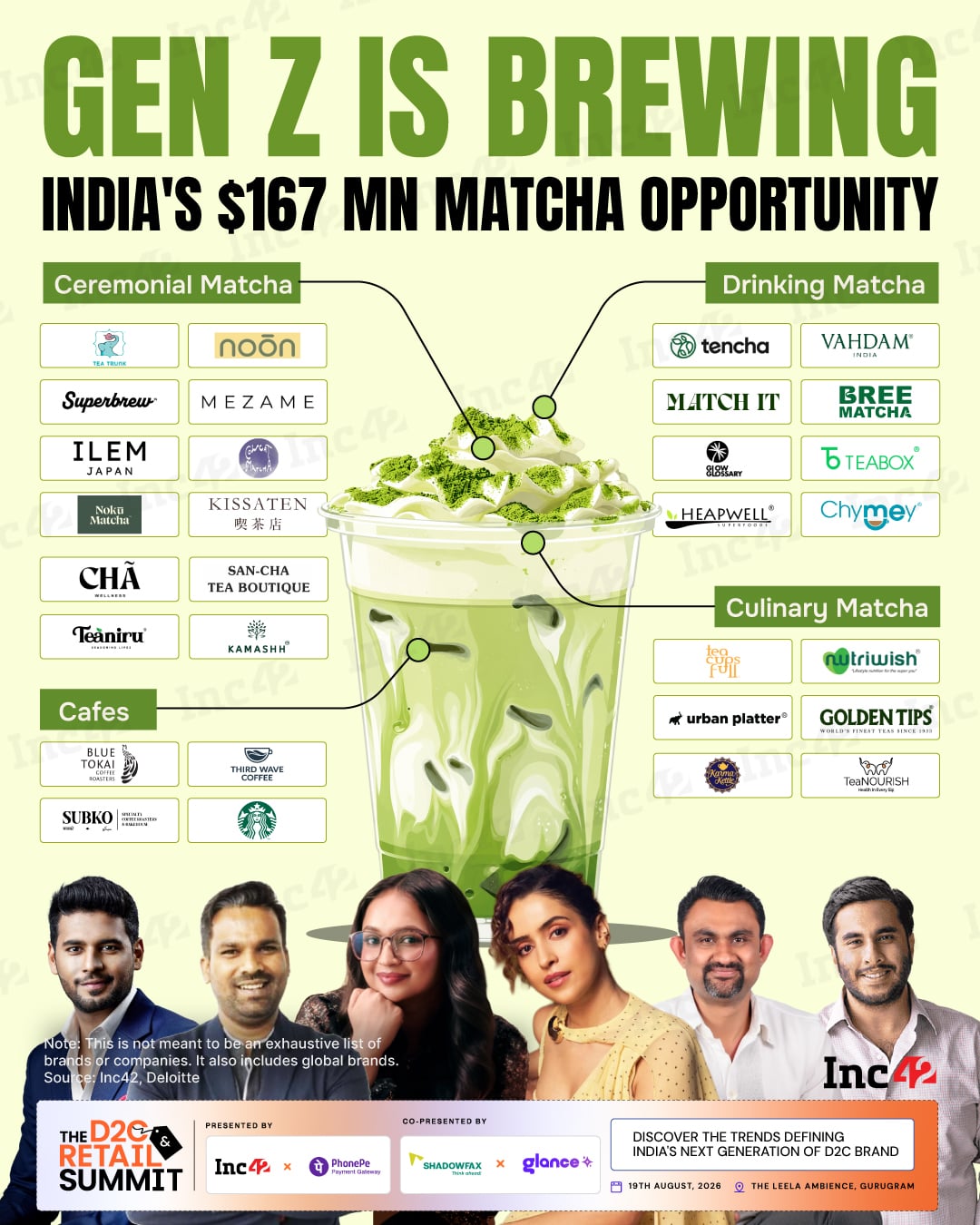
India’s Gen Z isn’t buying matcha just because it’s trendy. They are entering a broader ecosystem of wellness, rituals, aesthetics and community. This shift is creating a $167 Mn opportunity for India’s next wave of D2C brands. So, who’s winning the matcha race?

Comments are closed.