
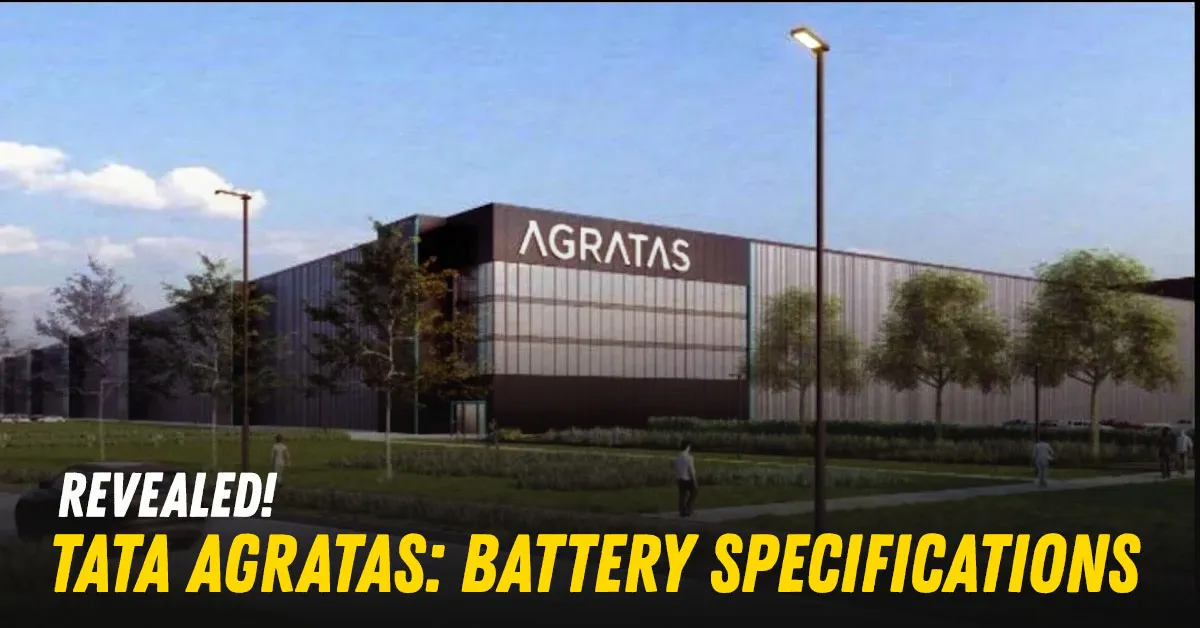

Agratas, Tata Group’s battery manufacturing arm, has made multiple headlines in the past. The company has set up manufacturing facilities in Somerset in the UK and Sanand in Gujarat. In April we had reported that the civil work is almost done and the actual battery manufacturing could soon commence. The key details of the battery packs being built by Agratas have now surfaced.
This information has been shared on X (previously Twitter) by the handle XRoaders. The post reveals the cell specifications of the first batteries being built at the Agratas facility. The Somerset plant has a capacity of 40GWh, and is the biggest of its kind in the UK. The Sanand facility, which will supply batteries to Tata Motors cars sold in India, has a capacity of 20GWh. Tata Group Chairperson Natarajan Chandrasekaran said that Tata EVs will start using Agratas-made battery packs from 2027.
According to the X post, Agratas will work across a range of chemistries. We have been used to seeing LFP (Lithium Iron Phosphate) battery packs in Tata EVs. However, Agratas will make both Nickel Manganese Cobalt (NMC) and LFP battery packs.
These cells (and batteries) will be designed in a way that they will all adhere to modern charging and performance standards. They will support fast-charging, and have long lifespans. The post also mentions that these cells will be reliable in the long run.
The Lithium Iron Phosphate (LFP) cells made by Agratas will have length, height and width of 295mm, 120mm, and 36mm respectively. The nominal capacity will be 175 Ah and nominal voltage will be 3.2V. The operational voltage will be 2.5V to 3.65V. Stored energy will be 562 Wh. These cells will have a life of 2500 cycles and will be able to operate in temperatures ranging from -30°C to 60°C.
NMC battery packs have higher energy density than LFPs. They deliver enhanced performance and can support faster charging as well. Many high performance EVs use NMC batteries. Agratas will manufacture these as well. In fact, two variants of NMCs will be produced at the UK facility.
The first variant will be 295mm long, 92mm tall and 20.7 mm wide. It will have a nominal capacity of 102 Ah and a nominal voltage of 3.68V. The operational voltage will be 2.5 to 4.25 V, and the operational temperature range will be -30degrees to 60-degree Celsius. This variant will have a life of over 1000 cycles. Each cell will pack 374 Wh of energy.
The second variant will be taller. The length, height and width will be 295mm, 120mm and 20.7 mm, respectively. The nominal capacity in this case will be much higher- 173Ah. The nominal voltage will be the same as the previous variant- 3.68V. Each of these cells will pack 636Wh of energy. It will be able to operate between 2.5 to 4.25 Volts. The operational temperature range will be the same as before and cell life will be 1000+ cycles.
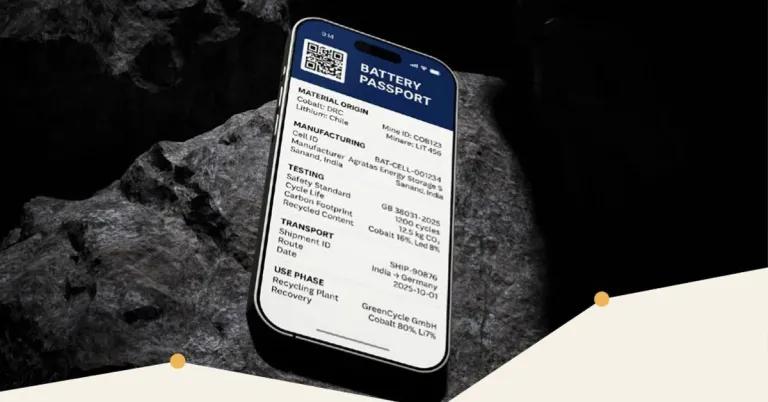
Agratas will also introduce a ‘battery passport’ system. It will create a transparent digital record for every battery produced. It will be traceable. The UK facility will manufacture batteries that comply with rules of origin requirements for electric batteries under the EU-UK Trade and Cooperation Agreement (TCA).
Agratas has signed a seven-year battery supply agreement with Jaguar Land Rover. According to this Rs 5,000-crore deal, upcoming electric cars and SUVs from Jaguar Land Rover will use Agratas battery packs. These models are likely to use NMC batteries. Range Rover is expected to get an electric version sometime in the near future. Jaguar is also working on the production form of its controversial electric car.
Having the two massive battery manufacturing plants running is expected to reduce Tata Group’s dependence on Chinese partners for EV and battery technologies for their upcoming electric models. Indian vehicle manufacturers, in general, are trying to reduce reliance on Chinese EV technology companies and supply partners. This is due to the shifting geopolitical dynamics. In this context, the Agratas scaling up its volumes can mean less reliance on China, and a more stable supply partner even for other automakers.
However, it should also be noted that AESC Group, owned by the Chinese energy technology firm Envision, recently bought a 12% stake in Agratas.
Comments are closed.