
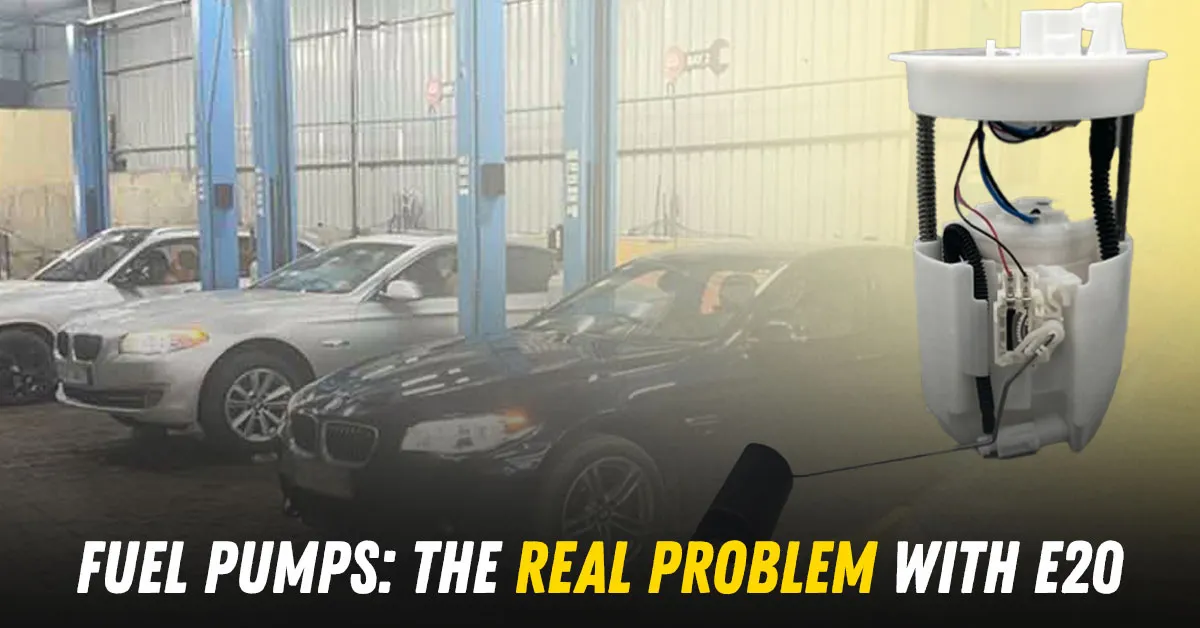

The government says no engine damage due to E20 for any car, experts agree. Govt admits to possible damage for plastic and rubber parts, experts agree. What both are not talking about – deliberately perhaps? – is damage to fuel pumps and fuel systems. There is very little talk about it. But damage to these are enough to cause a breakdownand moderate to expensive replacement costs and service center visits.
Fuel pumps are located at the absolute bottom of the fuel tank. Their duty is to draw fuel from the tank and supply it to the fuel system. A low pressure pump is used for this. However, modern cars that use direct injection technology (GDI for example) have two fuel pumps- a low pressure pump to draw fuel from the tank and a high pressure pump on the engine to spray the fuel into the hot engine cylinders.
Let’s first talk about low pressure fuel pumps- the ones that suck fuel from the tank. It is an assembly of mechanical, electrical, and filtration components, and not just an electric motor. The electric motor operates at high speeds to move the impeller that, in turn, moves the fuel. There is also a component called strainer that acts as a coarse filter to block foreign bodies from entering the system. Other components include a fuel pressure regulator, check valve, fuel level sending unit and a plastic housing.
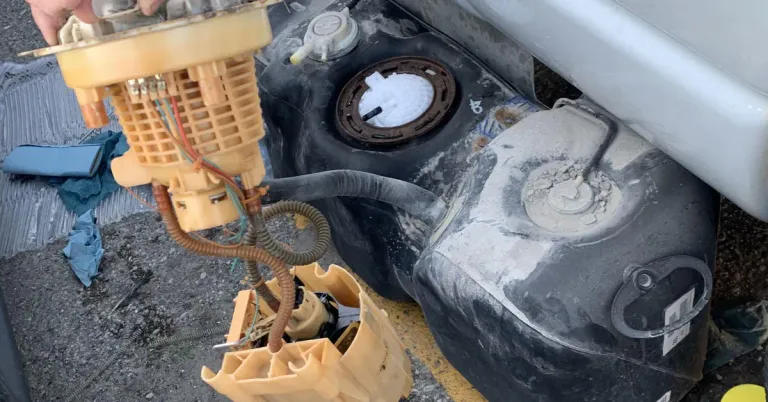
The most common way in which E20 fuel damages fuel pumps is by clogging their strainers. Over years of operation, a car’s petrol tank will accumulate a layer of varnish, lacquer, and sediments along its inner walls. Ethanol is an effective cleansing agent. It strips these and carries it along with the fuel.
The heavy slurry of dirt and sludge then flows down to the fuel pump strainer. The strainer is attached directly to the pump’s intake. Being the first line of defense, it will instantly filter out the slurry. Over time, this will lead to the strainer getting choked. This will limit the inflow of fuel.
This, in turn, will cause the electric motor to work harder to draw the fuel, through the clog. It will draw more current and will overheat. The fact that the electric motor depends on the fuel that flows through, for cooling, will further add to this. All of these will lead to the motor getting burnt out completely.
A luxury car mechanic had recently stated on video that the use of E20 fuel is damaging the fuel pumps in many older luxury vehicles. In luxury cars, replacing these can get very expensive. The mechanic even claims that over the last 2-3 months, more than 100 BMWs and Defenders have come to his workshop for fuel pump replacement.
Water ingress is another villain in this story. Ethanol is hygroscopic and aggressively attracts moisture and any form of water content. When the car sits idle for a long time, phase separation will happen inside the tank and water-ethanol mixture will eventually sink to the very bottom of the tank. The fuel pump will draw this mixture in.
In non E20-compliant cars, fuel pumps and fuel systems lack anti-corrosive coatings. This will lead to them getting damaged by the water-laden fuel. The internal corrosion further creates friction and may jam moving parts. This can cause a complete seizure of the pump’s motor.
In addition to these, the persistent use of E20 petrol in non-compliant cars can also damage seals and gaskets, and compromise the structural integrity of the fuel pump assembly. Pumps use plastic housings, rubber gaskets, and flexible O-rings to achieve and maintain fuel pressure. The seals and hoses of non-compliant cars may dry out, swell up or develop cracks. These will cause the pump to lose its pressure.
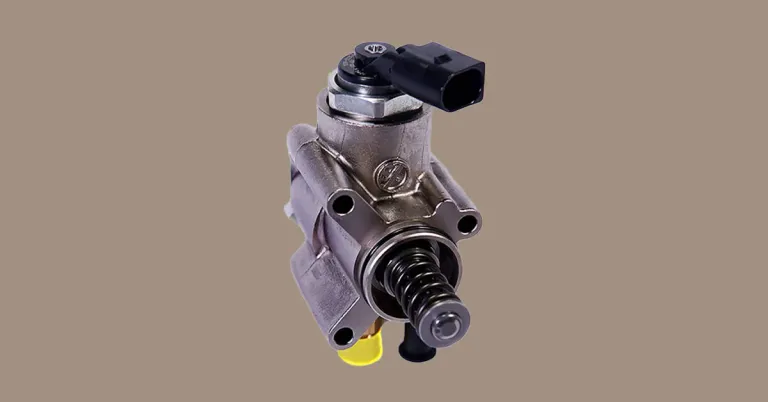
High pressure fuel pumps (HPFPs) can also be damaged by E20 petrol if the vehicle is not E20-compliant. In older cars, HPFPs are vulnerable due to the extreme physical demands placed on them. Most of them operated under intense pressure. They push fuel out at 2000-3000 PSI. E20 petrol may possibly affect these pumps in three ways:
- Petrol acts as a natural lubricant. Ethanol has less lubricating properties than pure petrol. This may cause a loss of lubrication, increased friction and eventually early wear of the pump.
- Tiny particles of rust in the injected fuel can cause micron-level scratches in HPFPs. This can , over time, ruin the seals inside the pump’s cylinder, causing internal fuel leaks and pressure drops.
- If phase separation occurs and the pump draws in moisture-heavy ethanol, it may cause the check valves to get damaged.
HPFPs can be very expensive to replace.
The use of E20 petrol in non-compliant cars is more likely to damage fuel pumps and fuel systems than causing outright engine damage or rusting within the tank. However, the authorities have hardly spoken anything about this. The silence is embarrassing.
Comments are closed.