
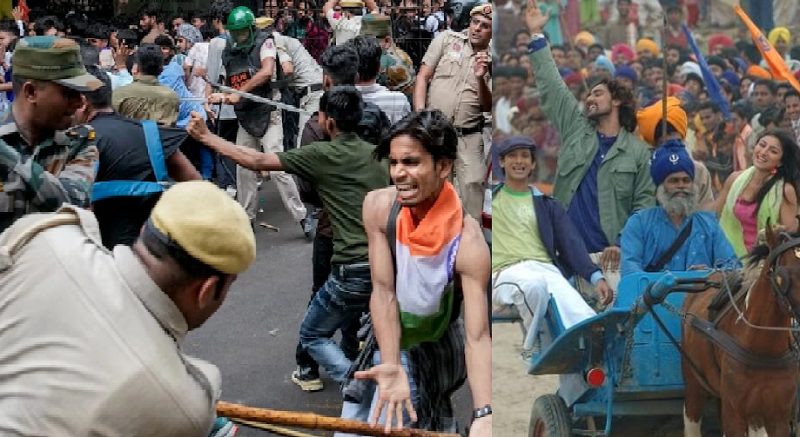
These 7 powerful Bollywood films tell the story of student politics, education and change, are still very relevant among the youth.

New Delhi . Indian cinema has from time to time brought many important issues related to society on the big screen. Student Movement, Education System, Youth Leadership and Social Change have also been such topics, which many directors presented effectively through their films. These films did not limit themselves to just entertainment, but also strongly highlighted the thinking, struggle, politics and aspirations of the youth for change. Even today, when issues related to the education system and student interests are discussed, the relevance of these films is felt again.
The most prominent name in this list is that of the 2006 film ‘Rang De Basanti’. This film gives the message of raising voice against the system and taking responsibility through the story of some youth. The protest that started after the death of a friend gradually takes the form of a big mass movement. The film tried to develop new thinking among the youth regarding social responsibility and active participation.
‘Yuva’, released in the year 2004, is considered an important film based on student politics and leadership. In this, the youth have been motivated to participate in the democratic process instead of being limited to mere protest. The film gives the message that to bring permanent change in the society, it is also necessary to play a positive role in politics and public life.
‘Hazaron Khwaishein Aisi’ is a film based on the backdrop of political conditions and student movements of the 1970s. It depicts social change, ideological conflict and political activism through the different life journeys of three students. The film tells that ideology and desire for social change sometimes completely changes the direction of the life of the youth.
Anurag Kashyap’s ‘Gulaal’ presents the university politics and the power struggle within student organizations in a realistic manner. Various aspects of student politics, ideological conflicts and ambitions for power are shown in detail in the film. This shows that student movements are not limited to idealism alone, but sometimes also become a part of complex political situations.
‘Haasil’ is a film based on the background of student politics of Allahabad University. In this, student union elections, muscle power, crime and the impact of politics on the future of youth are prominently shown. The film also raises the question of how increasing political competition in educational institutions affects the academic and personal lives of students.
Directed by Prakash Jha, ‘Aarakshan’ is a film based on sensitive topics like education system, social justice and reservation. In this, education policies, students’ reactions and the debate arising in the society have been presented in a balanced manner. Whereas ‘Huddang’ brings forward the story of students’ struggle, protest and social change in the background of the Mandal Commission movement. The film shows how wide-ranging an impact government policies can have on youth and the education system.
The specialty of all these films is that they effectively portrayed student movements, social conditions and the role of youth of different eras. This is the reason that even after years, these films are not only considered a part of cinema, but an important medium for serious discussion on education, democracy, social participation and responsibilities of youth.

Comments are closed.