
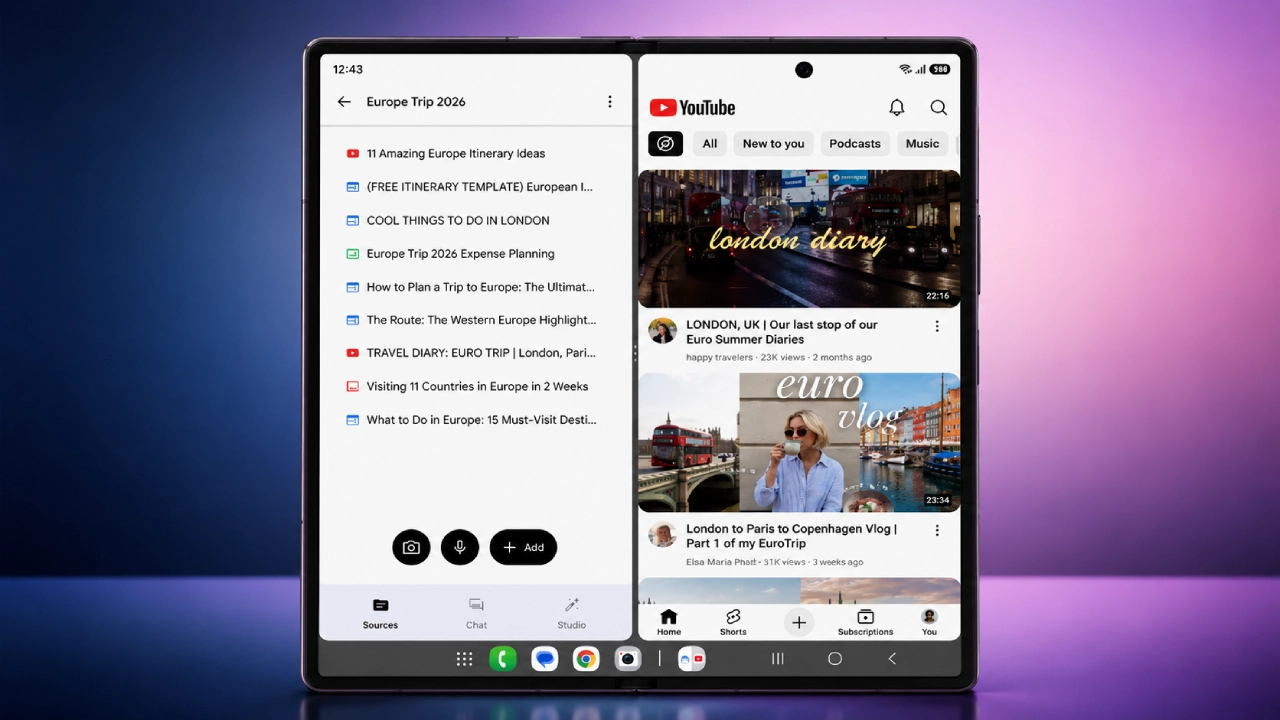

Google is continuing to push Gemini beyond being a conversational AI assistant by introducing a broader set of task automation capabilities. The latest demonstration shows Gemini handling everyday activities such as ordering transportation, shopping online, and making restaurant reservations, all through a single conversational prompt.
Rather than requiring users to switch between multiple applications, the Google Gemini AI assistant is designed to understand natural language requests and coordinate actions across compatible services. Google says users remain in control throughout the process, with the ability to monitor, edit, or cancel tasks before they are completed. The new features further reinforce Google’s vision of Gemini as a proactive digital assistant capable of completing real-world actions instead of simply answering questions.
Google Gemini AI Assistant: From Chatbot to Task Executor
Generative AI has evolved rapidly over the past two years, but many assistants still require users to manually perform actions after receiving recommendations. Google wants Gemini to bridge that gap. Instead of asking users to search for a restaurant, open a reservation app, select a time, and confirm the booking themselves, Gemini aims to complete much of the workflow through a single request.
For example, users can say:
- “Book me a ride to the airport.”
- “Add these shoes to my shopping cart.”
- “Reserve a table for two tonight.”
Gemini then coordinates the necessary steps across supported services while allowing users to approve the final action. The result is a workflow that feels less like searching and more like delegating tasks to a personal assistant.
Reducing App-Hopping
One of the primary goals behind the new functionality is reducing what’s commonly referred to as app-hopping.
Many daily activities involve opening several different apps in sequence:
- Messaging someone
- Checking maps
- Ordering transportation
- Making reservations
- Shopping online
- Completing payments
Gemini is designed to simplify these workflows by serving as a single conversational interface capable of interacting with multiple supported applications. Instead of navigating each app individually, users can describe what they want, and Gemini handles much of the underlying coordination. Google believes this conversational approach can make smartphones more efficient, particularly during busy moments when multitasking or hands-free operation is important.
Designed for Hands-Free Experiences
The updated automation features also highlight Gemini’s growing emphasis on voice interactions. Google says the experience is particularly useful when users are driving, cooking, exercising, walking, carrying groceries, or multitasking at work.
Rather than stopping to unlock a phone and navigate several apps, users can simply speak naturally to Gemini. The assistant interprets the request, initiates the workflow, and keeps users informed throughout the process. This hands-free approach aligns with Google’s broader efforts to make Gemini a central part of Android‘s voice-first experiences.
Users Stay in Control
Although Gemini is capable of automating more tasks, Google emphasizes that users maintain full control over every interaction.
According to the company, users can:
- View each step Gemini is performing
- Jump into the workflow at any time
- Edit information before completion
- Stop or cancel the automation entirely
This oversight helps prevent unwanted purchases or accidental bookings while maintaining transparency regarding the AI’s actions. Rather than operating independently, Gemini functions as a collaborative assistant that keeps users informed throughout the process.
A Growing Ecosystem of Connected Apps
The latest announcement also reflects Google’s broader strategy of connecting Gemini with more third-party and first-party services.
While Google has not published a complete list of supported apps for every region, the demonstration indicates increasing integration across categories such as transportation, shopping, food and dining, productivity and communication. As Gemini expands, additional app integrations are expected to make the assistant increasingly capable of handling complex, multi-step requests. This ecosystem approach mirrors the broader trend among AI companies seeking to transform chatbots into digital agents capable of interacting with software on users’ behalf.
A Key Part of the Galaxy Experience
Google highlighted the new automation capabilities alongside Galaxy Unpacked, underscoring Gemini’s growing importance within Samsung’s latest smartphones.
Recent Galaxy devices have increasingly integrated Gemini into the core Android experience, giving users quicker access to AI-powered features through voice commands, contextual suggestions, and productivity tools. The expanded automation capabilities complement other Gemini features already available on Galaxy devices, including writing assistance, image generation, search, and contextual AI experiences. As Google and Samsung continue strengthening their partnership, Gemini is expected to play an even larger role across future Galaxy products.
The Bigger Picture
The latest demonstration signals a shift in how AI assistants are evolving. Early generative AI focused primarily on generating text, answering questions, or summarizing information. The next phase appears to center on AI agents, where systems are capable of understanding user intent, interacting with multiple applications, and completing practical tasks while requiring minimal manual input.
For Google, Gemini represents that transition. Instead of replacing apps, Gemini aims to become the conversational layer that connects them, allowing users to accomplish more without constantly switching between different interfaces. As additional integrations become available, these automation capabilities could extend well beyond shopping and reservations into areas such as travel planning, productivity, finance, and smart home management.
Final Thoughts
Google’s latest Gemini update demonstrates how AI assistants are gradually moving beyond conversation and into real-world task execution. By allowing users to order rides, add products to shopping carts, and make restaurant reservations using simple natural language prompts, Gemini is positioning itself as a more capable digital assistant rather than just an AI chatbot.
Equally important is Google’s emphasis on transparency. Users remain in control throughout every automated workflow, with the ability to review, modify, or cancel actions before they are completed. As Gemini continues expanding its integrations across Android and Galaxy devices, these agentic capabilities could become one of the defining features of Google’s AI ecosystem in the years ahead.

Comments are closed.